Election case rejected HONOURABLE MR. JUSTICE G.K.ILANTHIRAIYAN Original Application No.957 of 2026 in E.L.P.No.35 of 2026 C.V.Shanmugam …Applicant Vs 1. P.Kamalakkannan
IN THE HIGH COURT OF JUDICATURE AT MADRAS
RESERVED ON : 06.10.2026
PRONOUNCED ON : 13.10.2026
CORAM
THE HONOURABLE MR. JUSTICE G.K.ILANTHIRAIYAN
Original Application No.957 of 2026 in
E.L.P.No.35 of 2026
C.V.Shanmugam
…Applicant
Vs
1. P.Kamalakkannan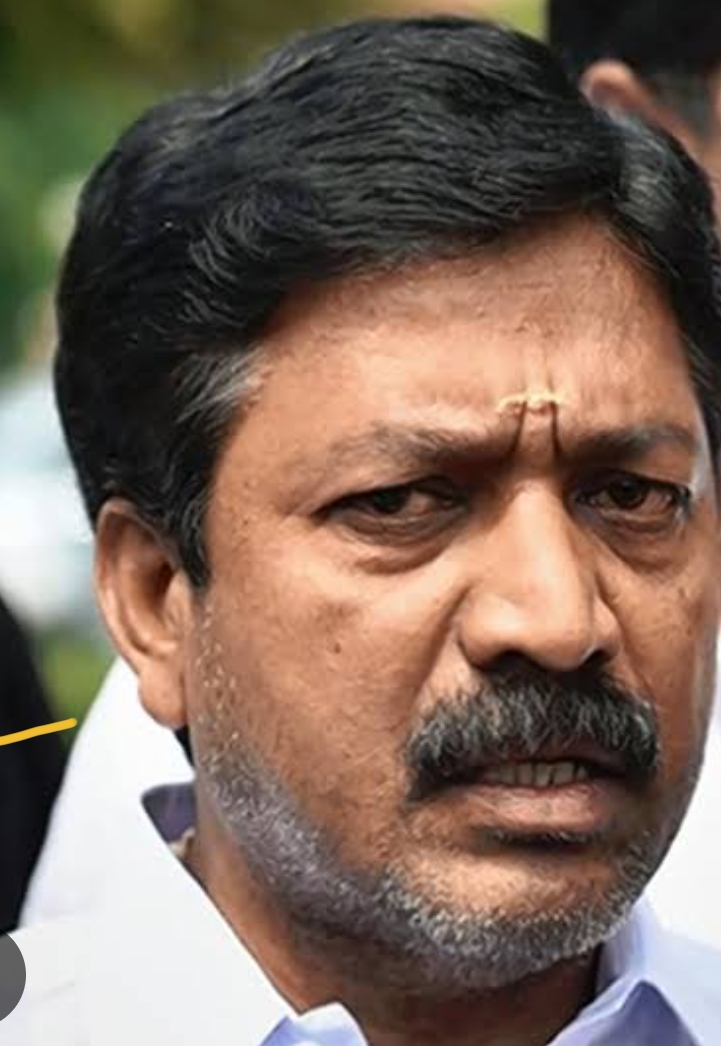
2. A.Vijay Niranjan
3. L.Venkatesan
4. S.Vidjaivikram
5. P.Divya
6.Anand Babu
7.M.Sekar Nayakar
8.Manavalan
9. N.Ayyanaar
10. M.Ranjith Kumar
11. R.Vinoth
12. S.Suresh Kumar
13.V.S.Gobu
14.Sundar @ Sundhara Moorthy
15. S.Siva
16. K.Kaarvannan
17. K.Vijayakanth
18. K.Purushothaman
19. M.Thamizharasan
20. K.Krishnamurthy
21.Ranjitha
22.The Returning Officer
No.71 of Mailam Constituency, Revenue Divisional Officer
…Respondents
Prayer : Original Application is filed under Order XIV Rule 8 of the Madras High Court Original Side Rules, 1994 r/w Order VII Rule 11 of CPC, 1908, praying to declare the election of the 1st respondent as void and to hold that the first respondent has committed corrupt practice
For Applicant : Mr.M.Sricharan Rangarajan, Senior Counsel
for Mr.K.Gowtham Kumar
A.P.Balaji
R.Harshini
For Respondents: Mr.J.Ravindran, Senior Counsel for Mr.A.Damodaran M/s.A.S.Neela Narayani Mr.M.Karthikeyan for R1
M/s.M.B.Ramya for R2
ORDER
The present Original Application has been filed seeking rejection of
the Election Petition in E.L.P.No.35 of 2026, which has been filed for the following reliefs:
(i) to declare the election of the first respondent as Member of Legislative
Assembly from Mailam Assembly Constituency in the Tamil Nadu Legislative
Assembly General Election, 2026 as void under Sections 100(1)(b) and 100(1)(d)
(ii) of the Representation of the People Act, 1951.
(ii) to hold that the respondent has committed corrupt practice within the meaning of Section 123(1) of the Representation of the People Act, 1951.
2. The applicant is the first respondent in the Election Petition (hereinafter referred to as “returned candidate”). The Election Petition has been filed by the election petitioner under Sections 80, 80A, 81, 83, 84, 100(1)(b), 100(1)(d) and 123(1) of the Representation of the People Act, 1951 (hereinafter referred to as “Act”), seeking to challenge the election of the returned candidate to the No.71, Mailam Legislative Assembly Constituency (hereinafter referred to as
“constituency”), on the ground that he is a voter of the said constituency.
The returned candidate contested the election on behalf of the All-India Anna Dravida Munnetra Kazhagam and was declared as elected from the said constituency in the 17th Legislative Assembly Election held in the State of Tamil Nadu on 23.04.2026. According to the election petitioner, on 19.04.2026, at about 1.20 p.m., during the election campaign at Kongarappattu Village within the constituency, one Kannan, a resident of the said village, witnessed the distribution of cash of Rs.1,000/- to voters by the party functionaries of the returned candidate, allegedly with his consent and for the purpose of inducing the voters to cast their votes in his favour. It is further alleged that the said party functionaries distributed cash to several voters who had assembled near the Government School at
Kongarappattu Village.
3. The election petitioner has further relied upon another eyewitness one Muniandi, also a resident of Kongarappattu Village, who is stated to have witnessed the party functionaries canvassing votes in favour of the returned candidate in consideration of monetary payments. According to the election petitioner, the party functionaries distributed Rs.1,000/- in cash and coupons promising payment of Rs.2,000/- to the voters. The said coupons allegedly contained the name and symbol of the political party represented by the returned candidate and were distributed systematically among voters within the
constituency. It is the further case of the election petitioner that video recordings are available to substantiate the alleged distribution of money by the party functionaries, purportedly with the consent of the returned candidate, for the purpose of soliciting votes in his favour. The said video recordings are stated to have been produced along with the requisite certificate under Section 63 of the Bharatiya Sakshya Adhiniyam, 2023. On the basis of the above allegations, the election petitioner contends that the alleged distribution of cash and coupons constitutes bribery and a corrupt practice within the meaning of Section 123(1) of the Act, rendering the election of the returned candidate liable to be declared void under Sections 100(1)(b) and 100(1)(d)(ii) of the Act. While the Election Petition is pending, the returned candidate has filed the present Original Application seeking rejection of the Election Petition.
4. The learned Senior Counsel appearing for the applicant/returned candidate submitted that the Election Petition is a clear abuse of the process of law, having been filed without setting out the requisite material facts or disclosing a complete cause of action. It was contended that the Election Petition was motivated by political malice and intended to undermine the outcome of an otherwise fair and proper electoral process. The allegations levelled by the election petitioner are frivolous, false and unsupported by any material particulars. He further submitted that the election petitioner had not disclosed his political affiliation in the Election Petition and had not approached the Court in his individual capacity as a voter seeking to vindicate the electoral rights of the electorate. On the contrary, the election petitioner had allegedly made representations in his capacity as the District Deputy Convener of the Dravida Munnetra Kazhagam Advocates Association. It was therefore contended that the Election Petition had been instituted in furtherance of a political agenda, in association with a political party, rather than on the basis of any bona fide grievance concerning the election. On that ground, the learned Senior Counsel questioned the bona fides of the election petitioner and contended that the proceedings amounted to an abuse of the process of law.
4.1. The learned Senior Counsel further contended that the allegations contained in the Election Petition are vague, frivolous, scandalous and vexatious and do not satisfy the mandatory requirements of Section 83 of the Act. It was submitted that an election petition alleging corrupt practices must contain a concise statement of the material facts on which the petitioner relies and must set forth full particulars of the alleged corrupt practices, including, wherever necessary, the names of the persons alleged to have committed such practices, the date and place of their commission, and the manner in which the returned candidate is alleged to have consented to or participated in the same. Material facts constitute the foundational facts necessary to establish a complete cause of action, and the omission of essential material facts would render the Election Petition liable to rejection. In the absence of such particulars, the returned candidate would be deprived of a fair opportunity to understand and meet the case pleaded against him.
4.2. It was further submitted that the Election Petition does not disclose a cause of action warranting the invocation of Sections 100(1)(b) and 100(1)(d)(ii), read with Section 123(1) of the Act. According to the learned Senior Counsel, the principal allegations concern the alleged distribution of cash of Rs.1,000/-, coupons promising payment of Rs.2,000/- and other monetary benefits to voters at
Kongarappattu Village and in several other villages within the Mailam Legislative Assembly Constituency. However, the Election Petition does not furnish the full and complete particulars of the alleged corrupt practices as required under Section 83 of the Act. He specifically contended that, even according to the election petitioner, he had no direct personal knowledge of the alleged distribution of cash and coupons. It was argued that the Election Petition does not contain specific averments identifying the returned candidate, his election agents, party functionaries or any person authorised by him as having distributed, or caused to be distributed, money or coupons to the voters of Kongarappattu Village. Nor does the Election Petition disclose the names of the persons who allegedly distributed the cash and coupons, the identities or number of the persons who allegedly received them, or the total amount of money and the number or value of the coupons purportedly distributed.
4.3. The learned Senior Counsel further submitted that, although the Election Petition refers to two persons, namely Kannan and Muniandi, as eyewitnesses to the alleged distribution, it does not disclose the circumstances in which their alleged observations came to the knowledge of the election petitioner or the specific particulars of the events witnessed by them. It was contended that the mere reference to the names of two alleged eyewitnesses, without the requisite material particulars connecting the alleged acts of bribery with the returned candidate, would not cure the defects in the pleadings. It was also argued that, although the election petitioner has alleged that the distribution of cash and coupons took place with the consent and knowledge of the returned candidate, the Election Petition does not disclose the material facts establishing the alleged consent or knowledge. In particular, it does not specify when, where, or in what manner the returned candidate allegedly consented to, authorised or participated in the distribution of money and coupons. According to the learned Senior Counsel, the absence of such foundational averments, coupled with the failure to furnish the requisite particulars connecting the returned candidate with the alleged acts, renders the charge of bribery vague and unsustainable.
4.4. The learned Senior Counsel further submitted that a perusal of the coupons and model cheques relied upon by the election petitioner does not disclose any material to indicate that they were issued or distributed at the instance of the returned candidate. On the contrary, the said documents merely contain general propaganda relating to the schemes and policies proposed to be implemented by the political party and do not contain any reference to the returned candidate. It was further contended that the video recording relied upon by the election petitioner had been sourced from the internet and comprised a compilation of separate video clips, thereby raising serious doubts as to its authenticity and reliability. Therefore, he submitted that the said video recording could not be relied upon to substantiate the allegations made in the Election Petition. In support of his contentions, the learned Senior Counsel appearing for the applicant relied upon several judgments of the Hon’ble Supreme Court of India and this Court.
5. The learned Senior Counsel appearing for the election petitioner filed a counter and submitted that the present application seeking rejection of the Election Petition is misconceived and legally untenable, as it is an attempt to have the Election Petition adjudicated on its merits at the threshold. It was contended that the Election Petition must be read as a whole and that, on a meaningful reading of the pleadings, it discloses a complete and triable cause of action founded upon the alleged corrupt practice of bribery within the meaning of Section 123(1) of the Act. He further submitted that rejection of an election petition is warranted only when, upon a meaningful and comprehensive reading of the
petition as a whole, it fails to disclose a cause of action. At this stage, the Court is required to examine the averments contained in the Election Petition and the documents forming part thereof, without substituting the defence of the returned candidate for the pleadings of the election petitioner. It was contended that an application seeking rejection of an election petition cannot be converted into a mini-trial and that disputed questions relating to the authenticity, reliability and evidentiary value of the materials relied upon by the parties are matters to be considered during trial.
5.1. The learned Senior Counsel submitted that the election petitioner had specifically pleaded the date, time and place of the alleged distribution of money
at Kongarappattu Village, which falls within the territorial limits of the constituency. With regard to the nature of the alleged corrupt practice, it was averred that cash and coupons were distributed to voters with the intention of inducing them to cast their votes in favour of the returned candidate and that such distribution was allegedly carried out with his knowledge and consent. The Election Petition also specifically referred to the alleged eyewitnesses to the distribution of money and furnished their names and addresses. It was further submitted that Section 83(1)(a) of the Act requires a concise statement of the material facts on which the election petitioner relies, whereas Section 83(1)(b) requires the setting forth of full particulars of the alleged corrupt practice. The distinction between material facts and particulars has, been explained in several decisions of the Hon’ble Supreme Court of India and this Court. It was contended that the material facts constituting the alleged corrupt practice of bribery had been sufficiently pleaded in the present Election Petition.
5.2. The learned Senior Counsel further submitted that the identity of every person who allegedly distributed or received the money, the precise total amount distributed and the complete particulars of every person present at the place of occurrence are matters to be established through evidence at trial. Therefore, the mere failure to name individually every person alleged to have distributed the money cannot, by itself, constitute a ground for rejecting the Election Petition, provided the pleadings otherwise satisfy the statutory requirements under Section 83 of the Act. It was also contended that, in paragraphs 7 to 16 of the Election Petition, the election petitioner had specifically averred that cash and coupons were distributed to voters within the constituency on behalf of the returned candidate and with his alleged knowledge and consent. In support of these allegations, the election petitioner had produced documents and video recordings, along with a certificate purportedly issued under Section 63(4)(c) of the Bharatiya Sakshya Adhiniyam, 2023. Therefore, he submitted that the evidentiary value and authenticity of the said materials could not be conclusively determined at the stage of considering the application for rejection of the Election Petition.
5.3. The learned Senior Counsel further submitted that, although an allegation of corrupt practice is quasi-criminal in nature and the election petitioner bears a heavy burden of proof at trial, requiring a standard of proof higher than a mere preponderance of probabilities, the said principle relates to the burden and standard of proof applicable during the trial. It does not require the election petitioner to conclusively establish the alleged corrupt practice at the stage of pleadings or while opposing an application for rejection of the Election Petition. In support of the above contentions, the learned Senior Counsel appearing for the election petitioner relied upon several judgments of the Hon’ble Supreme Court of India and this Court and prayed that the application seeking rejection of the Election Petition be dismissed.
6. Heard the learned counsel appearing on either side and perused all the materials placed before this Court.
7. The Election Petition has been instituted solely on the ground of the alleged commission of corrupt practice. Therefore, the principal question that arises for consideration is whether the averments contained in the Election Petition disclose a complete cause of action warranting the trial of the alleged corrupt practice and, ultimately, a declaration that the election of the returned candidate is void under the relevant provisions of the Representation of the People Act, 1951.
8. It is well settled that all facts necessary to formulate a complete cause of action are termed ‘material facts’. In other words, all basic and primary facts which must be established by a party to substantiate the existence of a cause of action or a defence constitute material facts. In the context of an allegation of corrupt practice, material facts comprise the basic facts constituting the essential ingredients of the particular corrupt practice alleged, which the election petitioner is required to establish in order to succeed in the proceedings. The requirement to plead material facts is mandatory, particularly in an election petition alleging corrupt practice. The omission of essential material facts goes to the root of the cause of action and cannot be remedied by subsequently introducing such facts after the expiry of the prescribed period of limitation for filing the election petition. Accordingly, where the foundational facts constituting the alleged corrupt practice are absent, the deficiency cannot be cured merely by furnishing further particulars at a later stage, and the pleading remains fundamentally deficient.
9. The election petitioner is stated to be a voter of the No.71, Mailam Legislative Assembly Constituency. The returned candidate contested the election on behalf of the All-India Anna Dravida Munnetra Kazhagam (AIADMK) and was declared elected from the said constituency in the election to the 17th Tamil Nadu Legislative Assembly. The main contention of the election petitioner is that the returned candidate distributed cash to several voters assembled near the Government school in Kongarappattu village and instructed them to cast their votes in favour of the returned canidate. The election petitioner also averred that two eye-witnesses, namely Kannan and Muniandi, witnessed the distribution of coupons to the voters. They also allegedly witnessed persons canvassing votes in favour of the returned candidate in consideration of payment of money and promises of monetary benefits. However, the election petitioner did not disclose his affiliation with any political party, nor did he personally witness the cash distribution to the voters. Therefore, the election petitioner had no personal knowledge of any of the allegations leveled in the election petition. The allegations were made solely on the basis of information received from certain persons and a videograph downloaded from the internet. Consequently, the election petitioner lacked personal knowledge and did not personally witness any corrupt practice on behalf of the returned candidate. Furthermore, no contemporaneous complaint appears to have been lodged by the election petitioner regarding the alleged distribution of money to voters. Therefore, the Election Petition was found to be filed only on hearsay allegations.
10. The election petitioner did not institute the election petition in an individual capacity as a voter, but as a representative of a political party alongside his supporters and election agents. On a perusal of the complaint dated 05.04.2026 lodged by the election petitioner, he represented himself in his capacity as District
Deputy Convener of the Dravida Munnetra Kazhagam Advocates Association. Therefore, the election petition was filed on behalf of the said political party on account of political vendetta and animosity against the returned candiate.
11. The returned candidate was declared elected with a victory margin of
30,041 votes. Further, the returned candidate was a Member of the Legislative
Assembly from 2001 till 2021 and served as a Member of Parliament from 2021 until he resigned following his election to the Tamil Nadu Legislative Assembly from No. 71 Mailam Legislative Assembly Constituency. He also served as a Cabinet Minister for the State of Tamil Nadu between 2001–2006 and again from 2011–2021.
12. The Election Petition does not contain a concise statement of all the material facts constituting the alleged corrupt practice, nor does it set forth the full and complete particulars of the allegations levelled against the returned candidate. The allegations primarily relate to the alleged distribution of money to voters at Kongarappattu Village, the distribution of coupons and model cheques among the electorate, and the alleged distribution of money across several villages within the constituency. However, the pleadings, as contended by the returned candidate, fail to disclose the essential material facts necessary to constitute the alleged corrupt practice of bribery. Consequently, the Election Petition does not disclose a complete cause of action warranting its maintainability under Sections 100(1)(b) and 100(1)(d)(ii), read with Section 123(1) of the Act.
13. Though the election petitioner has averred that, on 19.04.2026, two persons witnessed the alleged distribution of cash and coupons to voters assembled near the Government School at Kongarappattu Village, the Election Petition does not disclose the name of even a single person who allegedly distributed the money or coupons on behalf of the returned candidate. It also fails to specify the names or even the approximate number of voters who allegedly received the cash and coupons in consideration of casting their votes in favour of the returned candidate. Further, the Election Petition does not disclose the total amount or even an approximate sum of money allegedly distributed, or the number of coupons purportedly circulated among the voters within the constituency. The Election Petition does not contain any specific factual averment establishing the association of the persons allegedly involved in the distribution with the returned candidate or his election agents. Equally, the pleadings are found to be deficient in setting out the foundational facts from which the alleged knowledge, consent or authorisation of the returned candidate in respect of the distribution of cash and coupons could be inferred.
14. Although the election petitioner has referred to two persons as eyewitnesses to the alleged distribution, he has not claimed to have personally witnessed the occurrence or to possess direct knowledge of the alleged acts. The allegations are therefore founded on information received from third parties, without the requisite factual particulars to substantiate the alleged corrupt practice. Furthermore, the allegation that coupons promising monetary payments were distributed among voters residing in various villages within the constituency are
found to be vague and unspecific, as the Election Petition does not identify the particular villages, apart from Kongarappattu Village, in which such alleged distribution took place. In the absence of these material particulars renders the allegations insufficient to constitute a complete cause of action in respect of the alleged corrupt practice of bribery.
15. Even assuming that the coupons and model cheques were distributed, the Election Petition does not disclose the material facts demonstrating how such distribution was allegedly carried out with the knowledge and consent of the returned candidate. With regard to the video recording relied upon by the election petitioner, the pleadings do not specify when, where, to whom, or in what manner the returned candidate allegedly consented to or authorised the distribution of the coupons and model cheques. Nor do they disclose the date, time or place at which the video recording was made or set out the circumstances connecting the returned candidate with the alleged distribution. That apart, the video recording was merely downloaded from the internet and that no independent documentary material has been produced to establish the returned candidate’s involvement in the alleged corrupt practice. It is a settled principle that evidence at trial must relate to the material facts and particulars pleaded in the election petition, and a party cannot be permitted to introduce an entirely new case beyond the scope of its pleadings.
Therefore, the election petitioner is required to plead the material facts constituting the alleged corrupt practice with the requisite specificity and furnish the particulars mandated under Section 83 of the Act. The omission of the foundational facts connecting the returned candidate with the alleged distribution cannot be cured merely by adducing evidence at trial.
16. With regard to the applicability and scope of Section 83 of the Representation of the People Act, 1951, the learned Senior Counsel appearing for the applicant relied upon the judgment of the Hon’ble Supreme Court of India in
C.P. John v. Babu M. Palissery, reported in (2014) 10 SCC 547, wherein the
Hon’ble Supreme Court held as follows:
“18. When we read Section 83, the substantive part of Section 83(1) consists of three important elements, namely, that an Election Petition should contain a concise statement of material facts which an election petitioner relies upon. The emphasis is on the material facts which should be stated in a concise form. Under Section 83(1) (b) it is stipulated that the Election Petition should set forth full particulars of any corrupt practice which is alleged by the petitioner. A reading of the said sub-clause 83(1)(b) is to the effect that such particulars should be complete in every respect and when it relates to an allegation of corrupt practice it should specifically state the names of the parties who alleged to have committed such corrupt practice and also the date and place where such corrupt practice was committed. In other words, the particulars relating to corrupt practice should not be lacking in any respect. One who reads the averments relating to corrupt practice should be in a position to gather every minute detail about the alleged corrupt practice such as the names of the persons, the nature of the alleged corrupt practice indulged in by such person or persons, the place, the date, the time and every other detail relating to the alleged corrupt practice.
19. To put it differently, when the Election Petition is taken up for consideration, the Court which deals with such an Election Petition, should be in a position to know in exactitude as to what is the corrupt practice alleged as against the parties without giving any room for doubt as to the nature of such allegation, the parties involved, the date, time and the place etc. so that the party against whom such allegation is made is in a position to explain or defend any such allegation without giving scope for any speculation. In that context, both Sections 83(1)(a) and (1)(b) and the proviso play a very key role since the election petitioner cannot simply raise an allegation of corrupt practice and get away with it, inasmuch as the affidavit to be filed in respect of corrupt practice should specifically support the facts pleaded, as well as, the material particulars furnished. Rule 94A of the Rules in turn stipulates that the affidavit should be in the prescribed Form 25 and should be sworn before the Magistrate of 1st class or a notary or the Commissioner of Oaths and makes it mandatory for the election petitioner to comply with the said requirement statutorily. The format of the affidavit as prescribed in Form No.25 elaborates as to the requirement of specifically mentioning the paragraphs where the statement of facts are contained and also the other paragraphs where material particulars relating to such corrupt practices are alleged. It also mentions as to which of those statement of facts and material particulars are based on the personal knowledge of the election petitioner and such of those statements and particulars that are made based on the information gained by the election petitioner.”
17. The above decision makes it clear that, while challenging the election of a returned candidate on the ground of corrupt practice, the election petitioner is required to exercise due care and ensure that the allegations are pleaded with the requisite specificity, leaving no ambiguity as to the factual basis of the charge. The election petitioner cannot sustain the proceedings merely on the basis of general allegations or information gathered through sporadic discussions, without setting out the material facts constituting the alleged corrupt practice. The Hon’ble Supreme Court has emphasised that an election petition alleging corrupt practice must be founded upon definite and specific pleadings satisfying the mandatory requirements of the Act. The successful election of a candidate cannot be called into question on the basis of vague, frivolous or unsubstantiated allegations, thereby subjecting the returned candidate to unnecessary litigation. Accordingly, where the material facts constituting the alleged corrupt practice are not pleaded in accordance with law, the Election Petition may be liable to rejection at the threshold.
18. Though the election petitioner has contended that an allegation of corrupt practice is quasi-criminal in nature, in this regard, it is relevant to refer to the judgment of the Hon’ble Supreme Court of India in Senthilbalaji v. A.P. Geetha, reported in (2023) 16 SCC 279, wherein the Hon’ble Supreme Court held as follows:
“Moreover, when the allegation is of corrupt practice, the proceedings virtually become quasi-criminal. Therefore, the elected candidate must get adequate notice of what is alleged against him. That is why material facts concerning the ground of corrupt practice must be pleaded. The outcome of such a petition is very serious. It can oust a popularly elected representative of the people. Therefore, non- compliance with the requirement of stating material facts must result in the rejection of the petition at the threshold.”
19 The principles laid down in the above judgment are relevant to the present case. Non-compliance with the mandatory requirement of pleading material facts constituting the alleged corrupt practice may render an election petition liable to rejection at the threshold. In the present case, the allegations levelled against the returned candidate are vague, bald and bereft of the essential material facts and particulars necessary to constitute a complete cause of action. Recently, this Court, while dealing with similar issues in the Original Applications in O.A.Nos.917 and 918 of 2026 in E.L.P.No.33 of 2026, by order dated
30.09.2026, held as follows:
“17. Thus, it is clear that an election petition shall contain a concise statement of the material facts on which the petitioner relies. The material facts required to be pleaded are those facts that can be considered material to supporting the allegations made. There must be such facts as would afford the basis for the allegations made in the petition and would constitute a cause of action, as contemplated under the Code of Civil Procedure. Omission of a single material fact leads to an incomplete cause of action, making the statement of claim bad in law. Material facts are those primary facts that a party must prove at the trial to establish the existence of a cause of action. Failure to plead material facts is fatal to the election petition, and no amendment of pleadings is permissible to introduce such material facts after the expiration of the prescribed period of limitation for filing the election petition. Therefore, when considering an application to reject an election petition on the ground that it does not disclose a cause of action, this Court must look at the election petition and nothing else. This Court has consistently frowned upon vague pleadings that leave wide scope to adduce any evidence later. No amount of evidence can cure a basic defect in the pleadings. It is a settled legal position that all material facts must be pleaded by the party in support of the case set up by him within the period of limitation, as the object and purpose of this rule is to enable the opposite party to know the case they have to meet. In the absence of proper pleadings, a party cannot be allowed to lead evidence.”
20. Therefore, where an Election Petition fails to disclose a complete cause of action owing to the omission of essential material facts, such a fundamental defect in the pleadings cannot be cured by the subsequent production of evidence. In the present case, the Election Petition does not set out the requisite material facts demonstrating how the alleged corrupt practice satisfies the statutory grounds invoked by the election petitioner. In particular, the pleadings do not sufficiently disclose the factual basis for establishing the alleged corrupt practice or, insofar as Section 100(1)(d)(ii) of the Act is invoked, how the alleged noncompliance materially affected the result of the election. Therefore, upon consideration of the pleadings as a whole, this Court finds that the Election Petition fails to disclose a complete cause of action in accordance with the statutory requirements of the Representation of the People Act, 1951.
21. In view of the foregoing discussion, the Original Application is allowed, and the Election Petition in E.L.P. No. 35 of 2026 is rejected.
13.10.2026
Index : Yes/No
Neutral citation : Yes/No Speaking/non-speaking order lok
G.K.ILANTHIRAIYAN, J.
lok
To
1.The Returning Officer
No.71 of Mailam Constituency, Revenue Divisional Officer.
Original Application No.957 of 2026 in E.L.P.No.35 of 2026
13.10.2026


