CORAM THE HON’BLE MR JUSTICE S. M. SUBRAMANIAM AND THE HON’BLE MR.JUSTICE N.SENTHILKUMAR WA No. 49 of 2026, WA No. 364 OF 2026 and WA No. 426 OF 2026 1. The Registrar, The Tamil Nadu Dr. Ambedkar Law University, Perungudi Campus, Perungudi, Chennai -600 113 2. The Dean, School of Excellence in Law (SOEL) , The Tamil Nadu Dr. Ambedkar Law University, Perungudi Campus,
IN THE HIGH COURT OF JUDICATURE AT MADRAS
Orders reserved on : 10.06.2026
Orders Pronounced : 17.06.2026
CORAM
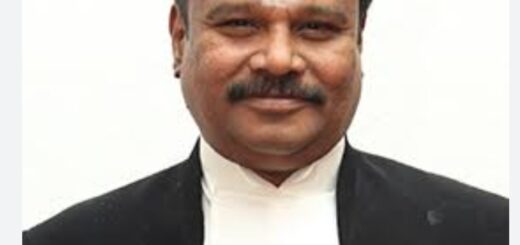
THE HON’BLE MR JUSTICE S. M. SUBRAMANIAM
AND
THE HON’BLE MR.JUSTICE N.SENTHILKUMAR
WA No. 49 of 2026,
WA No. 364 OF 2026 and WA No. 426 OF 2026
1. The Registrar,
The Tamil Nadu Dr. Ambedkar Law University,
Perungudi Campus,
Perungudi,
Chennai -600 113
2. The Dean,
School of Excellence in Law (SOEL) ,
The Tamil Nadu Dr. Ambedkar Law University,
Perungudi Campus,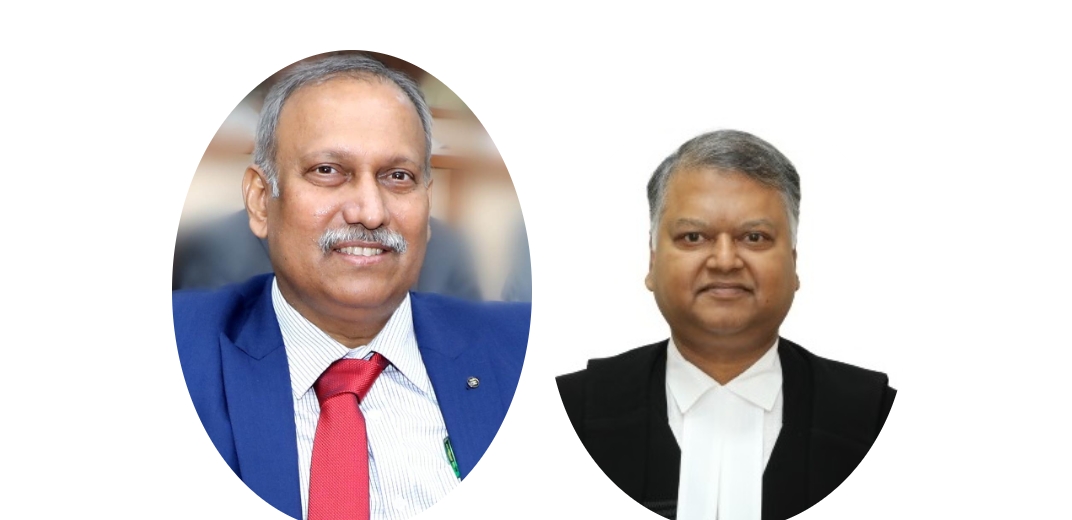
Perungudi,
Chennai -600 113.
..Appellant(s)
Vs
1. B.Vadhanan,
(Roll No. HD22152)
BCA., L.L.B (HONS) – IV Year,
S/o. Balaji,
School of Excellence in Law (SOEL)
The Tamil Nadu Dr. Ambedkar Law University,
Residing at No. 20/1, Karunanithi 3rd Street,
G-1 B Block, Sterling Promoters Kotturpuram,
Chennai -85.
2. The Bar Council of India,
Represented by its Secretary,
21, Rouse Avenue Institutional Area,
Near Bal Bhawan,
New Delhi – 110 002.
..Respondent(s)
WA No. 364 of 2026
1. The Dean
The Tamil Nadu Dr.Ambedkar Law University,
Perungudi Campus,
Perungudi,
Chennai-600 113.
2. Vice Chancellor Convenor Committee
The Tamil Nadu Dr.Ambedkar Law University,
Perungudi Campus,
Perungudi,
Chennai-600 113.
3. The Registrar
The Tamil Nadu Dr.Ambedkar Law University,
Perungudi Campus,
Perungudi,
Chennai-600 113.
4. The Director
The Tamil Nadu Dr.Ambedkar Law University,
Perungudi Campus,
Perungudi,
Chennai-600 113.
5. The Controller Of Examination
The Tamil Nadu Dr.Ambedkar Law University,
Perungudi Campus,
Perungudi,
Chennai-600 113.
..Appellant(s)
Vs
1. Shakthi Shyam R
2. The Bar Council of India
Represented by its Secretary,
21, Rouse Avenue Institutional Area,
Near Bal Bhawan,
New Delhi – 110 002
..Respondent(s)
WA No. 426 of 2026
1. The Registrar,
2. The Controller Of Examinations,
The Tamil Nadu Dr.Ambedkar Law University,
Poompozhil,
No.5, Dr.D.G.S.Dinakaran Salai,
Chennai-28.
..Appellant(s)
Vs
1. A.Miruthula Shre
2. The Principal
The Government Law College, Marudhamalai Road Aerodrome Post,
Near Baharathiyar University
Coimbatore-46
3. The Bar Council of India
Represented by its secretary,
No 21 Rouse Avenue Institutional Area,
Near Bal Bhawan,
New Delhi-02
4. The University Grants Commission
Represented by its Secretary,
Bahadur Shah Zafar Marg
New Delhi-02.
..Respondent(s)
WA No. 49 of 2026
Writ Appeal filed under Clause 15 of the Letters Patent issuing writ of certiorari mandamus to set-aside the final order dated 17.12.2025 passed by the Learned Judge of this Court in W.P.No.42641 of 2025 and thereby allow this writ appeal.
WA No. 364 of 2026
Writ Appeal filed under Clause 15 of the Letters Patent issuing writ of certiorari mandamus to set-aside the final order dated 17.12.2025 passed by the learned Judge of this Honble Court in W.P. No. 46137 of 2025 and thereby allow this writ appeal.
WA No. 426 of 2026
Writ Appeal filed under Clause 15 of the Letters Patent issuing writ of certiorari mandamus to set-aside the final order dated 17.12.2025 passed by the learned Judge of this Court in W.P. No. 43650 of 2025.
For Appellant(s): Mr.A.Thiyagarajan,
Senior Counsel for Mr.M.Nallathambi in all three writ appeals
For Respondent(s): Mr.P.M.Subramanian,
Senior Counsel for Mr.Manoj Sreevalsan for R1,
Mr.S.R.Raghunathan, Standing Counsel for Bar Counsel of India for R2 (in W.A.No.49 of 2026)
Mr.S.Bageerathan for R1
Mr.S.R.Raghunathan, Standing Counsel for Bar Counsel of India for R2 (in W.A.No.364 of 2026)
Mr.B.M.Subash for R1
Mr.S.R.Raghunathan, Standing Counsel for Bar Counsel of India for R3 (in W.A.No.426 of 2026)
Common Judgment
(Judgment of the Court was delivered by S.M.Subramaniam J.)
Under assail is the common order dated 17.12.2025 passed in W.P.Nos. 42641, 46137 and 43650 of 2025.
2. The present intra-court appeals have been instituted jointly by the Registrar, Tamil Nadu Dr.Ambedkar Law University and Dean, School of Excellence in Law (SOEL) under Clause 15 of the Letters patent. Appellants are the respondents in the writ petitions.
3. The common facts in all the writ appeals stem from an issue of attendance shortage of respondent students. The respondent students have insufficient attendance and have not fulfilled the mandatory minimum attendance percentage. Rule 12 of the Bar Council of India Rules mandates minimum attendance requirement, failing which the student concerned shall not be allowed to take the end semester test. Hence, writ petitions were filed by the respondent students with prayers, which include permission to take up their semester exams and reconsideration of decision to re-do the said academic year. The learned Single Judge through common order dated 17.12.2025 had partly allowed the writ petitions with the following directions:
“…
40. In view thereof, these Writ Petitions are partly allowed on the following terms:
(i) The Bar Council of India, as directed by the Hon’ble Division Bench of the Delhi High Court, shall undertake the exercise of re-evaluation/re-visit of Rules 10 and 12 of the Rules of Legal Education.
(ii) The Tamil Nadu Dr.Ambedkar Law University shall reconsider its present policy of directing students to redo the course, thereby mandating a one year gap for students, and explore alternative options as implemented by several other universities;
(iii) The respondents shall permit the petitioners/students to continue the Course to attend VIII semester and write the VIII semester examinations.
(iv) As far as the VII semester is concerned, since they have put in partial attendance of 46%, 41% and 37% respectively, they can be given an opportunity during the vacation after the VIII semester in May, 2026 and June, 2026 to put in balance mandatory attendance in the flexible forms and modes as discussed supra and their internal assessment shall be completed. Thereafter, they can write their end semester examinations of the VII semester as and when the semester examinations are scheduled along with the IX semester examinations so that the career progression is not affected. It is for the University to take a decision in respect of the two writ petitioners Vathanan and Mrithula Shre whether to mandate them to re-write the examination after the completion of the attendance and internal assessment or to publish the results of the examinations already written pursuant to the interim order of this Court.
(v) The compliance of the above directions need not result in additional burden on the lecturers. Depending on their willingness, if only anyone of them are available or by availing services of the teachers, alternatively, the above can be done.
(vi) There shall be no order as to costs. Consequently, connected miscellaneous petition is closed.”
4. It is pertinent to note that Rule 12 of the Bar Council of India Rules mandate compulsory 70% attendance and with sufficient cause, a further 5% can be condoned, bringing it down to 65%, but not any further. So the Rules are clear and any further relaxation would defeat the object of the Rule itself.
5. In Paragraph. No.31 of the learned Single Judges order, reference has been made to different teaching methods and the need to revisit Rules 10 and 12. This exercise can be undertaken by the expert bodies like Bar Council of India, since various other factors need to be considered including the financial, manpower and technological necessities involved in conducting such a systemic transformation. In the absence of such Rules today, only the present system can be followed. Thereby the Rules being clear, no further condonation can be made.
6. Equality under Article 14 of the Constitution of India is an important facet of our democracy. It is also essential to see that students, who attended classes regularly and secured the legally mandated attendance should not be made to feel that a differential treatment was accorded to a select few.
7. In a highly competitive educational landscape, it is only after extreme hard work put in by the students that they are able to secure a seat through merit in a college of their choice. Many students from financial and socially challenging backgrounds end up taking alternate courses, since they are unable to get the courses of their choice. So it is imperative that Students must realise the value of the seat secured by them. More so, studying law is a valuable educational stream and it directly connects the students with the legal and human rights prevalent in the society thereby affording an opportunity to be a voice for the voiceless. Legal education is not just for making money but traverses beyond that. It requires a commitment to the society and to the Constitution thereby requiring the presence of collective and diverse voices of the students in a classroom. It is from classroom debates and dynamic social discussions that legal ideas and novelty emanates. Classrooms provide a platform for the students to debate and engage in productive discussions thereby creating a future for a generation of energetic and vibrant legal professionals.
8. Online classes provide an avenue for learning when need arises, but it cannot be a substitute for physical mode of learning. There are certain advantages that stem from regularly attending classes. It goes beyond mere acquisition of knowledge. It instills values of self discipline, punctuality, active classroom engagements, positive social behaviours etc. So online classes cannot be substituted with physical classrooms. Also neither Chat GPT nor any other Al tool can ever be equated with a qualified lecturer. Artificial intelligence can come as closer to human intelligence but cannot teach the aspects of integrity and morality that are also ethical pillars of legal professions. Such lessons can only be learnt in a vibrant classroom.
9. In view of the discussions made above, common order dated 17.12.2025 passed in W.P.Nos. 42641, 46137 and 43650 of 2025 are set aside. Accordingly, the Writ Appeals are allowed. No costs. Consequently, the connected miscellaneous petitions, if any, are closed.
(S.M.S.,J.) (N.S.,J.)
17-06-2026
Index: Yes/No
Speaking/Non-speaking order
Neutral Citation: Yes/No
GD
To
1. The Principal
The Government Law College, Marudhamalai Road Aerodrome Post,
Near Baharathiyar University
Coimbatore-46
2. The Bar Council of India
Represented by its secretary,
No 21 Rouse Avenue Institutional Area,
Near Bal Bhawan,
New Delhi-02
3. The University Grants Commission
Represented by its Secretary,
Bahadur Shah Zafar Marg
New Delhi-02.
S.M.SUBRAMANIAM J.
AND
N.SENTHILKUMAR J.
GD
Pre-Delivery Judgment made in
WA No. 49 of 2026,
WA NO. 364 OF 2026 and WA NO. 426 OF 2026
17-06-2026