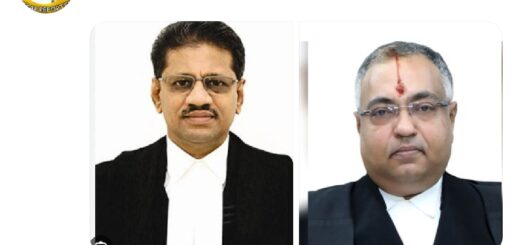
Justice J.B. Pardiwala and Justice K.V. Viswanathan observed, “…There is nothing to even remotely indicate that there was discovery of any fact at the instance of the appellants admissible under Section 27 of the Evidence Act. The information should directly and distinctly relate to the facts discovered. Where, therefore, a fact has already been discovered any information
[28/04, 11:08] sekarreporter1: “Justice J.B. Pardiwala and Justice K.V. Viswanathan observed, “…There is nothing to even remotely indicate that there was discovery of any fact at the instance of the appellants admissible under Section 27 of the Evidence Act. The information should directly and distinctly relate to the facts discovered. Where, therefore, a fact has already been discovered any information given in that behalf afterwards cannot be said to lead to the discovery of the fact. There cannot be a rediscovery. Where the information as to the fact said to have been discovered is already in the possession of the police, the information given over again does not actually lead to any discovery so that its discovery over again in consequence of the information given by the accused is rightly inadmissible under Section 27 of the Evidence Act”.”
https://www.verdictum.in/supreme-court/anand-jakkappa-pujari-gaddadar-v-the-state-of-karnataka-2026-insc-417-re-discovered-us-27-evidence-act-1612959#:~:text=Justice%20J.B.%20Pardiwala%20and,27%20of%20the%20Evidence%20Act%E2%80%9D.
[28/04, 11:08] Meta AI: *Supreme Court on “Re-Discovery” – Section 27 Evidence Act*
*Case*: _Anand Jakkappa Pujari Gaddadar v. State of Karnataka_, 2026 INSC 417
*Bench*: Justice J.B. Pardiwala & Justice K.V. Viswanathan
—
*1. Core Issue: Section 27 Indian Evidence Act*
*Section 27*: Allows admissibility of information from accused in custody _only if_ it leads to discovery of a new fact.
*Police Claim*: Accused’s statement led to “discovery” of incriminating material.
—
*2. SC’s Ruling – “No Re-Discovery”*
*Key Observations by Justice J.B. Pardiwala*:
1. *No New Discovery*: _“There is nothing to even remotely indicate that there was discovery of any fact at the instance of the appellants admissible under Section 27.”_
2. *Must Be Direct Link*: Information must _“directly and distinctly relate to the facts discovered.”_
3. *Can’t Re-Discover Known Facts*: _“Where a fact has already been discovered, any information given afterwards cannot be said to lead to discovery. There cannot be a rediscovery.”_
4. *Police Already Knew*: _“Where information as to the fact is already in possession of police, information given over again does not lead to discovery.”_ Such re-discovery is _“rightly inadmissible under Section 27.”_
—
*3. Legal Principle Laid Down*
**Condition for Sec 27** **Explanation**
**1. Fact must be unknown** Police should not know the fact beforehand
**2. Accused’s info leads to it** Info must be the cause of discovery
**3. Direct connection** Info must distinctly relate to fact found
**4. No re-discovery** Can’t use Sec 27 if police already had the info/fact
*Classic Example*: If police already know where body is buried, accused saying _“I buried it there”_ isn’t admissible u/s 27. Only if his statement _actually leads_ police to the body, it’s admissible.
—
*4. Impact on This Case*
*Result*: Recovery evidence based on accused’s statement was held inadmissible.
*Reason*: Fact was already known to police or discovered earlier. So statement didn’t “lead to discovery”.
—
*Bottom Line*: Sec 27 is not a tool to launder custodial statements. If police already know the fact, accused’s confession about it can’t be used. _“No re-discovery”_ is now strongly reiterated by SC.
This tightens misuse of Sec 27 where police show recoveries after accused is in custody, even though they knew location earlier.
Want me to explain Sec 27 with simpler examples?
![[6/7, 13:19] Meera Bar Bench: https://www.barandbench.com/news/only-press-can-show-mirror-to-emperor-justice-rajiv-shakdher-on-free-speech [6/7, 13:21] Sekarreporter 1: 🍁](https://www.sekarreporter.com/wp-content/themes/hueman/assets/front/img/thumb-medium-empty.png)