22.As the registration has been done properly as per the Statute, Section 26-E of SARFAESI Act will come into play. The secured creditor, viz., the petitioner Bank, shall be paid in priority over all other debts. In such view of the matter, the impugned communications sent by the Investigating Agency under BUDS Act, have no force and are liable to be quashed. 23.Accordingly, this writ petition is allowed and the impugned communications of the 3rd respondent are quashed. No costs. Consequently, connected miscellaneous petitions are closed. 02.09.2025 mkn Internet : Yes Index : Yes / No Speaking order : Yes / No Neutral Citation : Yes / No To 1.The Secretary, State of Tamil Nadu, Home, Excise and Prohibition, Fort St. George, Chennai. 2.The Superintendent of Police, Nagapattinam District, Nagapattinam. 3.The Deputy Superintendent of Police, Economic Offences Wing, Nagapattinam. 4.The Inspector of Police, District Crime Branch, Nagapattinam. 5.The Public Prosecutor, High Court, Madras. N. SATHISH KUMAR, J. mkn W.P.No.20431 of 2024 02.09.2025
IN THE HIGH COURT OF JUDICATURE AT MADRAS DATED : 02.09.2025
CORAM :
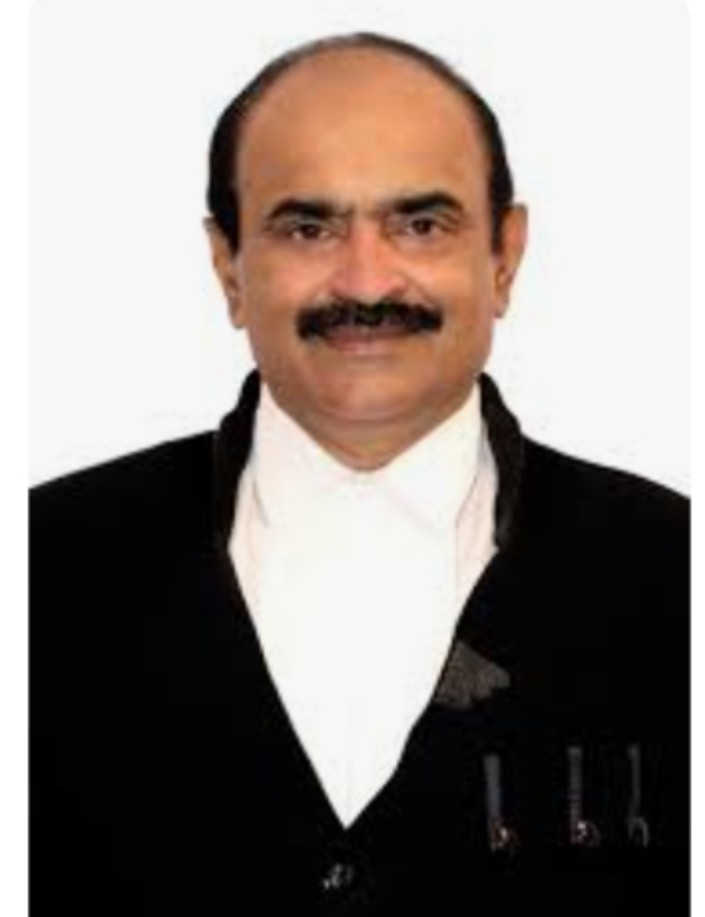
THE HONOURABLE MR. JUSTICE N. SATHISH KUMAR
W. P.No.20431 of 2024and
W.M.P.Nos.22374 & 22377 of 2024
City Union Bank Limited,
Represented by its Authorised Signatory,
Mr.R.M.Renganath,
Having its Branch Office at
39, Neela, South Street,
Nagapattinam. … Petitioner
Vs.
1.The State of Tamil Nadu,
Represented by its Secretary,
Home, Excise and Prohibition, Fort St. George, Chennai.
2.The Superintendent of Police, Nagapattinam District, Nagapattinam.
3.The Deputy Superintendent of Police, Economic Offences Wing, Nagapattinam.
4.The Inspector of Police, District Crime Branch, Nagapattinam.
5.R.K.Ravi … Respondents
Prayer : Writ Petition filed under Article 226 of the Constitution of India for issuance of a Writ of Certiorari to call for the records in letter dated
24.07.2023 on the file of the 3rd respondent and consequential letter dated 24.06.2024 on the file of the 3rd respondent and quash the same as wholly illegal and without jurisdiction.
For Petitioner : Mr.Sharath Chandran
For R1 to R4 : Mr.K.M.D.Muhilan,
Additional Public Prosecutor
O R D E R
This writ petition has been filed to quash the letter of the 3rd respondent dated 24.07.2023 requesting the petitioner Bank not to auction the jewels of the 5th respondent till attachment is made under TNPID Act and the consequential letter of the 3rd respondent dated 24.06.2024, calling upon the petitioner to produce the key of the immovable properties belonging to the 5th respondent for carrying out inspection by the authorities pursuant to the criminal proceedings initiated against the 5th respondent under the Banning of Unregulated Deposit Schemes Act, 2019 (“BUDS Act” for brevity).
2.The case of the petitioner is that the 5th respondent availed credit facilities to the tune of Rs.13 Crores from the petitioner Bank. As a security for the facilities extended, four immovable properties of the 5th respondent were mortgaged with the Bank and security interests have been created in respect of the immovable properties. As the 5th respondent defaulted in payment of dues, the petitioner, by following the procedure under Securitisation and Reconstruction of Financial Assets and Enforcement of Security Interest Act, 2002 (“SARFAESI Act” for brevity), brought the security interests for auction and physical possession of the properties was also taken by the Bank on 19.03.2024 and 17.04.2024. However, the respondents 1 to 4 are attempting to proceed against the secured assets under the provisions of the BUDS Act on the strength of an FIR registered against the 5th respondent in Crime No.3 of 2023 for the offences under Sections 406, 420, 120-B IPC, Sections 21(1), 21(2), 21(3), 23, 25 of BUDS Act and Section 4 of TNPID Act. In pursuance thereof, the 3rd respondent has issued a letter to the petitioner Bank, dated 24.07.2023, requesting the petitioner Bank not to proceed with the auction of the jewels of the 5th respondent, since the process of attachment of movable and immovable properties of the 5th respondent is under process by the Investigating Agency. Further, the 3rd respondent has also sent another communication to the petitioner Bank on 24.06.2024, calling upon the petitioner to hand over the keys of the four immovable properties of the 5th respondent, which are the secured assets with the petitioner Bank, for carrying out inspection by the concerned authorities as a part of investigation under BUDS Act. It is the contention of the petitioner that the petitioner has a priority to be paid over all other debts and any attachment made in respect of the secured assets will be subject to the rights already created in favour of the secured creditor under the SARFAESI Act. Hence, the petitioner seeks to quash the letters issued in this regard by the Investigating Agency.
3.Learned counsel for the petitioner would submit that, as the security interest has already been created in favour of the petitioner pursuant to the mortgage created in favour of the petitioner, as per Section 26-E of the SARFAESI Act, the petitioner Bank has priority right than Sections 12 and
13 of the BUDS Act. It is his contention that, though the amount due to the depositors from the deposit takers shall be paid in priority over all other debts and all revenues, the same is subject to the exception of the SARFAESI Act. Therefore, he would submit that, once a security interest is created and registered with the Central Registry of Securitisation Asset Reconstruction and Security Interest of India (“CERSAI” for brevity), the secured creditor has priority right over all other claims. According to him, the security interests in favour of the Bank have already been registered with CERSAI. Therefore, he would submit that the orders of the 3rd respondent/Investigating Agency directing the petitioner Bank not to proceed further under SARFAESI Act, have to be set aside.
4.Whereas, the learned Additional Public Prosecutor appearing for the respondents 1 to 4, would submit that, merely because security interest has been created in favour of the Bank and registered with CERSAI, that itself is not sufficient to contend that the Investigating Agency cannot proceed further under the BUDS Act over the movable and immovable properties of the accused. According to him, the secured creditor cannot exercise its priority under Section 26-E of the SARFAESI Act and proceed to enforce the security interest under Chapter-III of the Act, unless the secured interest created in their favour by the borrower has been registered with the Central Registry namely CERSAI. Hence, it is his contention that, as long as the secured interest is not registered with the CERSAI under SARFAESI Act, one cannot contend that Section 26-E under SARFAESI Act will prevail
over.
5.I have perused the entire materials on record.
6.The writ petition challenges two communications sent by the Investigating Agency, dated 24.07.2023 and 24.06.2024, directing the petitioner Bank/secured creditor not to take any further action under SARFAESI Act in respect of the secured assets of the 5th respondent. The communications have been issued on the strength of the investigation conducted in a criminal case registered against the 5th respondent under BUDS Act.
7.For the sake of convenience, Sections 12 and 13 of the BUDS Act are extracted hereunder :
“12. Priority of depositors’ claim. — Save as otherwise provided in the Securitisation and Reconstruction of Financial Assets and Enforcement of Security Interest Act, 2002 (54 of 2002) or the Insolvency and Bankruptcy Code, 2016 (31 of 2016), any amount due to depositors from a deposit taker shall be paid in priority over all other debts and all revenues, taxes, cesses and other rates payable to the appropriate Government or the local authority.
13.Precedence of attachment. — (1) Save as otherwise provided in the Securitisation and Reconstruction of Financial Assets and Enforcement of Security Interest Act, 2002 (54 of 2002) or the Insolvency and Bankruptcy Code, 2016 (31 of
2016), an order of provisional attachment passed by the Competent Authority, shall have precedence and priority, to the extent of the claims of the depositors, over any other attachment by any authority competent to attach property for repayment of any debts, revenues, taxes, cesses and other rates payable to the appropriate Government or the local authority.
(2) Where an order of provisional attachment has been passed by the Competent Authority—
(a) such attachment shall continue until an order
is passed under sub-section (3) or sub-section (5) of section 15 by the Designated Court;
(b) all the attached money or property of the
deposit taker and the persons mentioned therein shall vest in the Competent Authority and shall remain so vested till further order of the Designated Court.
(3) The Competent Authority shall open an account in a scheduled bank for the purpose of crediting and dealing with the money realised under this Act, which shall not be utilised except under the instructions of the Designated Court.
(4) The Competent Authority shall not dispose of or alienate the property or money attached, except in accordance with the order of the Designated Court under sub-section (3) or sub-section (5) of section 15.
(5) Notwithstanding anything contained in sub-section (4), the Competent Authority may, if it thinks it expedient, order the immediate sale of perishable items or assets, and the proceeds of the sale shall be utilised in the same manner as provided for other property.”
8.On a careful perusal of the above two provisions, it is clear that any amount due to depositors from a deposit taker shall be paid in priority over all other debts, however, with an exception that the said right should be exercised “save as otherwise provided in the SARFAESI Act”. Therefore, the priority of a deposit claim is always subject to the rights already created under SARFAESI Act.
9.In the light of the above provisions of the BUDS Act, the provisions under SARFAESI, when carefully perused, the “security interest” is defined as under Section 2(1)(zf) of SARFAESI Act as follows :
2. (1) .. (zf) “security interest” means right, title or interest of any kind, other than those specified in section 31, upon property created in favour of any secured creditor and includes-
(i) any mortgage, charge, hypothecation, assignment or any right, title or interest of any kind, on tangible asset, retained by the secured creditor as an owner of the property, given on hire or financial lease or conditional sale or under any other contract which secures the obligation to pay any unpaid portion of the purchase price of the asset or an obligation incurred or credit provided to enable the borrower to acquire the tangible asset; or
(ii) such right, title or interest in any intangible asset or assignment or licence of such intangible asset which secures the obligation to pay any unpaid portion of the purchase price of the intangible asset or the obligation incurred or any credit provided to enable the borrower to acquire the intangible asset or licence of intangible asset;”
10.Section 2(1)(g) of SARFAESI Act defines “Central Registry” as the Registry set up or caused to be set up under Sub-Section (1) of Section 20 of SARFAESI Act.
11.Sub-Section (1) of Section 20 of SARFAESI Act reads as follows :
“20.Central Registry.—(1) The Central Government may, by notification, set up or cause to be set up from such date as it may specify in such notification, a registry to be known as the Central Registry with its own seal for the purposes of registration of transaction of securitisation and reconstruction of financial assets and creation of security interest under this
Act.”
12.Section 20-A of the SARFAESI Act deals with integration of registration systems with the Central Registry. Section 21 deals with the Central Registrar.
13.Section 23 of the SARFAESI Act reads as follows :
“23.Filing of transactions of securitisation, reconstruction and creation of security interest — [(1)] The particulars of every transaction of securitisation, asset reconstruction or creation of security interest shall be filed, with the Central Registrar in the manner and on payment of such fee as may be prescribed.
[Provided that the Central Government may, by notification, require registration of all transactions of securitisation, or asset reconstruction or creation of security interest which are subsisting on or before the date of establishment of the Central Registry under sub-section (7) of section 20 within such period and on payment of such fees as may be prescribed.]
(2) The Central Government may, by notification, require the registration of transaction relating to different types of security interest created on different kinds of property with the Central Registry.
(3) The Central Government may, by rules, prescribe forms for registration for different types of security interest under this section and fee to be charged for such registration.”
Sub-Clause (1) of Section 23 makes it clear that the particulars of every transaction of securitisation, asset reconstruction or creation of security interest shall be filed with the Central Registrar in the manner and on payment of such fee as may be prescribed.
14.Section 26-B of the SARFAESI Act deals with registration by secured creditors and other creditors, which reads as follows :
“26-B.Registration by secured creditors and other creditors.—(1) The Central Government may by notification, extend the provisions of Chapter IV relating to Central Registry to all creditors other than secured creditors as defined in clause (zd) of sub-section (1) of section 2, for creation, modification or satisfaction of any security interest over any property of the borrower for the purpose of securing due repayment of any financial assistance granted by such creditor to the borrower.”
15.Section 26-D of the SARFAESI Act deals with right of
enforcement of securities, which reads as follows :
“26-D.Right of enforcement of securities.—
Notwithstanding anything contained in any other law for the time being in force, from the date of commencement of the provisions of this Chapter, no secured creditor shall be entitled to exercise the rights of enforcement of securities under Chapter III unless the security interest created in its favour by the borrower has been registered with the Central Registry.” The above provision makes it clear that, unless security interest created in favour of the creditor is registered with the Central Registry, there is a bar for the secured creditor to exercise his right to enforce the securities under Chapter-III of the Act.
16.Chapter-III of the SARFAESI Act deals with enforcement of security interest. Section 13 deals with enforcement of security interest without the intervention of the Court or Tribunal by secured creditor. Section 14 of the Act deals with the manner in which the possession of the secured asset has to be taken with the aid of the orders of the Chief Judicial Magistrate or the District Magistrate. Section 15 deals with the manner and effect of take over of management. The above provisions make it clear that the secured creditor is given a right to enforce the security interest without the intervention of the Court.
17.Section 26-E of the SARFAESI Act deals with priority to secured creditors, which reads as follows :
“26E.Priority to secured creditors—Notwithstanding anything contained in any other law for the time being in force, after the registration of security interest, the debts due to any secured creditor shall be paid in priority over all other debts and all revenues, taxes, cesses and other rates payable to the Central Government or State Government or local authority.
Explanation.—For the purposes of this section, it is
hereby clarified that on or after the commencement of the Insolvency and Bankruptcy Code, 2016 (31 of 2016), in cases where insolvency or bankruptcy proceedings are pending in respect of secured assets of the borrower, priority to secured creditors in payment of debt shall be subject to the provisions of that Code.”
18.Therefore, in view of the provisions, particularly Section 26-D and Section 26-E of SARFAESI Act, in order to enforce such rights provided under Chapter-III, security interest created must have been registered with the Central Registry. Therefore, only after such registration, the secured creditor shall be paid in priority over all other debts and all revenues, taxes and cesses and other rates payable by the Central Government as per Section 26-E of the Act. Further, it is relevant to note that the amendment inserting these Sections 26-D and 26-E into SARFAESI Act, 2002, will apply prospectively from the date of notification. Whereas, Sections 12 and 13 of the BUDS Act would make it clear that, save as otherwise provided under the SARFAESI Act, the amount due to the depositors from the deposit taker shall be paid in priority over all other debts. A combined reading of Sections 12 and 13 of the BUDS Act clearly indicates that the right under the BUDS Act will be subject to the right already created under the SARFAESI Act, provided the security interest created under the SARFAESI
Act is registered with the Central Registry as per Section 26-D of the SARFAESI Act.
19.In fact, before passing of The Banning of Unregulated Deposits
Scheme Bill, 2018, the Standing Committee of Finance, in its Seventieth Report, has recommended to the Government that the sentence “save as otherwise provided in the SARFAESI Act 2002 or the Insolvency and Bank Code (IBC) 2016, any amount due to depositors from a deposit taker shall be paid in priority over all other debts and all revenues, taxes, cesses and other rates payable” and the other provisions under Chapter-V of the Bill, may be deleted. Despite such recommendation made by the Committee, the Parliament did not accept it and the provision for making the SARFAESI
Act and IBC claim as a priority over other debts, has been retained under
Sections 12 and 13 of the BUDS Act. In this regard, the Full Bench of the Bombay High Court in Jalgaon Janta Sahakari Bank Ltd. and another v.
Joint Commissioner of Sales Tax and another reported in (2022) SCC Online Bom 1767, has held that the dues of a secured creditor (subject of course to CERSAI registration) and subject to proceedings under the I & B Code would rank superior to the dues of the relevant department of the State Government.
20.Therefore, a combined reading of the provisions stated supra and the judgment of the Full Bench of Bombay High Court makes it clear that, once a secured interest is created under SARFAESI Act and registered with the Central Registry, namely CERSAI, as required under law and as per Section 26-D of the SARFAESI Act, the secured creditor has a priority superior over all other dues.
21.Admittedly, in this case, it is brought to the notice of this Court that the secured interests in favour of the petitioner Bank in respect of four properties have already been registered with the Central Registry, namely CERSAI. The details of such registration in CERSAI Portal are as follows :
Sl.
No. Asset Details Security Interest Creation in Bank Security Interest
Registration
Timestamp in
CERSAI Portal
1 Immovable Asset S.No.2039 (17503 sq.ft.), Nethaji Road, Nagapattinam 16.04.2003 10.11.2014
2 Immovable Asset
S.No.1660 (692 sq.m.), Neela South Street, Nagapattinam 15.06.2016 05.07.2016
3 Immovable Asset 14.03.2019 11.04.2019
S.No.1323 (543.11 sq.m.), Nagapattinam
4 Immovable Asset
S.No.1322 (13512 sq.ft.), 13, Nagapattinam 21.03.2019 11.04.2019
22.As the registration has been done properly as per the Statute, Section 26-E of SARFAESI Act will come into play. The secured creditor, viz., the petitioner Bank, shall be paid in priority over all other debts. In such view of the matter, the impugned communications sent by the Investigating Agency under BUDS Act, have no force and are liable to be quashed.
23.Accordingly, this writ petition is allowed and the impugned communications of the 3rd respondent are quashed. No costs. Consequently, connected miscellaneous petitions are closed.
02.09.2025
mkn
Internet : Yes
Index : Yes / No
Speaking order : Yes / No
Neutral Citation : Yes / No
To
1.The Secretary,
State of Tamil Nadu,
Home, Excise and Prohibition, Fort St. George, Chennai.
2.The Superintendent of Police, Nagapattinam District, Nagapattinam.
3.The Deputy Superintendent of Police, Economic Offences Wing, Nagapattinam.
4.The Inspector of Police, District Crime Branch, Nagapattinam.
5.The Public Prosecutor, High Court, Madras.
N. SATHISH KUMAR, J. mkn
W.P.No.20431 of 2024
02.09.2025