The Second Appeals stand Partly Allowed. The defendants 2 and 3 are entitled to 1/12 share each in the suit property. The plaintiff and the 4th defendant are/HONOURABLE MR.JUSTICE S.SOUNTHAR S.A.Nos.601, 612 and 614 of 2023 and C.M.P.Nos.19260, 19344 and 19365 of 2023 Lakshmana Gounder (Since Deceased) 1.Sengottaiyan 2.Krishnan 3.Mani … Appellants
IN THE HIGH COURT OF JUDICATURE AT MADRAS
DATED : 18.06.2026
CORAM
THE HONOURABLE MR.JUSTICE S.SOUNTHAR
S.A.Nos.601, 612 and 614 of 2023 and
C.M.P.Nos.19260, 19344 and 19365 of 2023
Lakshmana Gounder (Since Deceased)
1.Sengottaiyan
2.Krishnan
3.Mani … Appellants 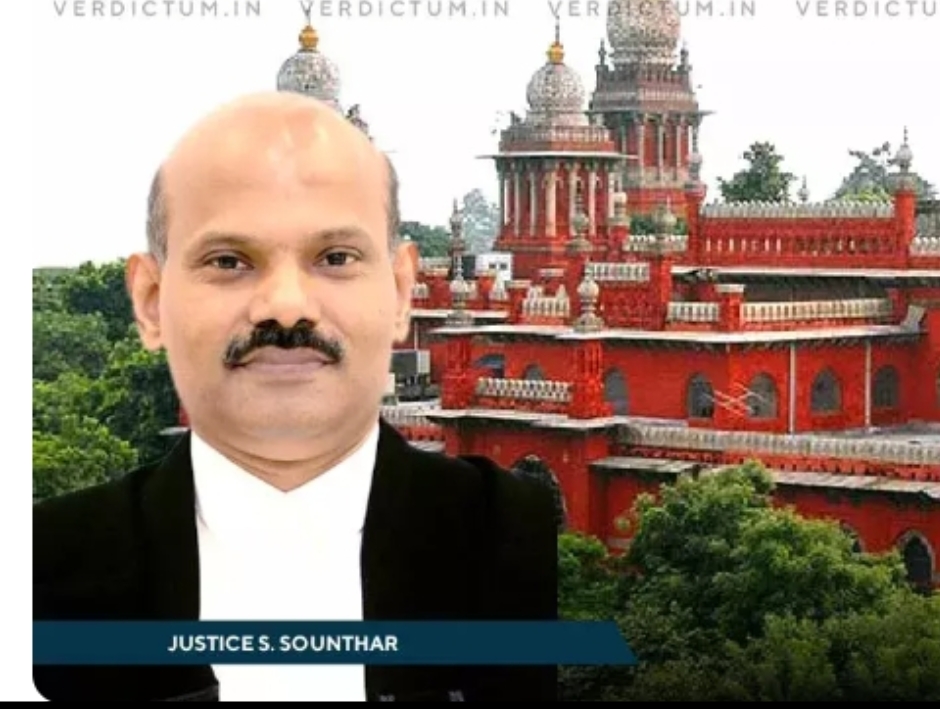 (in all SAs)
vs.
1.Selvi
2.Vijaya … Respondents (in all SAs)
COMMON PRAYER: Second Appeals are filed under Section 100 of the Code of Civil Procedure, to set aside the judgment and decree dated 16.11.2017 in A.S.Nos.35, 84 and 36 of 2012 on the file of I Additional District and Sessions Court, Salem modifying erroneous judgment and decree dated 15.12.2010 in O.S.No.34 of 2001 on the file of the Subordinate Court, Attur.
For Appellants : Mr.D.Shivakumaran
(in all SAs)
For R1 : Ms.D.Sathya
for M/s.Zeenath Begum
(in all SAs)
For R2 : Mr.R.P.Ruban Chakravarthy
for M/s.S.Kaithamalai Kumaran
(in all SAs)
C O M M O N J U D G M E N T
The defendants 2 and 3 and another legal representative of the deceased 1st defendant are the appellants. The 1st respondent/plaintiff filed a suit seeking her 1/3rd share in the suit properties. The Trial Court granted decree for 1/4th share in the suit ‘A’ and ‘B’ schedule properties. Challenging the said judgment and decree, the plaintiff, defendants 1 to 3 and 4th defendant filed separate appeals. All these three appeals were heard together. Pending first appeal, the 1st defendant-Lakshmana Gounder died and hence, the 4th appellant herein has been impleaded as one of his legal representative. The First Appellate Court partly allowed the appeals filed by the plaintiff and 4th defendant and dismissed the appeal filed by the defendants 1 to 3. The First Appellate Court modified the decree by granting 1/3rd share in favour of the plaintiff and 1/3rd share in favour of the 4th defendant. Aggrieved by the same, the defendants 2 and 3 and yet another legal representative of the deceased 1st defendant have come before this Court by way of filing these second appeals.
2. According to the 1st respondent/plaintiff, the 1st defendant in the suit is her father. The 4th defendant is her sister. It is admitted fact that the plaintiff and 4th defendant were born to 1st defendant through his divorced first wife-Valliammal. The defendants 2 and 3 were born to 1st defendant through the 4th appellant-Mani. It is the specific case of the plaintiff that the
suit properties are joint family properties and as such, the plaintiff, 1st defendant and 4th defendant are entitled to 1/3rd share each. It is also stated by the plaintiff that the marriage between her mother-Valliammal and 1st defendant got dissolved by a decree of divorce passed by the Subordinate Court, Salem on 31.03.1978 in H.M.O.P.No.250 of 1997. The marriage between the 1st defendant and 4th appellant-Mani was not lawful as it was
performed during the subsistence of legally performed marriage between 1st defendant with Valliammal. Therefore, according to the plaintiff, the defendants 2 and 3, who were born to the 1st defendant and Mani are not children born out of lawful marriage. Therefore, they should be treated as illegitimate sons of the 1st defendant. It is further stated that since the defendants 2 and 3 are illegitimate children, they are not entitled to any share in the joint family properties. On these pleadings, the plaintiff laid a suit seeking 1/3rd share in the suit properties.
3. The 1st defendant filed a written statement and denied the
averments contained in the plaint, as if, the suit properties are joint family properties. According to the 1st defendant, the Suit ‘A’ Schedule Properties are his exclusive properties. He further pleaded that the said properties were assigned in his favour by the Government. Therefore, the same shall be treated as his self-acquired properties. He further stated that he was rearing
cattle and vending milk and out of the funds generated from the said business, he purchased Item-1 of the Suit ‘B’ Schedule Properties. It was also pleaded that agricultural lands in suit ‘A’ schedule properties were vacant lands and the 1st defendant has not received any income. The 1st defendant also pleaded that the defendants 2 and 3 were born through his wife-Mani. On these pleadings, he sought for dismissal of the suit.
4. The defendants 2 and 3 filed written statement supporting thestand taken by the 1st defendant. It was also stated that they were legitimate children of 1st defendant and in case of partition, they have got equal share
in the suit properties.
5. The 4th defendant-Vijaya also filed written statement claiming that
the suit properties are ancestral properties and sought for decree for 1/3rd
share in the suit properties.
6. Before the Trial Court, the plaintiff was examined as PW.1 and on her behalf, four other witnesses were examined as PW.2 to PW.5 and 11 documents were marked as Exs.A1 to A11. The 1st defendant was examined as DW.1 and two other witnesses were examined on his behalf as DW.2 and DW.3. The defendants 3 and 4 were examined as DW.4 and DW.5. On
behalf of the defendants, 7 documents were marked as Exs.B1 to B7. Apart
from these documents, one another exhibit was marked as Ex.X1.
7. The Trial Court on appreciation of oral and documentary evidence available on record, came to the conclusion that the suit properties were ancestral properties. The Trial Court also found that the 3rd defendant was legitimate son of 1st defendant through 4th appellant-Mani and hence, held the plaintiff, 1st defendant, defendants 3 and 4 were entitled to 1/4th share each. Aggrieved by the same, the plaintiff filed first appeal in A.S.No.35 of 2012, the 4th defendant filed first appeal in A.S.No.36 of 2012 and the defendants 1 to 3 filed first appeal in A.S.No.84 of 2012 on the file of the I Additional District and Sessions Court, Salem. All these appeals were heard together and ultimately, the appeals filed by the plaintiff and 4th defendant
were partly allowed by modifying the decree for partition granting 1/3rd share each in favour of the plaintiff and 4th defendant. The appeal filed by the appellants were dismissed. Aggrieved by the same, the appellants have
come before this Court.
8. The learned counsel appearing for the appellants would submit that the suit properties were assigned to the 1st defendant by the Government, therefore, it shall be treated as his separate properties and the finding of the Courts below that the suit properties were treated as joint family properties was erroneous one. He further submitted that DW.5 in her evidence admitted that the 1st defendant married Mani subsequent to the divorce with her first wife and hence, the marriage with Mani is a valid one and the defendants 2 and 3 shall be treated as legitimate children. The learned counsel further submitted that in such case the plaintiff is entitled to only 1/5th share along with defendants 2 to 4 and the above said Mani. The learned counsel further submitted that even assuming the suit properties are ancestral properties, on death of 1st defendant pending first appeal, the defendants 2 and 3, even assuming illegitimate children of 1st defendant, are entitled to equal share along with plaintiff and 4th defendant in the 1/3rd share of 1st defendant.
9. In the light of the submission made by the learned counsel
appearing for the appellants, with regard to the subsequent event, ie., death of first defendant pending the first appeal, the following substantial question
of law arising for consideration in this Second Appeal:
(a) Whether the defendants 2 and 3, even assuming the illegitimate children of first defendant, are not entitled to equal share along with legitimate children for first defendant in the 1/3 share of the first defendant in the ancestral
properties;
10. The learned counsel appearing for the respondents are heard on the said question of law.
11. The learned counsel appearing for the respondents would
vehemently contend that the first appellate Court on proper appreciation of evidence available on record came to the conclusion that the defendants 2 and 3 are illegitimate children of first defendant and hence, they cannot claim any share in the suit properties, which are found to be ancestral
properties.
12. Ex.A1 is a Partition Deed between the 1st defendant, his father, mother and brother, dated 16.04.1986. Based on Ex.A1, the Courts below came to the conclusion that the suit properties which were assigned to the 1st defendant and other family properties were partitioned under Ex.A1 and the suit properties have been allotted to the share of 1st defendant. The 1st defendant, who was examined as DW.1 clearly admitted that the Suit ‘A’ Schedule properties were assigned in favour of his father by the Government and the assigned properties were allotted to his share in Ex.A1-Partition Deed. Therefore, it is clear that the Suit ‘A’ Schedule properties, which were assigned in favour of the 1st defendant’s father was blended with other joint family properties. The other joint family properties and the assigned properties, which were treated as joint family properties were partitioned and in the said partition, the assigned properties were allotted to the share of 1st defendant. Therefore, Ex.A1 and the admission of DW.1 are sufficient to come to a conclusion that the assigned properties were blended with the joint family properties and it acquired the character of joint family properties. The finding of the Courts below that the suit properties were joint family properties was based on proper appreciation of Ex.A1 and
admission of DW.1 and the same requires no interference from this Court.
13. It is vehemently contended by the learned counsel appearing for the appellants that the defendants 2 and 3 are legitimate children of 1st defendant and the finding of the First Appellate Court as if, they were
illegitimate children is contrary to the evidence available on record.
14. A close scrutiny of the pleadings of the parties would establish that the plaintiff, in his pleadings categorically stated that the 1st defendant’s
marriage with Mani was not lawful and the same had happened during the continuance of his marriage with Valliammal. The said plea raised by the plaintiff has not been denied specifically by the 1st defendant in his written statement. Though the 1st defendant in his written statement made an evasive plea that the defendants 2 and 3 were born to him through Mani, he had not stated that his marriage with Mani had happened subsequent to the divorce with Valliammal. In the absence of specific plea in the written statement denying the plea raised by the plaintiff that the 1st defendant married one Mani during continuance of his marriage with Valliammal. The
same shall be taken as an admission.
15. The 1st defendant is the best person to lead evidence with regard to the date of marriage with 4th appellant-Mani and with regard to the legitimacy of defendants 2 and 3. The plaintiff has taken a stand that the marriage of 1st defendant with Mani had taken place during continuance of his marriage with Valliammal. However, the defendants have not produced any evidence available on record to establish the marriage of 1st defendant with Mani was solemnised after decree for divorce and hence, it was a valid one. In the absence of any evidence available on record to suggest that the marriage of 1st defendant with Mani is valid, the defendants 2 and 3 can only be treated as illegitimate children of 1st defendant through the above said
Mani.
16. Once we come to the conclusion that the defendants 2 and 3 areillegitimate sons, they are not entitled to equal share in the joint family properties along with plaintiff and 4th defendant. The said conclusion reached by the First Appellate Court is based on proper appreciation of facts and the same is in accordance with law. The First Appellate Court is justified in modifying the Trial Court’s judgment by granting partition decree for 1/3rd share in favour of plaintiff in the suit properties.
17. However, the Trial Court committed an error in not taking into consideration the subsequent event namely death of 1st defendant pending first appeal. It is settled law, a partition suit is deemed to be pending till actual partition by meats and bounds under final decree. It is also settled law that any number of preliminary decree can be passed in a partition suit by taking into consideration the subsequent events like birth and death of sharers and change in law etc. In the case on hand, we already came to the conclusion that the suit properties are ancestral properties and therefore, the plaintiff, first defendant and fourth defendant are entitled to 1/3 share each
in the suit properties. However, the first defendant died pending
the first appeal. Therefore, the said subsequent event shall be taken into consideration and preliminary decree passed by the Courts below needs to be modified by distributing the share of the first defendant among the
surviving heirs.
18. As per the law settled by the Hon’ble Apex Court in
Revanasiddappa & Another Vs. Mallikarjun & Others reported in 2023 SCC OnLine SC 1087, even the illegitimate children are entitled to equal
share in the separate properties of father. On the date of death of 1st defendant-Lakshmana Gounder, there was a notional partition in his favour. Therefore, in the 1/3rd share of 1st defendant-Lakshmana Gounder, the
plaintiff, 4th defendant and defendants 2 and 3 are entitled to equal share. In such case, the First Appellate Court’s decree granting 1/3rd share in favour of plaintiff shall be modified by enhancing her share to 5/12 [4/12 + 1/12]. The defendants 2 and 3 are entitled to 1/12 share each. The 4th defendant is
entitled to 5/12 [4/12 + 1/12] share.
19. In the light of the above discussion, the appellants 1 and 2 viz., the defendants 2 and 3 are entitled to 1/12 share in the suit property and accordingly, the second Appeal stands partly allowed. In view of the
distribution of the share of the first defendant in the notional partition to the surviving legal heirs, the share already allotted to the plaintiff and 4th defendant gets enhanced by 5/12 share. It is also settled law that even though the respondents have not filed an appeal, in appropriate cases, where the appellate Court finds, in view of the conclusion reached by it, the unchallenged portion of the decree becomes incompatible with the modified portion of the decree, can very well invoke its power under Order 41 Rule 33 of C.P.C. and modify the unchallenged portion of the decree. Once we come to the conclusion that the defendants 2 and 3 are entitled to 1/12 share of the suit property by virtue of distribution of deceased first defendant’s share in the suit property among the surviving legal heirs, the other legal heirs viz., plaintiff and 4th defendant are also entitled to 1/12 share each in addition to what was already allotted by the first appellate Court. Therefore, this Court by virtue of its power under Order 44 Rule 33 of C.P.C., enhances the share allotted to the plaintiff and 4th defendant as 5/12 share each in the
suit properties.
20. In Nutshell:-
(i) The Second Appeals stand Partly Allowed. The defendants 2 and 3 are entitled to 1/12 share each in the suit property. The plaintiff and the 4th defendant are entitled to 5/12 share each in the suit property. The judgment and decree passed by the first appellant are
modified accordingly.
(ii) Consequently, the connected civil miscellaneous petitions
are closed.
(iii) In the facts and circumstances of the case, there will be no
order as to costs.
18.06.2026
Index : Yes
Speaking order : Yes Neutral Citation : Yes
dm
To
1.The I Additional District and Sessions Court, Salem.
2.The Subordinate Court, Attur. S.SOUNTHAR, J. dm
S.A.Nos.601, 612 and 614 of 2023
18.06.2026