THE HONOURABLE MRS.JUSTICE L.VICTORIA GOWRI Crl.O.P.(MD).Nos.1514, 1617, 1623, 1624, and 4711 of 2026 and Crl.M.P.(MD)Nos.1656, 1658, 1761, 1762, 1774 to 1777 of 2026 Crl.O.P(MD) No.1514 of 2026 S. Rajmohan … Petitioner Vs. The Judicial Magistrate No.V, Madurai. …. Respondent Prayer : Criminal Original Petition is filed under Section
BEFORE THE MADURAI BENCH OF MADRAS HIGH COURT
RESERVED ON : 27.02.2026
PRONOUNCED ON : 30.04.2026
CORAM
THE HONOURABLE MRS.JUSTICE L.VICTORIA GOWRI
Crl.O.P.(MD).Nos.1514, 1617, 1623, 1624, and 4711 of 2026 and Crl.M.P.(MD)Nos.1656, 1658, 1761, 1762, 1774 to 1777 of 2026 Crl.O.P(MD) No.1514 of 2026
S. Rajmohan
… Petitioner
Vs. The Judicial Magistrate No.V, Madurai.
…. Respondent
Prayer : Criminal Original Petition is filed under Section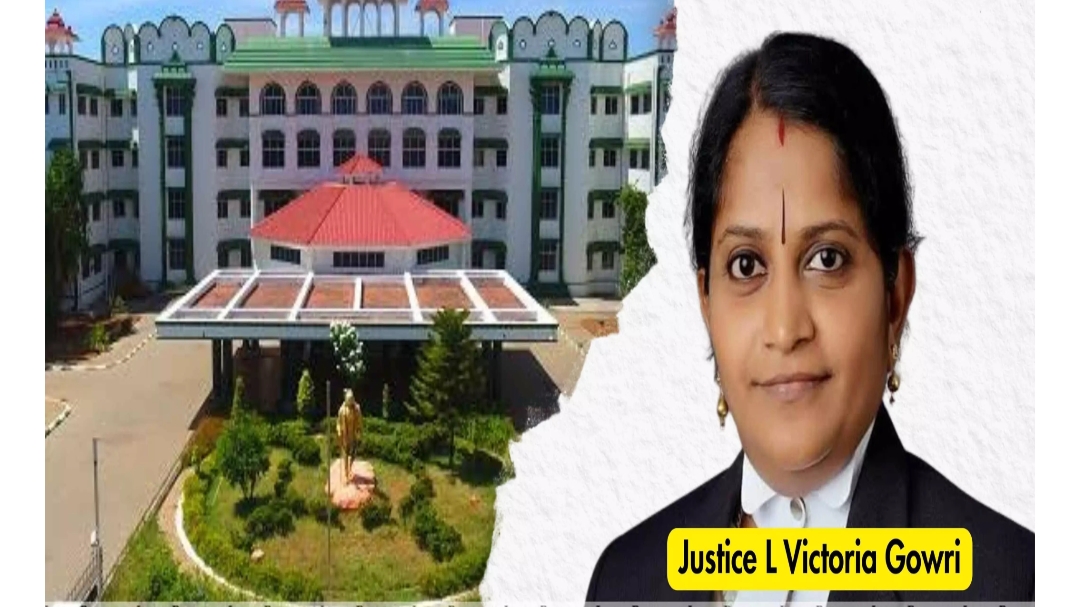 528 of BNSS, 2023, to call for the entire records pertaining to the impugned proceedings and consequential impugned show cause notice in MC.No.07 of 2026 pending on the file of the Learned
Judicial Magistrate No.V, Madurai District.
For Petitioner : Mr.S.R.Rajagopal,
Senior counsel,
For Mr.C.M.Arumugam
For Respondent : Mr.D.Sivaraman
Crl.O.P(MD) No.1617 of 2026
T.Balarathina Kumar
… Petitioner
Vs.
The Judicial Magistrate No.V, Madurai.
…. Respondent
Prayer : Criminal Original Petition is filed under Section 528 of BNSS, 2023, to call for the entire records pertaining to the impugned proceedings and consequential impugned show cause notice in MC. No.07/2026 pending on the file of the Learned Judicial
Magistrate No.V, Madurai and quash the same.
For Petitioner : Mr.Prabhu Rajadurai,
For M/s. Dhana Law Associates
Mr.V.A.Dhana Aravindha Balaji
For Respondent : Mr.D.Sivaraman
Crl.O.P(MD)No.1623 of 2026
Mohan Kumar
… Petitioner
The Judicial Magistrate No.V, Madurai. Vs.
…. Respondent
Prayer : Criminal Original Petition is filed under Section 528 of BNSS, 2023, to call for the entire records pertaining to the impugned proceedings and consequential impugned show cause notice in MC. No.07/2026 pending on the file of the Learned Judicial
Magistrate No.V, Madurai and quash the same.
For Petitioner : Mr.M.Thirunavukkarasu
For Respondent : Mr.D.Sivaraman
Crl.O.P(MD) No.1624 of 2026
A.Baskaran
… Petitioner
The Judicial Magistrate No.V, Madurai. Vs.
…. Respondent
Prayer : Criminal Original Petition is filed under Section 528 of BNSS, 2023, to call for the entire records pertaining to the impugned proceedings and consequential impugned show cause notice in MC No.07/2026 pending on the file of the Learned Judicial
Magistrate No.V, Madurai District and quash the same.
For Petitioner : Mr.D.Selvam,
For C.M.Arumugam
For Respondent : Mr.D.Sivaraman
Crl.O.P(MD) No.4711 of 2026
1. A.Baskaran
2. S.Mohan Kumar
3. S.Rajamohan
… Petitioners
The Judicial Magistrate No.V, Madurai. Vs.
…. Respondent
Prayer : Criminal Original Petition is filed under Section 528 of BNSS, 2023, to quash the order (B-Diary entry) dated 11.02.2026 passed by the Learned Judicial Magistrate No.V, Madura returning the vakalaths, and consequently direct the learned Judicial
Magistrate No.V, Madurai to accept the vakalaths and permit.
For Petitioner : Mr.D.Selvam,
Senior counsel,
For Mr.A.S.Vaigunth
For Respondent : Mr.D.Sivaraman
COMMON ORDER
Prologue:
“If you want something said, ask a man; if you want something done, ask a woman,” observed Margaret Thatcher, a remark that resonates with particular force in the present context.
In the case at hand, this Court is witness to a young judicial officer who, unmindful of the age, stature, or experience of the members of the Bar, chose not the path of convenience, but that of conviction. Faced with a charged atmosphere and competing pressures, she did not yield to expediency, nor retreat into silence, but acted with resolute determination to uphold the dignity and authority of the institution she represents. What may be perceived by some as stubbornness, this Court views as principled firmness, an essential attribute in the discharge of judicial duty.
The strength of the justice delivery system does not lie merely in statutes and precedents, but in the character of those entrusted with their application. It is through such unwavering commitment, particularly by those at the very threshold of their judicial journey, that institutional integrity is preserved and public confidence is sustained.
Crux of the case:
These batch of Criminal Original Petitions, though presented by different petitioners, arise out of one common episode, one common set of proceedings, and one common institutional question. The petitioners are all practising Advocates and, in four of the cases, office bearers or members of a Bar Association at Madurai. They have invoked the inherent jurisdiction of this Court under Section 528 of the Bharatiya Nagarik Suraksha Sanhita, 2023, seeking quashment of the proceedings in M.C.No.07 of 2026 on the file of the learned Judicial Magistrate No.V, Madurai, together with the consequential show cause notices issued under Section 384 BNSS, 2023, and, in the connected petition of Crl.O.P.(MD) No.4711 of 2026, the further order dated 11.02.2026 returning the vakalaths, declining representation through counsel, and directing personal appearance.
2. Since the foundation of all the petitions is the very same occurrence and since the rival submissions also substantially overlap, all these matters are taken up together and are being disposed of by this common order.
3. The controversy is not a mere private quarrel between an individual judicial officer and certain members of the Bar. Nor can it be reduced to a passing misunderstanding. At its heart lies a question of great institutional significance: to what extent can members of the Bar, individually or collectively, intervene in proceedings pending before a Court, and whether conduct
alleged to have interrupted or overawed the Court in the face of judicial proceedings can be interdicted at the threshold by
exercise of inherent powers?
4. This Court is acutely conscious that the Bar and the Bench are not adversaries. They are partners in the administration of justice. The finest traditions of our legal system rest upon mutual respect, institutional discipline, and a shared understanding that while lawyers are fearless in defence of their clients, they remain, at all times, officers of the Court. The closer the relationship between the Bar and the Bench, the greater the duty to preserve its dignity.
5. The petitioners plead that the impugned proceedings are legally unsustainable for want of jurisdiction, absence of specific allegations, procedural illegality, and predetermination. The respondent Judicial Magistrate, on the other hand, would maintain that the events amounted to a deliberate interruption and insult to the Court in the course of judicial proceedings, attracting Section 267 of the Bharatiya Nyaya Sanhita, and that the proceedings under Section 384 BNSS, 2023 are fully maintainable.
6. Having anxiously considered the pleadings, the common counter affidavit, the rival submissions, the statutory provisions placed before this Court, and the authorities cited on either side, this Court is of the firm view that no ground is made out to quash the impugned proceedings at this nascent stage, and that the batch of petitions deserves to be dismissed.
Case of the Prosecution:
7. The respondent, namely the learned Judicial Magistrate No.V, Madurai, has filed a detailed common counter affidavit setting out the factual sequence which, according to her, culminated in the initiation of proceedings under Section 384 BNSS, 2023.
8. The respondent states that on 19.01.2026 at about 6.05 p.m., after the Court had risen for the day, one Advocate, namely Mr. T. Balarathina Kumar, presented a petition under Section 100 BNSS, 2023 through the Magistrate Clerk, alleging wrongful detention of one person by the S.S. Colony Police from 7.10 a.m. on the same day. The petition, according to the respondent, was placed before her in chambers. Upon examining the same, and without rejecting it, she directed the Station House Officer to appear before Court at 10.30 a.m. on 20.01.2026 and further directed that the petition be listed as the first case on the next day. It is also her case that even after such judicial directions were made, the said counsel and his juniors came to the open Court and shouted at a member of the Court staff, and that the same was captured in the CCTV footage.
10. The respondent would further state that on 20.01.2026, when the petition under Section 100 BNSS, 2023 was called as the first matter at about 10.30 a.m., neither the petitioner therein nor the counsel was present, and therefore the matter was passed over. Thereafter, at about 10.35 a.m., the police produced a remand requisition, in which the very same person referred to in the earlier petition was shown as Accused No.2.
11. At that stage, according to the respondent, several
Advocates were present in the Court hall, including the counsel for
Accused No.2 and the present petitioners, namely the Bar President, Secretary, Treasurer, and other members. It is alleged that, instead of permitting the remand proceedings to continue in an orderly fashion, the Bar office bearers and others collectively intervened, insisted that the Court should not proceed with the remand, and sought to dictate the order to be passed.
12. The respondent specifically alleges that despite her clarification that the petition under Section 100 BNSS, 2023 had been registered, listed, and called for, but had been passed over owing to non representation, the petitioners continued to interrupt the proceedings and insisted that the accused should not be remanded, on the plea that remand would render the Section 100 petition infructuous.
13. It is her further case that when the Court reiterated that only the counsel named in the petition could represent the matter, the Bar President, in a sarcastic and enraged tone, uttered the remark, “Vakalath Nghl;lhjh NgrDk;D vOjpapUf;fh vd;d”, accompanied by gestures, and repeated the same loudly in open Court in the presence of advocates and staff.
14. According to the respondent, despite repeated directions that submissions should be made one at a time, the Court proceedings were collectively disrupted and the Court was sought to be overawed. She has stated that she was constrained to rise from the dais, retire to chambers, and later resume work, and that, even thereafter, interruptions continued. Since about 160 cases were pending and witnesses were present, she was compelled to defer the remand proceedings and take up other Court business.
15. It is further stated that at about 6.30 p.m., after other pending matters were dealt with, the remand proceedings were resumed, at which point the counsel for Accused No.2 made certain statements, which, according to the respondent, disclosed that he had full knowledge of the custody and had nevertheless invoked Section 100 BNSS, 2023. On the basis of the totality of conduct, the respondent formed a prima facie view that an offence under Section 267 BNS, 2023 had been committed in the face of the Court.
16. The respondent asserts that the entire incident was captured in CCTV footage and, therefore, steps were taken immediately to preserve the electronic evidence through the Principal District Judge, Madurai, for the relevant time blocks on 19.01.2026 and 20.01.2026.
17. The respondent’s stand is that since the offence was committed in the view and presence of the Court, she was empowered to take cognizance under Section 384 BNSS, 2023. According to her, cognizance was taken on 20.01.2026 itself, though after regular office hours, yet before the actual rising of the Court, which, according to her, occurred only at about 7.30 p.m. She emphasizes the distinction between “court working hours” and “rising of the Court”.
18. The respondent also contends that the impugned notices are only show cause notices, affording the petitioners an opportunity to explain their conduct, and that the petitions filed before this Court are premature. The subsequent order dated 11.02.2026, which is assailed in Crl.O.P.(MD) No.4711 of 2026, is defended on the ground that proceedings under Section 384 BNSS, 2023 are summary in character and do not contemplate avoidance of personal appearance through counsel alone.
Grounds for quash contended by the Petitioners:
19.The petitioners, in substance, raise the following grounds for quashment :
(i)Firstly, it is contended that there is no specific overt act attributed to each of the petitioners, and that the allegations are vague, omnibus, and bereft of particulars.
(ii) Secondly, it is submitted that even if the allegations areaccepted in their entirety, the ingredients of Section 267 BNS, 2023 are not made out, since there was no intentional insult or interruption.
(iii) Thirdly, it is argued that the mandatory procedure under Section 384 BNSS, 2023 has been violated, since cognizance, according to the petitioners, was not taken before the rising of the Court on the same day, but only thereafter, and the notices themselves came to be issued on the next day.
(iv) Fourthly, it is contended that, once the Magistrate did not conclude the matter in the manner contemplated by Section 384 BNSS, 2023, the only permissible course was to act under Section 385 BNSS, 2023 by forwarding the matter to another Magistrate.
(v) Fifthly, the petitioners would submit that the repeated use of the expression “offenders” and the recital in the proceedings that they had committed an offence demonstrate predetermination and bias, thereby vitiating the entire process.
(vi) Sixthly, it is urged that there is no contemporaneous judicial record sufficient to support the allegations and that the counter affidavit impermissibly supplements or improves upon the original proceedings.
(vii) Seventhly, the order dated 11.02.2026 is separately attacked on the ground that refusal to receive vakalath, denial of representation through counsel, and insistence upon personal appearance are contrary to law and natural justice. On the above grounds, the petitioners pray that the show cause notices, the proceedings in M.C.No.07 of 2026, and the consequential order dated 11.02.2026 be quashed.
Submissions on the side of the Petitioners/Respondent on 17.02.2026:
20. When the matter was taken up for arguments on
17.02.2026, the learned Senior Counsel appearing for the petitioners
submitted that the present issue has arisen out of a misunderstanding between the members of the Bar and the Bench, and therefore, the matter requires a harmonious and forwardlooking resolution rather than adversarial adjudication. It was contended that the petitioners, being senior members and office bearers of the Bar Association, had entered the Court only for the limited purpose of making a representation in the interest of the Bar and not with any intention to interfere with the judicial proceedings or to show any disrespect to the Court.
21.The learned Senior Counsel further submitted that there was no deliberate act of intimidation, threat, or obstruction on the part of the petitioners and that the incident, if at all, was momentary and unintentional, arising out of professional exigencies. It was emphasized that the petitioners continue to hold the highest regard for the institution of the judiciary and that their conduct ought not to be misconstrued as an affront to the dignity of the Court.
22. The learned Senior Counsel also submitted that the petitioners are willing to resolve the issue amicably and had proposed a conciliation through in-camera interaction, wherein the parties could exchange pleasantries, assure mutual respect, and undertake to maintain cordial relations in future. However, it was categorically stated that no occasion has arisen warranting an apology, as the petitioners do not admit to any misconduct, and the proposed compromise is only with a view to restore institutional harmony.
23. It was further argued that continuation of the proceedingswould unnecessarily escalate tensions between the Bar and the Bench, and would leave a permanent record affecting professional relationships, which would not be conducive to the functioning of the judicial system. The learned Senior Counsel submitted that this Hon’ble Court may adopt a pragmatic approach by focusing on a forward- looking resolution rather than dwelling on past events.
24. On the legal aspect, the learned Senior Counsel raised the issue regarding the propriety of issuance of the show cause notice on the subsequent day and whether such proceedings ought to have been concluded summarily on the same day. It was also submitted that the petitioners must be afforded an opportunity to file a rejoinder to the counter affidavit, particularly in view of the detailed allegations made therein.
25. The learned Senior Counsel ultimately submitted that while the petitioners are ready to argue the matter on merits, they would prefer that this Hon’ble Court intervenes to evolve a mechanism or resolution that would regulate such situations in future and prevent recurrence, thereby preserving the dignity of both the Bar and the Bench.
26. The learned Counsel appearing for the respondent/ Judicial Magistrate, in response, strongly opposed the proposal for compromise and submitted that the issue is not personal in nature but concerns the dignity and authority of the judicial institution. It was stated that the incident did not occur within the confines of a private chamber but in open Court, in the presence of advocates, litigants, and members of the public, and therefore, any attempt to resolve the issue privately would be inappropriate.
27. The learned Counsel submitted that the conduct of the petitioners amounted to threatening and undermining the authority of the Court and that such behaviour cannot be condoned under the guise of professional representation. It was emphasized that advocates are expected to adhere to high standards of professional ethics and that any deviation from such standards, particularly in open Court, must be addressed with seriousness.
28. It was further submitted that there has been no restrictionon representation by senior counsel or Bar office bearers and that the objection is only to the manner in which the petitioners entered the Court, interrupted proceedings, and conducted themselves in a manner that was unbecoming of members of the legal profession. The learned Counsel for the Judicial Magistrate asserted that if such conduct is permitted or trivialized, it would send a dangerous message that Court proceedings can be influenced through pressure or intimidation.
29. The learned Counsel for the Judicial Magistrate also brought to the notice of this Hon’ble Court the subsequent developments following the issuance of the show cause notice, including the alleged boycott of Court proceedings and disruption of functioning from the corridors and in the neighbouring Courts. It was submitted that such actions further aggravate the situation and
demonstrate a pattern of conduct that undermines the
administration of justice.
30. It was categorically stated that the incident has affectednot the individual officer but the institution of the Court itself and that it cannot be resolved through a private handshake or informal settlement. The learned Magistrate emphasized that every statement made in the counter affidavit and proceedings has been made consciously and with full responsibility, and that if any word is found to be inappropriate, this Hon’ble Court is at liberty to take action.
31. The learned Counsel for the Judicial Magistrate ultimately submitted that the matter requires judicial determination and that any resolution must address the institutional damage caused, rather than merely restoring superficial harmony. It was therefore insisted that this Hon’ble Court may take appropriate action to uphold the dignity and authority of the judiciary.
Observations of the Court:
32. This Court observed that the petitioners are at liberty either to argue the matter on merits or to propose a meaningful compromise, provided the same is acceptable to the respondent. The Court expressed the view that the action taken by the learned Magistrate appears to be at a minimal level in the context of the allegations and that mere exchange of pleasantries without acknowledgment of the issue may not suffice.
33. The Court further observed that a smooth relationship between the Bar and the Bench must be ensured through discipline and adherence to professional norms, and that practices such as entering the Court during proceedings to influence or advise the presiding officer must be regulated or discontinued in the interest of the institution. Accordingly, this Court directed the petitioners to file their rejoinder within the stipulated time and posted the matter for arguments on merits on 24.02.2026.
Final Arguments on Either Side on 24.02.2026:
34. Introductory Submission and Background:
The learned Senior Counsel Thiru.S.R.Rajagopal, Thiru. Prabu Rajadurai, Thiru. Thirunavukkarasu, Thiru.C.M.Arumugam appearing for the petitioners commenced their submissions by stating that the petitioners had approached this Court in a spirit of reconciliation and institutional respect, metaphorically submitting that they had “hoisted the flag of peace,” but were constrained to litigate due to the absence of any reciprocal response. It was further submitted that the present proceedings arise out of an unfortunate and isolated incident within the Court premises, which has been magnified into a proceeding under Section 384 of the Bharatiya Nagarik Suraksha Sanhita, 2023.
35. Factual Matrix Leading to the Incident:
35.1. The learned Senior Counsel submitted that on
19.01.2026 at about 5.00 p.m., a petition under Section 100 BNSS, 2023 was presented before the learned Judicial Magistrate No. V, Madurai, alleging illegal detention of a client by the Inspector of Police, S.S. Colony Police Station. It was specifically brought to the notice of the learned Magistrate that an order had already been passed by this Court in a Criminal Original Petition restraining the arrest of the said person.
35.2. However, despite the said submission, the learned Magistrate allegedly declined to consider the petition and rose from the dais. It was further contended that the learned Magistrate contacted the concerned police officer, who appeared before the Court, but no effective judicial order was passed on that day. On the following day, i.e., 20.01.2026, when the matter was taken up, a remand requisition was presented by the police, despite the subsisting order of this Court restraining arrest. It was at this stage that certain members of the Bar, including the petitioners, made submissions requesting that the earlier petition be taken up first.
36. Reliance on CCTV Footage:
The learned Senior Counsel placed heavy reliance on the CCTV footage of the Court proceedings, which was viewed pursuant to the direction of this Court. It was submitted that the entire incident lasted only about two minutes and did not involve any form of collective disruption or intimidation. According to the learned Senior Counsel, the footage reveals that only the Bar Secretary made a brief representation, and that too in a respectful manner, without raising his voice or making any threatening gesture. It was specifically contended that the alleged raising of the index finger or aggressive conduct, as recorded in the show cause notice, is factually incorrect and not borne out by the video evidence.
37. Challenge to the Show Cause Notice – Procedural
Illegality:
37.1. The principal contention of the petitioners is that the initiation of proceedings under Section 384 BNSS, 2023 is wholly without jurisdiction and in violation of the statutory mandate. It was submitted that Section 384 BNSS, 2023 requires that cognizance must be taken “before the rising of the Court on the same day” and that the entire proceeding, including the opportunity to show cause, must be completed on the same day. In the present case, the show cause notice is dated 21.01.2026, whereas the alleged occurrence took place on 20.01.2026, thereby vitiating the proceedings. Further, it was contended that the learned Magistrate has herself recorded that cognizance was taken “after court working hours,” which clearly indicates that the statutory requirement was not complied with. It was also argued that the order was passed in chambers, which is impermissible in view of Rule 4.4 of the Criminal Rules of Practice.
38.Non-Applicability of Section 384 and Requirement to
Proceed under Section 385 BNSS, 2023:
The learned Senior Counsel submitted that once the learned
Magistrate failed to act within the time frame prescribed under Section 384 BNSS, 2023, she lost jurisdiction to proceed under the said provision. In such circumstances, the only permissible course was to proceed under Section 385 BNSS, 2023 by forwarding the matter to another Magistrate. It was contended that the continued retention of the proceedings by the same Magistrate is contrary to the statutory scheme and amounts to a violation of fair procedure.
39.Predetermination and Violation of Natural Justice:
The learned Senior Counsel further submitted that the repeated use of the term “offenders” in the diary proceedings and orders of the learned Magistrate demonstrates a clear
predetermination of guilt. It was argued that even before affording an opportunity to the petitioners, the learned Magistrate has recorded a finding that they have committed an offence under Section 267 BNS, 2023. Such conduct, according to the petitioners, is in violation of the principles of natural justice and renders the proceedings vitiated by bias.
40.Absence of Ingredients of Section 267 BNS, 2023:
The learned Senior Counsel contended that even if the allegations in the show cause notice are taken at face value, they do not constitute an offence under Section 267 BNS, 2023. It was submitted that the essential ingredient of the offence is “intentional insult or interruption,” which requires the presence of mens rea. In the present case, the conduct of the petitioners was merely a professional request to consider a petition in light of a subsisting High Court order, and cannot be construed as intentional insult or obstruction.
41.Discrepancies Between Show Cause Notice,
Proceedings, and Counter Affidavit:
The learned Senior Counsel elaborately pointed out inconsistencies between the show cause notice, the diary proceedings, and the counter affidavit filed by the learned Magistrate. It was submitted that the allegations have been progressively “improved” at each stage and that several facts stated in the proceedings are not reflected in the show cause notice. It was argued that such supplementation of reasons is impermissible in law, as held in Mohinder Singh Gill v. Chief Election Commissioner .
42. Failure to Consider High Court Order and Conduct of Police:
The learned Senior Counsel emphasized that the learned Magistrate failed to take note of the binding order of this Court restraining arrest, and instead proceeded to entertain the remand requisition submitted by the police. It was argued that the proper course of action would have been to question the police for violating the order of this Court, rather than initiating proceedings against the advocates who brought the violation to the notice of the Court.
43.Apprehension of Bias and Inability to Continue
Proceedings:
The learned Senior Counsel further submitted that the filing of a detailed counter affidavit by the learned Magistrate defending her actions gives rise to a reasonable apprehension of bias. It was contended that the same officer cannot fairly adjudicate the matter after having taken a definitive stand. Reliance was placed on settled principles that justice must not only be done but must also be seen to be done. In fine, the learned Senior Counsel for the petitioners prayed that the show cause notice and the consequential proceedings in M.C. No.7 of 2026 be quashed as being without jurisdiction, legally unsustainable, and an abuse of process of Court.
Submissions on the side of the Respondent:
44.Maintainability and Scope of Interference:
The learned Counsel appearing for the respondent submitted that the present petition is not maintainable, as it challenges only a show cause notice, which is merely a preliminary step. It was contended that the inherent jurisdiction of this Court under Section 528 BNSS, 2023 is to be exercised sparingly and only in exceptional circumstances, such as where there is a clear lack of jurisdiction or where no offence is made out on the face of the record.
45. Prematurity of the Petition:
Relying on settled principles of law, it was submitted that a show cause notice does not give rise to a cause of action, as it does not affect the rights of the parties. The petitioners have an adequate opportunity to submit their explanation before the learned Judicial Magistrate, and therefore, the petition is premature.
46.Valid Exercise of Jurisdiction under Section 384
BNSS, 2023:
The learned Counsel contended that the learned Judicial
Magistrate has validly exercised jurisdiction under Section 384 BNSS, 2023. It was submitted that cognizance was taken on the same day, i.e., 20.01.2026, and that the mere fact that the notice was formally issued on the next day does not vitiate the proceedings. It was further argued that the expression “before the rising of the Court” does not mean “within court hours” and that the Court can continue to sit beyond the prescribed hours, if necessary.
47. Nature of Proceedings under Section 384 BNSS, 2023:
The learned Counsel submitted that proceedings under Section 384 BNSS, 2023 are summary in nature and are akin to contempt in the face of the Court. In such proceedings, the presiding officer acts based on what is witnessed in the Court, and therefore, there is no requirement of a full fledged trial. It was contended that the opportunity contemplated under the provision is only with respect to the quantum of punishment and not for determining guilt.
48.Conduct of Petitioners Constituting Interference:
The learned Counsel submitted that the conduct of the petitioners, as recorded in the proceedings, clearly amounts to interference with judicial proceedings. It was argued that the collective presence of advocates and their insistence on a particular course of action disrupted the proceedings and justified the initiation of action under Section 384 BNSS, 2023.
49.Filing of Counter by Judicial Officer:
The learned Counsel defended the filing of a counter affidavit by the learned Magistrate, stating that there is no legal bar preventing a judicial officer from placing facts before this Court when impleaded as a respondent. It was submitted that in proceedings of this nature, the judicial officer is not acting as a neutral adjudicator but as a respondent explaining the circumstances leading to the impugned action.
50.Availability of Alternative Remedies:
It was contended that the petitioners have an effective alternative remedy of participating in the proceedings before the learned Judicial Magistrate and placing their defence. Therefore, the invocation of inherent jurisdiction at this stage is unwarranted.
51.Protection of Institutional Integrity:
The learned Counsel emphasized that the proceedings have been initiated not to protect the dignity of an individual officer, but to safeguard the administration of justice and maintain discipline within the Court. Accordingly, the learned counsel for the respondent propounded that the Criminal Original Petition be dismissed as not maintainable and premature.
Points for Consideration:
52. In the light of the pleadings and submissions, the following points arise for consideration:
(i) Whether the impugned proceedings under Section 384 BNSS, 2023 are without jurisdiction on the ground that cognizance was not taken before the rising of the Court on the same day?
(ii) Whether the show cause notices and proceedings are liable to be quashed for want of specific allegations or for failure to disclose the ingredients of Section 267 BNS, 2023?
(iii) Whether the proceedings are vitiated by predetermination, bias, or violation of natural justice?
(iv) Whether the order dated 11.02.2026 returning vakalaths, refusing representation through counsel, and insisting on personal appearance warrants interference?
(v) Whether this Court ought to exercise its inherentjurisdiction under Section 528 BNSS, 2023 to quash the impugned proceedings at the show cause stage?
Analysis:
I. The Position of an Advocate as Officer of the Court:
53. Before adverting to the facts, this Court considers it necessary to restate certain first principles governing the legal profession.
54. The Bar Council of India Rules, Part VI, Chapter II, Section I, cast explicit duties upon an advocate towards the Court. Rule 1 mandates that an advocate shall conduct himself with dignity and self- respect while acting before a Court. Rule 2 requires an advocate to maintain a respectful attitude towards Courts, bearing in mind that the dignity of the judicial office is essential for the survival of a free community. Rule 3 prohibits any attempt to influence the decision of a Court by illegal or improper means. Rule 4 requires an advocate not to act as a mere mouthpiece of the client and obliges him to use restrained language and avoid improper conduct during arguments in Court. These rules are not ornamental declarations. They are normative standards
inseparable from the privilege of audience before a Court of
law.
55. In D.P. Chadha v. Triyugi Narain Mishra , the Hon’ ble Supreme Court emphasized that the monopoly statutorily granted to the legal profession obligates the lawyer to observe scrupulously those norms which make him worthy of the confidence of the community as a vehicle of justice. The Hon’ ble Apex Court reminded that law is no trade and briefs are no merchandise.
56. In O.P. Sharma v. High Court of Punjab & Haryana, (2011) 6 SCC 86, the Hon’ ble Supreme Court held that an advocate must act with utmost sincerity and respect and that any violation of professional ethics is unfortunate and unacceptable. The Hon’ ble Supreme Court underscored that an advocate is under an obligation to uphold the rule of law and ensure that the public justice system functions at its full potential.
57. In Shambhu Ram Yadav v. Hanuman Das Khatry , the Hon’ ble Supreme Court observed that the credibility and reputation of the profession depend upon the manner in which members of the profession conduct themselves.
58. In Ministry of Information & Broadcasting, In re , the Hon’ ble Supreme Court declared that the legal profession is a solemn and serious occupation, a noble calling, and that the honour of the profession has to be maintained by exemplary conduct both in and outside Court.
59. In Harbans Lal Arora v. Divisional Supdt. Central Railway , it was observed that the Bar and the Bench are the joint guardians of the rule of law.
60. In Prem Surana v. Addl. Munsif & Judicial
Magistrate , the Hon’ ble Supreme Court reiterated that in the justice delivery system, members of the Bar are as much a part thereof as the Judges, and that it is the closest possible harmony between the Bar and the Bench that yields the best results.
61. Therefore, while an advocate is entitled to be
fearless, he is never entitled to be intemperate; while he may be firm, he cannot be overbearing; while he may criticize, he cannot insult; while he may persuade, he cannot pressure; and while he may protect the rights of the client, he cannot
obstruct the course of justice.
II. Scope of Section 384 BNSS, 2023 and Section 267 BNS, 2023
62. Section 267 BNS, 2023 penalises intentional insult or interruption to a public servant while such public servant is sitting in any stage of a judicial proceeding. Section 384 BNSS, 2023 provides a summary procedure where such offence is committed in the view or presence of the Court.
63. The scheme of Section 384 BNSS, 2023 shows that where an offence of the specified nature is committed in the face of the Court, the Court may, before rising on the same day, take cognizance, afford a reasonable opportunity to show cause, and then proceed in the manner prescribed. Sub section (2) requires recording of the facts constituting the offence, the statement of the offender, the finding, and sentence. Sub-section (3), in the case of Section 267 BNS, 2023, requires the record to show the nature and stage of the judicial proceeding and the nature of the interruption or insult.
64. Section 385 BNSS, 2023 comes into play where the Court considers that the case should not be dealt with under Section 384, whether because a greater sentence is warranted or for any other reason. In such event, the matter may be forwarded to a Magistrate having jurisdiction.
65. Section 387 BNSS, 2023 further recognises the power of the Court to discharge the offender or remit punishment on apology being made to its satisfaction. The legislative architecture thus clearly treats such misconduct as one affecting the Court in the discharge of its judicial function and provides a calibrated, summary, but legally structured procedure. The jurisprudential basis of such summary power is not alien to our system. In Vinay Chandra Mishra, In re , the Hon’ ble Supreme Court explained that in certain residue cases, immediate or summary action is justified because it is the only realistic way of dealing with disruptive conduct in Court. The Hon’ ble Supreme Court held that the purpose is not to protect the Judge personally but to protect the administration of justice and restore order in the hearing.
66. Likewise, in Daroga Singh v. B.K. Pandey , the Hon’ ble Supreme Court reiterated that contempt proceedings affecting the authority and functioning of the Court must be decided in a summary manner and that immediate steps are necessary to restore order and maintain the efficacy of judicial administration. The essence of the law, therefore, is that when conduct in the face of the Court tends to interrupt, insult, overawe, or obstruct the due course of judicial proceedings, the law arms the Court with immediate powers, subject to procedural safeguards, to
protect the institution.
66.1. It would be apposite to recall the observations of the Hon’ble Mr. Justice Surya Kant, The Chief Justice of India, made while inaugurating the Additional Court Buildings at the Madurai
District Court Campus on 19.04.2026:
“I have, on many occasions, emphasised that the District Judiciary is the backbone of our justice delivery system. This is not a mere pleasantry or a ceremonial
expression, but a statement of structural reality. For the vast majority of our citizens, the District Court is the first court they enter, and for many, it remains the only court they ever
know. While the Supreme Court and the High Courts
interpret, refine, and shape the law, it is the District Judiciary that breathes life into it, imparting daily meaning to the law in the lived experiences of ordinary people. If the higher judiciary may be regarded as the mind of the legal
system, the District Judiciary is its lifeblood, the vital organs
and sinews that sustain and hold the entire system
together.”
III. Whether the Proceedings are Liable to be Quashed for
Want of Specific Allegations:
67. The petitioners’ first line of attack is that the allegations are vague and omnibus. This Court is unable to accept such submission at this stage. The common counter affidavit and the proceedings, read as a whole, do not merely make abstract accusations. They narrate the date, the context, the nature of the proceedings then underway, the names of the counsel and Bar office bearers stated to have intervened, the stand allegedly taken by them, and even one particular remark attributed to the Bar President. The respondent has also stated that repeated collective interruptions were made when the remand requisition was under consideration.
68. Whether those allegations are ultimately proved, whether the CCTV footage supports them in full or in part, whether the conduct was momentary or substantial, and whether a particular petitioner’s role was active, passive, or merely incidental, are all matters that lie in the realm of adjudicatory appreciation. They are not matters that can be conclusively decided in a petition for quashment at the threshold.
68.1. Considerable emphasis was laid on the alleged failure to take note of the binding interim order of this Court restraining arrest, and on the course adopted by the learned Magistrate in entertaining the remand requisition submitted by the police. It was vehemently contended that the proper course would have been to call upon the police to explain the purported violation of the order of this Court, rather than initiating proceedings against the advocates who had brought such violation to the notice of the Court. However, the factual position discloses that the client of Mr. T. Bala Rathnakumar, along with another, had filed Crl.O.P.(MD) No. 402 of 2026 before this Court seeking anticipatory bail in connection with a crime number not then specified, arising out of the same transaction. This Court, by order dated 09.01.2026, passed the following interim directions:
“5. Considering the facts and circumstances, this Court directs the petitioners to appear before the respondent police daily at 10.30 a.m. till 30.01.2026 and co-operate for the enquiry.
6. Post the matter on 30.01.2026. The respondent police is directed not to arrest the petitioners till then. Further, the respondent police is directed to file a status report on
30.01.2026, without fail.”
68.2. It is significant to note that a copy of the said order was marked only to the Inspector of Police, S.S. Colony Police Station (Law & Order), Madurai City, and to the learned Additional Public Prosecutor, Madurai Bench of the Madras High Court, Madurai, and not to the learned Judicial Magistrate No. V, Madurai.
68.3. It is further evident that neither the counsel for the allegedly arrested accused, namely Mr. T. Bala Rathnakumar, while presenting the petition under Section 100 of the Bharatiya Nagarik Suraksha Sanhita, 2023 on 19.01.2026, nor the accused at the time of his production for remand on 20.01.2026, nor even the Inspector of Police, S.S. Colony Police Station, placed the said interim order before the learned Judicial Magistrate. On the contrary, Mr. T. Bala Rathnakumar, one of the petitioners herein, having suppressed the order of this Court in Crl.O.P.(MD) No. 402 of 2026 dated 09.01.2026, proceeded to file the petition under Section 100 of
BNSS, 2023, despite being aware that his client had voluntarily appeared before the S.S. Colony Police Station in compliance with the aforesaid order of this Court.
68.4. Having thus approached the learned Magistrate on 19.01.2026 without disclosing the material facts, it is evident from the available CCTV footage that, on the following day, i.e., 20.01.2026, he proceeded to mobilise the office bearers of the
Madurai Bar Association within the Court hall of the learned Judicial Magistrate.
69. The settled principle governing quash jurisdiction is that where the allegations, if taken at face value, disclose the ingredients of an offence or a statutory proceeding, the High Court does not ordinarily embark upon a meticulous evaluation of disputed facts. Here, the allegation is not one of remote inference. It is an allegation by the Presiding Officer that, while she was sitting in a judicial proceeding, the petitioners and others collectively interrupted the hearing, insisted on a particular judicial course, and used language and conduct amounting to insult and interference. Such allegation, if ultimately established, would clearly attract the field of Section 267 BNS, 2023. At this stage, therefore, this Court is unable to hold that no offence is even prima facie made out.
IV. Interpretation of the Phrase “Before Rising of the
Court on the Same Day”:
70. Considerable argument was advanced on the expression
“before the rising of the Court on the same day” occurring in Section 384 BNSS, 2023. The petitioners would equate this expression with regular Court hours or office hours. The respondent would distinguish the two and contend that the Court continued to sit till about 7.30 p.m., and that cognizance was taken before the Court actually rose for the day.
71. This Court finds substantial force in the respondent’s construction. A Court is not a time-clock institution governed solely by the outer boundary of office hours. Judicial work frequently extends beyond scheduled hours, especially in remand matters, urgent applications, part heard cases, and cases involving witnesses. The expression employed by the statute is not “before the close of office hours” but “before the rising of the Court”. The legislature has consciously used an expression associated with the actual sitting and adjournment of the Court, not with clerical timings.
72. The respondent has specifically asserted that the Courtrose only around 7.30 p.m. and that cognizance was taken in open Court before rising and the available CCTV footage adds strength to this contention. She has also explained that assignment of a case number on the next day was only an administrative consequence, whereas the judicial act of cognizance had already taken place.
73. Whether this assertion is correct on fact is not a matter that can be conclusively negatived in a petition for quashment. The CCTV footage and the judicial record are matters available for consideration. So long as the respondent’s case, on its face, is that the cognizance was taken before the actual rising of the Court on the same day, this Court cannot, in inherent jurisdiction, declare the proceedings void ab initio.
74. The petitioners’ submission that Section 384 requires not merely cognizance but the entire process to be concluded on the same day is also too broad a proposition to be accepted in the absolute form in which it is stated. The provision requires cognizance before the rising of the Court on the same day and requires a reasonable opportunity of showing cause. The content and extent of such opportunity may vary with circumstances, but at any rate, the present proceedings cannot be quashed merely because the formal notices bear the next day’s date, especially when the respondent’s specific stand is that cognizance itself was taken on the same day. Therefore, the contention founded on timing does
not, at this stage, render the proceedings non est.
V. Whether Section 385 BNSS, 2023 ought Necessarily to
Have Been Invoked:
75. The petitioners next contend that once the matter was not summarily concluded under Section 384 BNSS, 2023, the respondent necessarily had to invoke Section 385 BNSS, 2023 and forward the matter to another Magistrate. This argument also cannot be accepted as an inflexible rule.
76. Section 385 BNSS, 2023 is attracted where the Court considers that the case should not be dealt with under Section 384, whether because a greater punishment is warranted or for any other reason. The provision is discretionary and conditional. Unless the Court forms such opinion, the mere existence of Section 385 does not automatically strip the Court of power under Section 384.
77. At this stage, the learned Magistrate has not yet imposed punishment. The proceedings are still at the stage of calling upon the petitioners to show cause. The argument that the Magistrate ought to have mandatorily forwarded the matter under Section 385 is, therefore, premature.
VI. Alleged Predetermination and Use of the Expression
“Offenders”:
78. The petitioners place heavy reliance on the use of the word “offenders” and on the recital that the petitioners had committed an offence under Section 267 BNS, 2023. According to them, this betrays a closed mind. It is indeed a settled principle that judicial language, particularly in proceedings impinging upon personal liberty or professional standing, must be marked by restraint, sobriety, and circumspection. Expressions indicative of a concluded determination at a preliminary stage are, as a rule, to be eschewed.
79. However, the statutory scheme governing summaryproceedings in cases of certain forms of contempt, as contemplated under Section 384 of the Bharatiya Nagarik Suraksha Sanhita, 2023, makes a conscious departure in terminology and procedure. The provision envisages that, upon cognizance of the offence being taken before the rising of the Court, the person concerned is treated as an “offender” rather than a “contemner,” even prior to the issuance of a show cause notice, with the object of affording him a reasonable opportunity of being heard. It is also apposite to note that the provision empowers the Court, in appropriate
circumstances, to direct the detention of such offender in custody on the very same day, even prior to the formal taking of cognizance, provided such action is undertaken before the rising of the Court.
80. However, in proceedings under Section 384 BNSS, 2023, the Court acts upon an occurrence witnessed in its own presence and records the facts constituting the offence. The very structure of the provision contemplates that the Court forms a prima facie opinion that an offence in its view or presence has occurred. That, by itself, cannot be equated with final adjudication of guilt in the sense understood in a regular criminal trial.
81. The law in this branch has long recognised that proceedings for in facie curiae misconduct possess a summary and exceptional character. In Vinay Chandra Mishra the Hon’ ble Supreme Court held that such power is exercised not to vindicate personal dignity but to protect the administration of justice.
82. Therefore, though the terminology employed by the learned Magistrate may be open to criticism as being stronger than what prudence would commend at a notice stage, that circumstance alone does not persuade this Court to hold that the proceeding is vitiated beyond cure. The petitioners will still have the opportunity to place their explanation, contest the factual allegations, rely upon the CCTV footage, and urge every legal objection available to them. Inherent jurisdiction is to be exercised to prevent abuse of process, not to entertain every phraseology into a ground for annihilating a statutory proceeding.
VII. Filing of Counter Affidavit by the Judicial Officer:
83. Much criticism was directed against the filing of a detailed counter affidavit by the learned Magistrate. This Court is unable to hold that the mere filing of a counter affidavit, when the judicial officer is arrayed as a respondent, renders the proceedings illegal.
84. The officer has not stepped out of judicial office to become a partisan litigant in the ordinary sense. She has placed before this Court the circumstances in which the impugned action came to be taken, that too, at the instance of this Court. When the challenge is mounted to proceedings initiated by the Court in the face of judicial proceedings, a factual explanation from the Presiding Officer is neither unexpected nor impermissible.
VIII. Right of Audience, Vakalath, and Representation
Through Counsel:
85. The challenge in Crl.O.P.(MD) No.4711 of 2026 calls for separate consideration. The petitioners rely upon Section 30 of the
Advocates Act, 1961 and assert a right to be represented through counsel. However, the right of an advocate to practise, though substantial, is always subject to the supervisory control of the Court over its own proceedings.
86. In Pravin C. Shah v. K.A. Mohd. Ali10, as noticed in the materials placed before this Court,theHon’ ble Supreme Court observed that while the right to practise is the genus, the right to appear and conduct cases in Court is a matter on which the Court must have major supervisory power. In Bhiwa Yeshwant v. Regional Director, E.S.I. Corporation11, the Hon’ ble Bombay High Court held that appearance before Court is not a matter of blanket entitlement in every circumstance, and may depend upon leave of the Court.
87. In Baru Singh v. Babu Ram Sharma12, the Hon’ ble Supreme Court observed that a signed vakalatnama is ordinarily required when a lawyer is to appear and plead before a Court on behalf of a client. Equally relevant is the observation in V.C.
10(2001) 8 SCC 650
111978 Mh LJ 589
121996 SCC OnLine All 478
Rangadurai v. D. Gopalan , as cited in the materials, that it is not in accordance with professional etiquette for an advocate to hand over his brief to another advocate to take his place and conduct the case as though he himself were briefed, unless the client so agrees.
88. The present matter, however, is not a routine adjudication between private parties. It concerns proceedings under Section 384 BNSS, 2023 for alleged misconduct in the face of the Court. The learned Magistrate, in the impugned order dated 11.02.2026, appears to have insisted upon the personal appearance of those proceeded against and declined to accept vakalaths tendered on their behalf.
89. This Court is not inclined to hold, in the abstract, that proceedings under Section 384 BNSS, 2023 always and absolutely bar representation through counsel. Equally, this Court is not prepared to hold that the person proceeded against is entitled, as of right, to avoid personal appearance altogether and participate solely through counsel in a proceeding of this character.
90. The statutory scheme itself requires the Court to give theoffender a reasonable opportunity of showing cause. The form of such opportunity must be meaningful, though it need not mirror a full- fledged criminal trial. Personal presence in such proceedings may well be insisted upon. The assistance of counsel, where appropriate, may be regulated by the Court in a manner consistent with orderly procedure.
91. But the order dated 11.02.2026 cannot, in the peculiar facts of this case and at this stage, be singled out for quashment. It forms part of the same continuum of proceedings, and the grievance of the petitioners in that regard can adequately be worked out before the learned Magistrate and, if necessary, in accordance with law thereafter. The extraordinary jurisdiction of this Court is not meant to micro- manage the procedural incidents of an ongoing summary proceeding, unless manifest illegality of a grave order is shown. Such threshold is not met here.
IX. The Institutional Dimension:
92. The most important aspect of the matter lies beyond individual grievances. Courts exist not by physical structures but by public confidence. The independence of the judiciary at the district level is no less precious than at the constitutional level. The trial Court is the face of justice for the ordinary citizen. If the atmosphere of that Court is permitted to be clouded by shouting, collective pressure, gestures of derision, or attempts to influence the course of a remand hearing, the injury is not to a person alone; it is to the justice system.
93. In Vishram Singh Raghubanshi v. State of U.P., , the Hon’ ble Supreme Court warned that the growing tendency of maligning judicial officers by advocates who fail to secure desired orders must be curbed, since it touches not merely the officer but the institution as a whole. In M.B. Sanghi v. High Court of Punjab & Haryana , the Hon’ ble Supreme Court held that attacks on judicial officers by members of the Bar scandalise the Court and undermine public confidence in the judiciary.
94. In Radha Mohan Lal v. Rajasthan High Court , the Hon’ ble Supreme Court held that there can be nothing more serious than an act of an advocate if it tends to impede, obstruct, or prevent the administration of law or destroys public confidence in such administration. In R.K. Anand v. Delhi High Court , the Hon’ ble Supreme Court observed that the Court has not only the right but also the obligation to protect itself and preserve the purity of its proceedings from being polluted.
95. In Daroga Singh v. B.K. Pandey , the Hon’ ble Supreme
Court declared that the Courts cannot be compelled to give “command orders” and that intimidation of judicial officers strikes at the whole judiciary. In State v. Sunderlal Srivastava , it was beautifully observed by the Hon’ ble Supreme Court that no Court can give its best to the litigant public without the cooperation of the Bar; but the maintenance of a proper atmosphere for the efficient working of the Court and upholding the dignity and prestige of the Court are the privilege as well as the duty of the Bar.
96. In Vinay Chandra Mishra , the Hon’ ble Supreme Court reminded the profession that brazenness is not outspokenness, arrogance is not fearlessness, use of intemperate language is not assertion of right, and threat is not argument. Those words deserve
to be remembered in every Court hall.
97. This Court is not, in this order, pronouncing upon the ultimate culpability of the petitioners. That is not the exercise presently undertaken. But this Court must declare, in unmistakable terms, that any collective attempt by advocates or office bearers of a Bar Association to overbear a Presiding Officer, to insist upon a particular judicial order, or to interrupt the course of a hearing in a manner unbecoming of officers of the Court, cannot be treated as protected professional conduct.
98. The Bar Council Rules themselves draw the boundary. TheAdvocates Act, 1961 confers privilege, but that privilege is inseparably yoked to discipline. The Court’s power to preserve order in its proceedings is not subordinate to the sensibilities of any individual or association.
X. Whether This is a Fit Case for Exercise of Inherent
Power:
99. The inherent power under Section 528 BNSS, 2023 is extraordinary, to be used sparingly, and only where intervention is necessary to prevent palpable abuse of process or secure the ends of justice.
100. In the present case, this Court is unable to say:
(i)that the impugned proceedings are wholly without
jurisdiction;
(ii) that the allegations, taken at face value, disclose no offence at all;
(iii) that the statutory provisions are inapplicable on theadmitted facts; or
(iv) that continuation of the proceedings would, by itself, amount to abuse of process.
101. On the contrary, the matter involves disputed questions of fact, existence of contemporaneous material including alleged CCTV footage, and interpretation of the statutory procedure in the context of events witnessed by the Court itself. The petitioners will have every opportunity, in accordance with law, to place their explanation, rely upon the CCTV footage, contend that no
interruption or insult occurred, point out inconsistencies, and urge that their conduct did not attract Section 267 BNS, 2023. Those are all matters which the statutory forum is competent to consider.
102. This Court cannot, by invoking inherent powers, short circuit such process merely because the petitioners assert that the matter arose out of misunderstanding or because the institutional sensitivity of the issue is high. Indeed, the higher the institutional stake, the greater the need that the law should be allowed to take its course.
Findings:
103. In view of the foregoing discussion, this Court answers the points for consideration as follows:
On Point No.(i): The proceedings cannot be held, at this stage, to be without jurisdiction on the ground of timing. The distinction between “court working hours” and “rising of the Court” is a plausible and legally sustainable distinction, and the respondent’s case is that cognizance was taken on the same day before the Court rose.
On Point No.(ii): The allegations in the proceedings and counter affidavit cannot be said to be so vague or deficient as to warrant quashment. Whether the ingredients of Section 267 BNS, 2023 are ultimately made out is a matter for adjudication in the statutory proceedings.
On Point No.(iii): Though certain expressions employed in the proceedings may be stronger, they do not, at this stage, render the entire action void for predetermination or bias so as to justify exercise of inherent jurisdiction.
On Point No.(iv): The challenge to the order dated 11.02.2026 also does not merit interference at this stage. The issue of personal appearance and regulated legal assistance in proceedings under Section 384 BNSS, 2023 must be worked out in accordance with law within the pending proceedings.
On Point No.(v): This is not a fit case for exercise of inherent power under Section 528 BNSS, 2023. The petitions are premature and devoid of merit.
Epilogue:
104. Before parting with the matter, this Court deems it proper to observe that the justice delivery system cannot function in an atmosphere of mutual suspicion between the Bar and the Bench.
The answer, however, is not institutional indulgence at the cost of discipline. Nor can judicial process be stifled under the plea of preserving harmony. True harmony rests not on silence about misconduct, but on restoration of principled boundaries.
105. An advocate is not a mere agent of the litigant. He is an officer of the Court. The Court, in turn, is not an adversary of the Bar. The dignity of one sustains the honour of the other. If the Bar fails in restraint, the institution suffers; if the Bench fails in fairness, the institution suffers equally. The law, therefore, expects both to remain within their constitutional and professional discipline.
106. In the present case, this Court finds no justification to quash the proceedings in their inception. The learned Judicial Magistrate shall proceed strictly in accordance with the statutory
framework of Sections 384, 385, and 387 BNSS, 2023,
uninfluenced by any observation in this order on the factual merits of the allegations. Equally, the petitioners shall be at liberty to place all their factual and legal objections before the learned Magistrate. This Court trusts and expects that all concerned will remember that the majesty of law is not upheld by victory of one side over another, but by disciplined fidelity to institutional norms.
107.In this context, this Court deems it appropriate to place on record its considered appreciation of the conduct of the learned Judicial Magistrate No.V, Madurai, Ms. Lakshmi Priya. A young judicial officer and a first generation graduate from the School of Excellence in Law, Chennai, she has stood firm before this Court, displaying commendable fortitude and composure in the face of considerable pressure. Unmoved by attempts, whether overt or subtle, to dilute institutional authority in the guise of compromise or conciliatory overtures, she has chosen instead to uphold the majesty of the law and the dignity of the judicial office she adorns.
108. Her steadfast adherence to duty, marked by
independence of mind and clarity of purpose, reflects the finest traditions of the judiciary acting without fear or favour, affection or ill will. In an era where the resilience of institutions is often tested, it is officers of such character who reinforce the very foundations of the justice delivery system.
109. The strength, sanctity, and enduring credibility of theconstitutional courts are inextricably linked to the manner in which such upright and earnest judicial officers are protected, encouraged, and emboldened in the righteous discharge of their functions. They are not merely functionaries within the system, but its living conscience. This Court, therefore, records its deep appreciation of Ms. Lakshmi Priya, learned Judicial Magistrate No.V, Madurai, for her fearlessness, integrity, and unwavering commitment to judicial duty. Officers of her calibre are indeed the invaluable assets of the judiciary worthy inheritors of the noble legacy of justice, reminiscent of the timeless ideals embodied in the land of Manu Neethi Cholan.
110. In the result, Crl.O.P.(MD) Nos.1514, 1617, 1623, 1624 and 4711 of 2026 are dismissed. Consequently, all connected miscellaneous petitions are closed.
30.04.2026
NCC : Yes / No
Index : Yes / No
Internet : Yes/ No
Sml
To
1. The Judicial Magistrate No.V, Madurai.
2. The Additional Public Prosecutor, Madurai Bench of Madras High Court, Madurai.
L.VICTORIA GOWRI, J.
Sml
CRL OP(MD)No.1514, 1617, 1623, 1624, and 4711 of 2026
30.04.2026
![Sekarreporter: https://x.com/sekarreporter1/status/1969722224245617005?t=sVo_Kcfei9wYGf9s7qjL8w&s=08 [21/09, 16:46] Sekarreporter: [21/09, 16:11] Rm Pradeepan Ec Mhaa ./VELS SCHOOL OF LAW “DECENNIAL YEAR CELEBRATION” Hon’ble Mr. JUSTICE N KOTISWAR SINGH Judge, Supreme Court of India, Hon’ble Mr. JUSTICE R MAHADEVAN](https://www.sekarreporter.com/wp-content/themes/hueman/assets/front/img/thumb-medium-empty.png)