THE HONOURABLE MR.JUSTICE V.LAKSHMINARAYANAN W. P.No.44029 of 2025and W.M.P.No.49135 of 2025 The Public Information Officer / The Administrator General and Official Trustee of Tamil Nadu, High Court Campus, Chennai – 600 104. .. Petitioner Vs. 1.State Information Commissioner, Tamil Nadu Information Commission, Block No.19, Government Farm Village, Nandanam, Chennai – 600 035. 2.S.Srikumar .. Respondents Prayer: Writ Petition filed
IN THE HIGH COURT OF JUDICATURE AT MADRAS
Reserved On:
27.11.2025 Pronounced On:
04.06.2026
CORAM
THE HONOURABLE MR.JUSTICE V.LAKSHMINARAYANAN
W. P.No.44029 of 2025and
W.M.P.No.49135 of 2025
The Public Information Officer /
The Administrator General and
Official Trustee of Tamil Nadu, High Court Campus, Chennai – 600 104. .. Petitioner
Vs.
1.State Information Commissioner,
Tamil Nadu Information Commission, Block No.19, Government Farm Village, Nandanam, Chennai – 600 035.
2.S.Srikumar .. Respondents
Prayer: Writ Petition filed 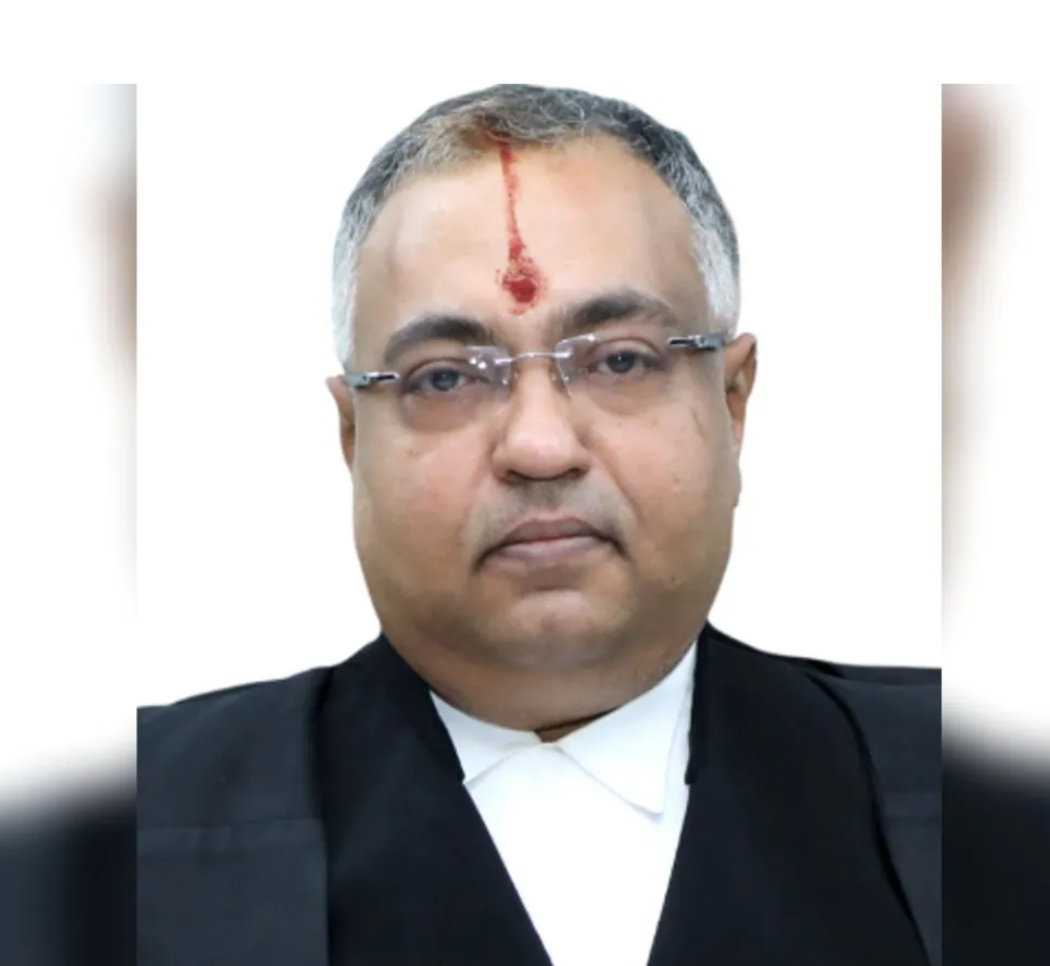 under Article 226 of the Constitution of India praying to issue a Writ of Certiorari, calling for the records relating to the order dated 03.10.2025 made in SA 19042/A/2023 by the 1st respondent and quash the same as being illegal, arbitrary and unconstitutional.
For Petitioner : Mr.C.K.Chandrasekkar
For R1 : Mr.C.Vigneshwaran Chandrasekaran
Assisted by
Mr.R.Vasanthakumar
For R2 : Mr.T.Sri Krishna Bhagavat
O R D E R
The petitioner is the Public Information Officer cum Administrator General and Official Trustee of the State of Tamil Nadu. The present writ petition relates to scope of the Right to Information Act as applicable to the Official Trustee of Tamil Nadu, an office created by virtue of the Official Trustees Act, 1913.
2.One of the several trusts administered by the Official Trustee of the State of Tamil Nadu is the V.Thiruvengadathan Chetty Charities. Rao Bahadur V.Thiruvengadathan Chetty, a prominent and prosperous member of the Arya Vysya Community, had executed a “WILL” on
09.11.1941. In terms of the “WILL”, the Official Trustee of the Tamil Nadu was to act as the executor and trustee. The said “WILL” was a subject matter of probate proceedings before this Court in O.P.No.109 of 1942. Probate was granted to the Administrator General of the Tamil
Nadu. Subsequently, by an order of this Court dated 07.04.1977 in
Application No.942 of 1977 in O.P.No.109 of 1942, the estate of Rao
Bahadur V.Thiruvengadathan Chetty was transferred to the office of the
Official Trustee of Tamil Nadu.
3.One of the objects of V.Thiruvengadathan Chetty Charities is for educational advancement of the economically weaker members of that community. The 2nd respondent herein claims to be a member of the Arya Vysya Community. In the capacity of being a member of that community, he filed applications invoking Section 6(1) of the Right to Information Act, 2005, on 17.08.2023. He sought the following information from the office of the Official Trustee:-
“1.Provide a copy of all the orders issued by the Honourable Madras High Court / any other competent authority in O.P.No.109 of 1942.
2.Provide the copy of Rao Bahadur V. Thiruvengadanatha Chetty’s Will, dated 09.11.1941.
3.Kindly provide the copy of order dated 07.04.1977 in Application No.942 of 1977 in O.P.No.109 of 1942 pertaining to this trust.
4.Provide a copy of the following documents pertaining to this trust.
4.a. Balance Sheet of last five financial years.
4.b. Audit Report of Last Five Financial years.
4.c. Immovable property register.
4.d. Demand, Collection and Arrear details of each
property.”
4.The Official Trustee, responded to the said request on 15.09.2023. The following was the reply:-
S.
No. Information sought for Information Furnished
1 Provide a copy of all the orders issued by the Hon’ble Madras High Court / Any other competent authority in O.P.No.109 of 1942. Copy of the order copies annexed herewith.
2 Provide the copy of Roa Bahadur V.Thiruvengadathan Chetty’s Will dated 09.11.1941 The information sought for is exempted u/s. 8(1)(e) of the Right to Information Act, 2005, the same cannot be furnished.
3 Kindly provide the copy of order dated 07.04.1977 in Application No.942 of 1977 in O.P.No.109 of
1942 pertains to this trust Copy of the order copy annexed herewith
4 Provide a copy of the following documents pertaining to the 4a. Balance Sheet of last five years 4b. Audit Report of last five Years 4c. Immovable property Register. 4d. Demand, Collection and Arrear details of each Property The information sought for is exempted u/s. 8(1)(e) of the Right to Information Act, 2005, the same cannot be furnished.
Since the information in Sl.Nos.2 and 4 were not provided, the 2nd respondent preferred an appeal to the appellate authority, namely, the
Registrar General of this Court.
5.The appellate authority passed an order on 18.10.2023. In that order, after adverting to the facts, the appellate authority referred to the
judgment of the Supreme Court in CBSE and another Vs. Aditya Bandopadhyay and others, (2011) 8 SCC 497 and came to the
conclusion that the order of the official trustee is valid.
6.Challenging the same, the 2nd respondent preferred an appeal dated 17.08.2023 to the 1st respondent – Tamil Nadu State Information Commission (TNSIC) invoking Section 19(3) of the Right to Information
Act, 2005 read with Rule 3 of the Tamil Nadu Information Commission (Appeal Procedure) Rules, 2012.
7.During the pendency of the appeal, he filed W.P.No.15582 of 2025, seeking a writ of mandamus to direct disclosure of the information as per his RTI application dated 17.08.2023. When the writ petition was taken up for disposal, the First Bench of this Court recorded the statement of the counsel appearing for the 1st respondent that the appeal is pending in S.A.No.19042/A/2023, and that the appeal will be disposed of within a period of three months. Recording the statement as an undertaking, the writ petition was permitted to be withdrawn and dismissed as such.
8.Pursuant to the order, the TNSIC took up the matter for enquiry on 02.09.2025. It heard the 2nd respondent and the writ petitioner. It came to the following conclusion:-
(i)Insofar as Item No.2 is concerned, the information provided by the writ petitioner is a complete information.
(ii)Following the judgment in W.P.No.27151 of 2023, dated
26.03.2024, it came to the conclusion that as V.Thiruvengadathan Chetty
Charities is a public and religious charitable trust for the benefit of the Arya Vysya Community, it cannot be considered as a private one.
9.Consequent to these conclusions, it directed the writ petitioner to disclose the information sought in Item No.4 within a period of seven days. Challenging the same, the present writ petition.
10.This Court entertained the writ petition on 18.11.2025. Mr.C.Vigneshwaran Chandrasekaran took notice for the 1st respondent. Notice was ordered to the 2nd respondent. Mr.T.Sri Krishna Bhagavat entered appearance for the 2nd respondent and filed his counter statement.
11.I heard Mr.C.K.Chandrasekkar for the writ petitioner, Mr.C.Vigneshwaran Chandrasekaran asssisted by Mr.R.Vasanthakumar
for the 1st respondent and Mr.T.Sri Krishna Bhagavat for the 2nd respondent.
Submission on both sides:
12.Mr.C.K.Chandrasekkar urged that the Official Trustee functions in terms of the Official Trustees Act, 1913 and that the administration is carried on as per the orders of the High Court. He stated the disclosure of the details, which form part of the activity of the Official Trustee, would violate the rights of individuals and also affect the functioning of the trust. He pointed out that it was in those circumstances that the writ petitioner furnished certain informations, but denied the information under Items 2 and 4. He pleaded that the details of the beneficiaries are governed under Section 8(1)(e) of the Right to Information Act, 2005, which had not been taken note of by the 1st respondent. He added that the Official Trustees Act, 1913, is a special legislation and under Section 22 of the said legislation, the details that the 2nd respondent seeks, can be obtained by following the due process and it is not necessary to file an RTI application at all. He further stated that no independent decision is taken by the Official Trustee, without the approval of the High Court as the office is under the administrative governance of the High Court. Hence, he seeks the Writ Petition to be allowed and the impugned order to be set aside.
13.He relied upon the judgment of this Court in The Public Information Officer Vs. G.K.Jayajothimurugan, W.P.No.27151 of 2023, dated 26.03.2024, to buttress his point. He sought to apply Section 49 of the Administrators General Act, 1963 and claimed exemption from the Right to Information Act, 2005, when it involves disclosure of the identity of the beneficiaries. Curiously, he argued, the Official Trustee, who is a part of the State, is entitled to protection of Article 21 of the Constitution of India.
14.Mr.T.Sri Krishna Bhagavat, urged that the 1st respondent had applied its mind and came to the conclusion that Section 8(1)(e) of the Right to Information Act, 2005, does not apply where a larger public interest exists. In the present case, it had come to the conclusion that the larger public interest required disclosure of the details of the trust. He added that the information sought, i.e., Audit Reports, Balance Sheets, Property Registers, and Demand / Arrear Registers, are institutional records of a public trust and are not those relating to private individuals.
Hence, the exemption under Section 8 of the Act does not apply. He further states that the second respondent had expressed concerns regarding the funds, that have been allotted for poor beneficiaries belonging to the Arya Vysya Community, have been diverted for activities not contemplated under the Trust deed.
15.He pointed out that under Section 49 of the Administrator General Act, any interested person could inspect accounts and audit reports and obtain copies thereof. It being a statutory right, it prevails over the general exemption under Section 8(1)(e) of the Right to Information Act, 2005. He urged that, as the TNSIC had exercised its powers in accordance with the Act and therefore, there is no necessity to issue a writ of certiorari. He pointed out that the Trust was providing financial aid to the beneficiaries, without any cap, on the amount of fees. However, in recent years, it was providing the same only to an extent of Rs.50,000/-, citing lack of funds. He stated that transparency regarding the expenditure incurred by the Trust, would enable the community to understand how the trust funds are allocated. He urged such disclosure would enhance general accountability and facilitate appeals for deserving members of the Community, seeking increasing or revising the limits of financial aid in terms of the current educational realities. Hence, he sought the writ petition to be dismissed.
16.By way of a reply, Mr.C.K.Chandrasekkar submitted a report of the Administrator General. In this report, it is stated that once an estate vests with the Administrator General and Official Trustee, all possible attempts are made to fulfill the requirements of the testator. The plea that the details sought would reveal the identity of the individuals was reiterated. It was further stated that the writ petitioner has no intention to avoid transparency and accountability, and that, as it is functioning under the guidance and supervision of a Hon’ble Judge of this Court, the petitioner can always obtain the records from the High Court itself. He pointed out that the writ petition filed by the present petitioner in W.P.No.27151 of 2023, came to be allowed on 26.03.2024, whereas, another learned Single Judge had dismissed the writ petition filed by the present writ petitioner in W.P.No.9340 of 2023 on 03.04.2023. Both the orders are in conflict with each other and that an appeal is pending in
C.M.P.No.22897 of 2023 in W.A.SR.No.126661 of 2023. Hence, the
Official Trustee took a stand that it will abide by the orders passed by the
Division Bench in the pending appeal.
17.I have carefully considered the submissions of both sides and have gone through the records.
18.It is not in dispute that the Rao Bahadur V.Thiruvengadathan
Chetty Charities is a Public charitable trust. One of the purposes of the
Trust is to give funds for deserving candidates who belong to the Arya Vysya Community, to continue their education and thereby lead to improvement of that community. It is also not in dispute that this Trust is now being maintained by the Official Trustee. A brief history of the Official Trustee would be relevant here.
Statutory Framework:
19.The office of the Official Trustee was created in the year 1843. The purpose for creating this office was to safeguard the trust property from the risk such as insolvency, death or incapacity of private trustees.
20.After the passage of several decades, the colonial legislature brought about a consolidated legislation with respect to the office of the Official Trustee titled it “the Official Trustees Act, 1913”. The legislation itself is not a prolix one. This legislation outlines the powers and duties of the Official Trustee including his mode of appointment and removal. It states that the Official Trustees shall have the same power and duties as an individual trustee and he / she, holding the said office, would be liable for any losses incurred by the Trust due to his / her negligence. The Act also empowers the Government to remove any Official Trustee, who is deemed unfit and has failed to perform his / her duties effectively.
21.In terms of the 1913 Act, the Official Trustee functions as a Corporation sole having perpetual succession and an official seal. He may sue or be sued in his corporate name, namely, the Official Trustee.
22.Part-II of the Official Trustees Act delineates as to who can be appointed as an Official Trustee by the Government and empowers the Government to appoint a Deputy or Deputies to assist the Official
Trustee. Sections 4 & 5 fix the qualifications of an Official Trustee and Deputy Official Trustee. Part III of the Act, comprising Sections 7 to 16 deal with the rights, powers, duties and liabilities of an Official Trustee.
23.The fee payable with respect to the duties of the Official Trustee and the rate of percentage of the disposal of the fees are dealt with in
Part-IV.
24.Part-V of the Act entitles the Government to direct audit of the accounts of the Official Trustee. It mandates the auditors, who after examination of the accounts, to forward to the Government, a statement in terms of Section 19(2). During the course of audit, the auditor is also
empowered to summon persons, examine them on oath, issue
commissions and also take action in terms of Section 188 of the Indian Penal Code, in case, the summons or demand for production of document etc., is refused. The cost of the audit is to be recovered in accordance with the Rules made by the Government.
25.Under Section 22 of the Official Trustees Act, subject to the conditions that may be prescribed under the Rules, a beneficiary is given the right to inspect accounts of a trust, the report submitted by the auditor and to take copies thereof on payment of prescribed fee.
26.Part-VI comprises the Chapter “Miscellaneous”. Section 23 provides that, in case, there is an accumulation of funds in the hands of an Official Trustee for a period of 12 years and the beneficiary is unable to be traced by the Official Trustee, such monies stand transferred to the account of the Government. Section 3 & 25 empowers the High Court to be a Court of competent jurisdiction throughout its civil appellate jurisdiction and also to make such orders as this Court thinks fit with respect to any trust property vested in the Official Trustee or the income produced thereof. Section 26 enables any beneficiary to file an application to seek and obtain an order with respect to any trust property or any trustee thereof. The general power of administration is vested with the Official Trustee in terms of Section 28. Under Section 29, if the Official Trustee so desires, he can transfer the property vested in him to any other person, who shall hold the property in the same manner.
27.Section 30 deals with the power to make Rules. The other provisions relating to the Indian Registration Act and special provisions in case, the office of the Official Trustee is affected, by the States’ Reorganisation.
28.The power to make Rules is vested with the Government under Section 30 of the Act. In exercise of the said power, the Government has framed the ‘Rules for the office of the Official Trustees of Madras’. It was notified on 22.02.1916. They have been amended from time to time.
29.Rule I fixes the fee that an Official Trustee can charge with respect to the property vested in him. Rule II refers to the manner and date on which the fees and commission that can be collected by the Official Trustee. Rule III mandates the registers that have to be maintained by the Official Trustee. Under Rule IV, the Official Trustee is called upon to deliver to the Government, a true schedule showing the gross amount of all sums of money or bonds paid or delivered to him on account of the Trust, of which he is a trustee and the balance during the year ending on the thirty first day of March of the accounting year.
30.Rule V mandates the Examiner of Local Fund Accounts to audit the official accounts of the Official Trustee every month and to forward the statement to the High Court and to the Official Trustee for necessary actions and objections so made. The Rules also direct the auditors to submit a statement regarding the following:-
(i)Abstract of Cash and Government and other securities received and paid during the year;
(ii)Official Trustee’s balance for the year;
(iii)Abstract of the Official Trustee’s Commission account for the year;
(iv)Statement of cash balances of Rs.500 and upwards on the last day of the year with reasons for non-investment;
(v)All the replies of the Official Trustee on the audit objections.
31.Rule VI states that no person, unless and until he satisfies the Official Trustee that he is a beneficiary under the trust, is entitled to inspect the account titled “The Closed Estates audit, etc., charges Account”, reports and certificates of the auditor. The proviso to this Rule states that in case, the Official Trustee is of the view that the inspection of documents and papers are of confidential in nature, he may refuse such inspection.
32.It is very interesting to note that such a rule had been inserted even when this country was ruled by the British colonial powers. The Act indicates that the Government undertook to make good any loss that the Trust might suffer on account of the action or inaction of the Official Trustee. Even the colonial Government wanted the Official Trustee to be open and transparent. This position prevailed 113 years ago. Only such information, which were confidential, were called upon to be withheld from the beneficiaries. This shows that disclosure is the name of the game under the Rules and refusal of information is only an exception. By virtue of the Right to Information Act, the scope of refusal has been further reduced. If the plea of Mr.C.K.Chandrasekkar is accepted, then, it would be as if till the Right to Information Act came into force, only confidential information could be withheld and after the new regime came into force, the Official Trustee can withhold even matters which are laid open for auditors and the Government to see from the eyes of the beneficiary. In my view, such a submission runs contrary to the letter and spirit of the “Rules for the Office of the Official Trustees of Madras” and the Right to Information Act.
33.If the Official Trustee is satisfied that the person seeking information is interested in the trust and also regarding his status as a beneficiary, he should fix an hour to enable the applicant to inspect the records under his supervision. A fee is fixed for inspection of the records. Rule VI(5) states that, unless and until, the person is entitled for inspection under Rule VI(1), he will not be entitled to take copies thereof.
34.Rule VII states about the manner of investment. Rule VIII deals with the repatriation of funds to persons residing in Europe and United Kingdom. Rule IX deals with a situation where the administration of the trust is completed. Rule X empowers the Official Trustee to accept any trust of a religious institution or a commercial undertaking or creditors of such undertaking, etc,. Rule XI corresponds to Section 9 of the Official
Trustees Act, 1913, which deals with appointment of an Official Trustee as a Trustee by a “WILL”. Rule XII places an embargo on the Official Trustee to embark on a litigation with respect to an estate in his charge, without prior sanction of the Government, in certain cases. Rule XIII empowers the Official Trustee to make payments to estate agents, etc,. Rule XIV calls upon the Official Trustee to maintain records of all cases, in which, properties of the Trustees are under the lock and seal of the
Official Trustee and for the said purpose, a form is prescribed under Form No.24. Rule XV and XVI are procedural in nature.
Status of Official Trustee:
35.I have discussed the Act and the Rule in order to deal with the contention of Mr.C.K.Chandrasekkar, stating that the Official Trustee is
an arm of the High Court and therefore, the appropriate remedy for the 2nd respondent is to approach the High Court and obtain the copies. The argument of Mr.C.K.Chandrasekkar is not supported by the Statute and the rules made thereunder. The abstract of the above provisions points out that the Government exercises significant administration regularly and financial control over the office of the Official Trustee. This has obviously been done in order to ensure accountability and to ensure that trust property vested with the Official Trustee is not dissipated.
36.The Official Trustee is appointed by the Government under Section 4 of the Act. The Government retains in itself the power to remove an Official Trustee under certain circumstances. The rule-making power under Section 30 ensures that the Government has got wide powers to make rules for carrying into the effect the objects of the Act and for regulating the proceedings of the official trustee in discharge of his duties.
37.A perusal of the rule indicates that such rules may declare for:-
(i)Registers to be maintained;
(ii)Accounts to be kept, audited and inspected;
(iii) the safe custody and deposits of funds and securities;
(iii)Mandatory submission of statements, schedules and documents to the Government. So much so, even the fees that may be charged by the Official Trustee for the public activities carried on by the Trustee is fixed by the Government.
38.Apart from this, the Government is entitled to audit the accounts of the Official Trustee any time it so desires. The fees received must be transferred to the Government at the time prescribed under the Act and the same must be credited to the Government’s account. The reason for maintaining such a supervision is because under Section 15, the
Government is made liable for all liabilities caused by the Official Trustee’s negligence. A reading of the Act shows that the Government essentially acts as a guarantor for the acts of the Official Trustee. Hence, the plea of Mr.C.K.Chandrasekkar that the actions of the Official Trustee borders the acts of the High Court cannot be countenanced, even for a moment. The official trustee is answerable to the High Court in addition to the subordination to the Government. The High Court does not exercise the power of appointment. It is vested with the Government
statutorily.
39.It is here that, I will refer to the definition of a “Public
Authority” under Section 2(h) of the Right to Information Act, 2005.
“A ‘Public Authority’ means any authority or body or institution of self-Government established or constituted by any other law made by the Parliament.”
The Official Trustees Act, being a central legislation, the official trustee becomes a ‘Public Authority’ within the meaning of Section 2(h)(b) of the RTI Act, 2005, as he has been constituted under law made by Parliament.
Constitutional Basis of Right to Information:
40.Before dwelling into the merits of the case, there are a few fundamentals which have to be looked into. Right to information is an integral part of right to know. Unless and until, a person gets access to the information, he / she will not be in a position to know as to how a public authority functions. This right to know has not been expressly enumerated as a fundamental right under Part-III of the Constitution. Yet, realizing the importance, the Supreme Court, atleast 50 years ago, held that citizens have a Right to be informed about official functions and public acts. (See, State of Uttar Pradesh Vs. Raj Narain and others, (1975) 4 SCC 428). Interpreting Article 19(1)(a) of the Constitution, the Court declared that every citizen have a right to be informed. This view was reiterated in the famous Judges transfer’s case – S.P.Gupta Vs. Union of India and Another, 1981 SCC OnLine SC 494. The Supreme Court held that the right to know is an essential ingredient of a free and open Government. This Country, by its Preamble, declares it to be a Sovereign Socialist Secular Democratic Republic. We are not a dictatorship nor do we live under an iron curtain, for the public authorities to retain information and keep it away from the citizenry.
41.With the march of the law, the Supreme Court declared Article
21 of the Constitution to include right to know. (See, Reliance Petrochemicals Ltd. Vs. Proprietors of Indian Express Newspapers and others, (1988) 4 SCC 592). Further, in Association of Democratic Reforms and others Vs. Union of India, 2024 INSC 113, while declaring the Electoral Bond Scheme as unconstitutional, the Supreme Court held that it was due to the violation of citizen’s right to information, on the manner in which political parties, are receiving their funding.
42.The authorities cited supra, except Reliance Petrochemicals Ltd’s case, have been delivered by the Constitution Benches. Though the judicial declarations have been separated by time, the golden thread that runs through all these judgments is that right to know and right to information are inherent in freedom of speech and expression and right to life and personal liberty enshrined under Article 19(1)(a) and Article 21 respectively.
43.In order to give a statutory recognition for this Constitutional right to know and right to information, the Parliament enacted the Right to Information Act, 2005. Having traced the right to information as a part of Article 19(1)(a), I hasten to add that such a right cannot be unbridled and carried for any or all information that a citizen would like to know.
The restrictions to this right correspond to Article 19(2) of the Constitution of India. National security, right to privacy and information held in a fiduciary relationship can be brought within these restrictions. However, being in the nature of restrictions, the Court should be conscious to limit the said restrictions so that it does not snuff out the very exercise of the right itself. The restriction tending to total prohibition will not pass the constitutional muster under all circumstances. When the sovereignty, integrity and security of the nation would be affected by the disclosure of the information, obviously the Court cannot issue a Mandamus to disclose it, invoking the aforesaid right.
Fiduciary Vs. Statutory Duty
44.The fate of a nation will obviously take precedent over an interest of an individual. Similarly, if information is sought to be used for voyeuristic pleasure, which would affect the right to privacy of another individual, the same has to be refused. Another exception that is to be dealt is the information held in a fiduciary relationship.
45.What is meant by fiduciary relationship? This relationship exists when a person is entrusted with power to maintain the assets or take decisions for the benefit of another namely, the beneficiary. In such a relationship, the fiduciary must act with absolute loyalty to the trust so placed and at all points of time, the fiduciary should not put their personal interest above those of the beneficiaries.
46.A statutory indication of a fiduciary relationship can be found under Section 19 of the Indian Trusts Act, 1882. This Section imposes a Trustee the duty to maintain transparency and provide information. The trustee is called upon to maintain a clear and accurate accounts of the Trust property. This duty is not at the option of the trustee. Similarly, the trustee is mandated to provide the beneficiary, on his / her request during all reasonable times, the full and accurate information regarding the amounts and the status of the trust property.
47.I discussed Section 19 of the Indian Trusts Act, 1882, in order to point out that, even for a trustee appointed by a deed, he owes the beneficiary the satisfactory compliance of Section 19 of the Indian Trusts Act, 1882. Higher should be the case of an Official Trustee. This is because, the Official Trustee is a body corporate. As per the constituting Act and the rules made thereunder, the accounts are not only to be divulged to the beneficiaries, but have to be scrutinized by the Government through an audit on a periodic basis, including concurrent and annual audit.
48.Mr.C.K.Chandrasekkar places heavy reliance upon Section 8(1) (e) of the Right to Information Act, 2005 to state that the information available with the Official Trustee is exempted by that provision. The
Official Trustee does not assume office by virtue of being a “Judicial Officer”. The High Court recommends his name to the Government and if the Government so desires, it accepts the recommendation so made, and issues a notification appointing a person as an Official Trustee. The relationship that the Official Trustee has to the trust properties is in the nature of a fiduciary relationship. He/she is called upon by the Act itself to act as an ordinary trustee. Section 7(2) declares that the Official Trustee shall have the same power, duties and liabilities, rights and privileges as in the case of any other trustee acting in the same capacity. Whatever applies to a trustee would apply to the Official Trustee also. Therefore, he is duty bound to render accounts, as well as, to treat any profit that has been made during the governance of the trust, as that belonging to the beneficiary.
49.The properties vest in the Official Trustee in the capacity of a trustee and hence, he is called upon to administer the same as one. The information which is exempted is the information available to the Official Trustee in his fiduciary relationship. The records that has been sought for in this case under Clause 4 are not records which the Official Trustee has received in fiduciary capacity, but are information that he received during the course of discharge of his statutory duties.
50.The balance sheet is prepared by the Official Trustee for the accounts of the Trust. It is the core financial statement that provides a snapshot of the Trust’s financial position at a specific point of time. It outlines what the Trust owns, what it owes and the total amount invested from its accounts. Beneficiaries, by going through the balance sheet, can assess the Trust’s credit worthiness and financial durability. By comparing the present one with the historic balance sheets, a person will be able to understand as to how the amounts are being spent and the systemic risks that the investment of the Trust face. These are prepared by the Official Trustee as they are required to be maintained by the Rules. The Official Trustee does not receive these reports in fiduciary capacity, but generates and maintains them in order to show that the whole of the
Trust is going good and is being managed well.
51.Audit reports, by the very nature of things, is an evaluation document. It is prepared by the Government auditors after examining the records of the Trust. They merely communicate whether the Trust’s financial and other statements are accurate and whether they comply with the necessary standards. The purpose of such an audit is to assure all stakeholders, including the beneficiaries, that the data furnished by the
Official Trustee is reliable. An audit report ensures compliance with law. Such reports, if complied with immediately, ensure credibility. An auditor, by the very nature of his job, is not in his fiduciary capacity with the Official Trustee, but puts his actions under a microscope and finds out whether the claims are true and genuine.
52.The immovable property register discloses as to the property that the Trust holds. Similarly, the demand collection and arrears details of each property also discloses as to whether the property of the Trust is being managed properly. If they are managed properly, there is nothing confidential in them. When the Official Trustee discloses all these informations to the Government, then to urge that these informations are held in fiduciary capacity, does not cut ice.
53.The requirement sought for under Clause 4 would only disclose as to how the Official Trustee is functioning as a statutory authority under the Official Trustees Act. The Official Trustee is in a fiduciary capacity with the Trust, but his work and actions are not in a fiduciary capacity with the Trust. If this Court can call upon an ordinary trustee to disclose all these accounts, say, in a suit relating to trust or in a proceeding under the Indian Trusts Act, all the more reason that they are liable to be disclosed when sought under the Right to Information Act. There is no judicial cloak of protection as is available to Court records. The records of the Official Trustee are not records of this Court, but are records of his actions. Such actions should be scrutinised by the beneficiaries. Hence, to plead that the manner in which the Official Trustee is discharging the Trust is also governed under fiduciary relationship, is an erroneous reading of Section 8(1)(e).
54.This is because, the Section specifically states only the information available to a person in a fiduciary relationship is exempted. This exemption too is not a blanket one. If a competent authority, namely the Public Information Officer or the appellate authority, is satisfied that larger public interest is involved in disclosure of such information, it may do so. In the present case, the 1st respondent has exercised this discretion and has directed the disclosure of the information. While exercise of discretion, if perverse, or has been arrived placing reliance upon irrelevant material, certainly a writ petition is maintainable.
55.This Court, while exercising the power of writ jurisdiction under Article 226 of the Constitution of India, is not sitting as a Court of appeal, but only exercises visitorial or supervisory jurisdiction. The Court is not concerned with the decision itself, but only with the decision making process.
56.A perusal of the impugned order in this case shows that the 1st respondent had applied its mind when the appeal came before it. In paragraph No.6, it had specifically rejected the request for a copy of the “WILL”, stating that the information on the aspect does not carry any public interest. Yet, the very same authority had pointed out that the balance sheets, audit report, immovable property register, demand, collection and arrear details of each of those properties, satisfy the larger public interest. He arrives at this conclusion on account of the fact that V.Thiruvengadathan Chetty Charities is a public trust meant for the benefit of persons belonging to the Arya Vysya community.
57.I have already pointed out that it is not in dispute that the private respondent in this case is a person belonging to the said community. The 1st respondent had also taken into consideration that the author of the trust had created the trust to provide financial assistance for educational purposes for those belonging to his community. To state that the information sought for under question No.4 is held by the trustee in his fiduciary capacity cannot be accepted.
58.If I were to agree with the submission of Mr.C.K.Chandrasekkar that the information that the Official Trustee maintains with respect to income and expenditure is also protected under fiduciary relationship, then it will be a misreading of the provisions of the Official Trustees Act and the Rules made thereunder, which enables the Government to conduct yearly/concurrent monthly audits and also directs the manner in which the registers relating to income and expenditure should be maintained. An information, which the Official Trustee lays open for his appointing authority to scrutinize, is also open to the beneficiary to peruse and obtain copies.
Special Vs. General Law:
59.Let me now deal with the next submission of
Mr.C.K.Chandrasekkar that the Official Trustees Act is a Special Act and the Right to Information Act is a General Act.
60.A special statute is enacted to address a specific subject matter. To give an example, the Protection of Children from Sexual Offences Act and Scheduled Castes and Scheduled Tribes (Prevention of Atrocities)
Acts are special legislations when compared with the Bharatiya Nyaya
Sanhita (BNS) and the Bharatiya Nagarik Suraksha Sanhita (BNSS). Special laws are normally complete codes in itself which excludes the operation of a general law. They are given supremacy in their area of operation. By the nature of Official Trustees Act, 1913, we have already seen under Section 7(2) of the Official Trustees Act, the Official Trustee performs the same duties and enjoys the same privileges as a private
trustee.
61.The Official Trustees Act would be a special law when
compared to the Indian Trust Act, but it cannot be treated as a special law for the purpose of granting information. This is because, insofar as the information is concerned, the Right to Information Act, is a special law.
While the Official Trustees Act permit exercise of jurisdiction by civil courts under certain circumstances, under Section 23 of the Right to Information Act, there is a bar on the jurisdiction of the civil court. In addition to this, the Parliament, which enacted the Official Trustees Act, has also enacted the Right to Information Act. By virtue of Section 22 of the RTI Act, it has been given an overriding effect not only over the Official Secrets Act, 1923, but also any other law for the time being in force.
62.It is a settled position of law that when a statute is enacted by the Parliament or a State legislature, a presumption arises that it knew the existing laws before it enacted the new one. When the Parliament gave an overriding effect to the Right to Information Act, obviously, it wanted to override anything contrary contained in other enactments, including the provisions of the Official Trustees Act.
63.If an application is made to the Official Trustee under certain circumstances, he is entitled to refuse information, particularly, where the person seeking information is not a beneficiary or fails to establish his entitlement to inspection, or where the documents sought are of a confidential nature. This is as per Rule VI of the Official Trustee Rules. It is the proviso thereto that enables such refusal on the ground of confidentiality, and consequently deny copies as provided under Rule VI (5). However, unless and until, it comes within the parameters of Section 8 of the Right to Information Act, 2005, and there is no larger public interest, the information would have to be furnished. These details having been furnished by Official Trustee to Government, the applicant would, in any event, be entitled to it, had he applied directly to the Government. This is because the information is available with the Government in its supervisory and regulatory capacity over the official trustee.
64.An indication that the Official Trustee is not excluded from the operation of the Right to Information Act can be found under Section 24. Certain organizations are excluded from the operation of right to information. Those organizations have been notified under the second Schedule of the Act. The Official Trustee is not one such authority.
Case Law Analysis:
65.Let me now turn to the discussion on the case laws cited by
Mr.C.K.Chandrasekkar.
66.He relied upon the judgment in The Public Information Officer Vs. G.K.Jayajothimurugan and another in W.P.No.27151 of 2023, dated 26.03.2024. A perusal of paragraph Nos.2 & 5 shows that the documents that have been sought for in that case were the title deeds to the properties and other connected papers, which were held in a fiduciary capacity. Justice P.D.Audikesavalu, held that as these documents are available on the file of this Court, following the procedure laid down in Chief Information Commissioner Vs. High Court of Gujarat and another,
(2020) 4 SCC 702, the writ petitioner therein may approach the High Court and get the information. I should point out here that the information sought for under Sl.No.4 is not related to any High Court proceedings. These are records which the Official Trustee has to statutorily maintain as per Rule III of the Official Trustee Rules, notified by the Government of
Tamil Nadu. The audit reports are those prepared in terms of Rule V. These are not Court proceedings nor Court records, for a party to file an application and obtain the copy of the same. In fact, the annual audit report is submitted directly to the Government, with only copies marked to the High Court and to the Official Trustee. It is untenable to contend that the audit reports are received by the Official Trustee in his fiduciary capacity. An audit report is sent to the recipient to take note of the objections, if any and rectify the same. That being the position, the judgment in the case of The Public Information Officer Vs. G.K.Jayajothimurugan and another does not come to the assistance of Mr.C.K.Chandrasekkar.
67.The other judgment referred to by the counsel for the 2nd respondent is more or less akin to the facts of this case. This is the judgment in The Public Information Officer Vs. S.Majeed and another, in W.P.No.9340 of 2023 dated 03.04.2023. After a detailed analysis of the law applicable, the Hon’ble Mr.Justice M.Dhandapani, in paragraph
No.30, held, where there is no direct relationship between the Official Trustee and the author of the trust, the Official Trustee cannot claim to be in a fiduciary capacity with the trustee. I respectfully agree with the views expressed by Mr.Justice M.Dhandapani, as the situation in the present case aligns with the situation that His Lordship was dealing.
68.Mr.C.K.Chandrasekkar relied upon the judgment of Chief Information Commissioner Vs. High Court of Gujarat, cited supra. Let us look at the facts of the case. The case arose out of a request made by the applicant for judicial documents. The Gujarat High Court Rules, 1993, provided that, in case, a third party to a Court proceeding requires a document, he / she should file an affidavit and pay the fee and thereafter obtain the same. This was as per the mandate of Rule 151 of the Gujarat High Court Rules. The Court held that the judiciary retains with itself the authority to regulate access to its records, and thereby ensuring judicial process are not interfered or tampered or dis-reputed through mass disclosures. It also held that there is a requirement to balance transparency viz-a-viz, the need to protect sensitive information and maintain integrity of judicial proceedings. The Court affirmed the procedural safeguards found under Rule 151 are such that they do not infringe upon the substantive right granted under the Right to Information Act.
69.It pointed out that the Right to Information is a powerful tool ensuring access to the information and operates as long as it does not infringe judicial autonomy and integrity of judicial proceedings.
70.I find it extremely vain on the part of Mr.C.K.Chandrasekkar to urge that the Official Trustee should be given the same status as this Court. For sake of administrative convenience, the Official Trustee is being drawn from the members of the District Judiciary. For the fact that he is otherwise a judicial officer while he is in the course of his judicial duties, will not make the office of Official Trustee a part of the judiciary.
The Official Trustee is appointed by the Government and under certain circumstances, is also capable of being removed from the said post by the Government. The Office of the Official Trustee is not a part of the sovereign function of the judiciary under the Constitution. He is a statutory authority and remains one. The records maintained by him are audited by the Government and are available with the Government at all
point of times. This aspect had rightly been analyzed by the 1st respondent.
71.This Court holds that insofar as the copy of the ‘WILL’ sought by the 2nd respondent in Sl.No.2 is concerned, the same can be obtained from the High Court by filing an appropriate application, and therefore, the request does not warrant consideration under the RTI Act. In this context, let me refer to Order XIV Rule 10(5) of the High Court of Madras Original Side Rules. As per this rule, a stranger to the proceedings may seek leave to inspect records and obtain copies by following the prescribed procedure. This Court also finds that the judgment in Chief Information Commissioner Vs. High Court of Gujarat cited supra, squarely applies to that extent. However, insofar as the information sought under Sl.No.04 is concerned, the same does not constitute judicial records or form part of such records, and therefore warrants disclosure.
72.In the light of the above discussion, I do not find any merits in any of the pleas raised by Mr.C.K.Chandrasekkar. The Writ Petition deserves an order of dismissal. It is accordingly dismissed. The information sought under Clause 4 shall be disclosed within a period of two (2) weeks from the date of uploading of this order onto its website. As the present incumbent to the office of the Official Trustee has been resisting the disclosure of information which he would otherwise be bound to furnish, I am inclined to impose a cost of Rs.10,000/- (Rupees Ten Thousand Only) on him.
73.In the result, this Writ Petition is dismissed with cost of Rs.10,000/- (Rupees Ten Thousand Only). The cost shall not be borne out of the funds or accounts of the Trust. Consequently, the connected miscellaneous petition is closed.
04.06.2026
krk/Lm
Index : Yes / No
Internet : Yes / No
Neutral Citation : Yes / No
To
1.State Information Commissioner,
Tamil Nadu Information Commission, Block No.19, Government Farm Village, Nandanam, Chennai – 600 035.
V.LAKSHMINARAYANAN, J. krk/Lm
W.P.No.44029 of 2025 and W.M.P.No.49135 of 2025
04.06.2026