THE HON’BLE MR. JUSTICE P.B.BALAJI CRP.No.2002 of 2021 & CMP.No.15195 of 2021 1. C.Venkatesan 2. K.Ananthanarayanan
THE HIGH COURT OF JUDICATURE AT MADRAS
Order reserved on : 01.08.2025 Order pronounced on : 22.08.2025
CORAM
THE HON’BLE MR. JUSTICE P.B.BALAJI
CRP.No.2002 of 2021 & CMP.No.15195 of 2021
1. C.Venkatesan
2. K.Ananthanarayanan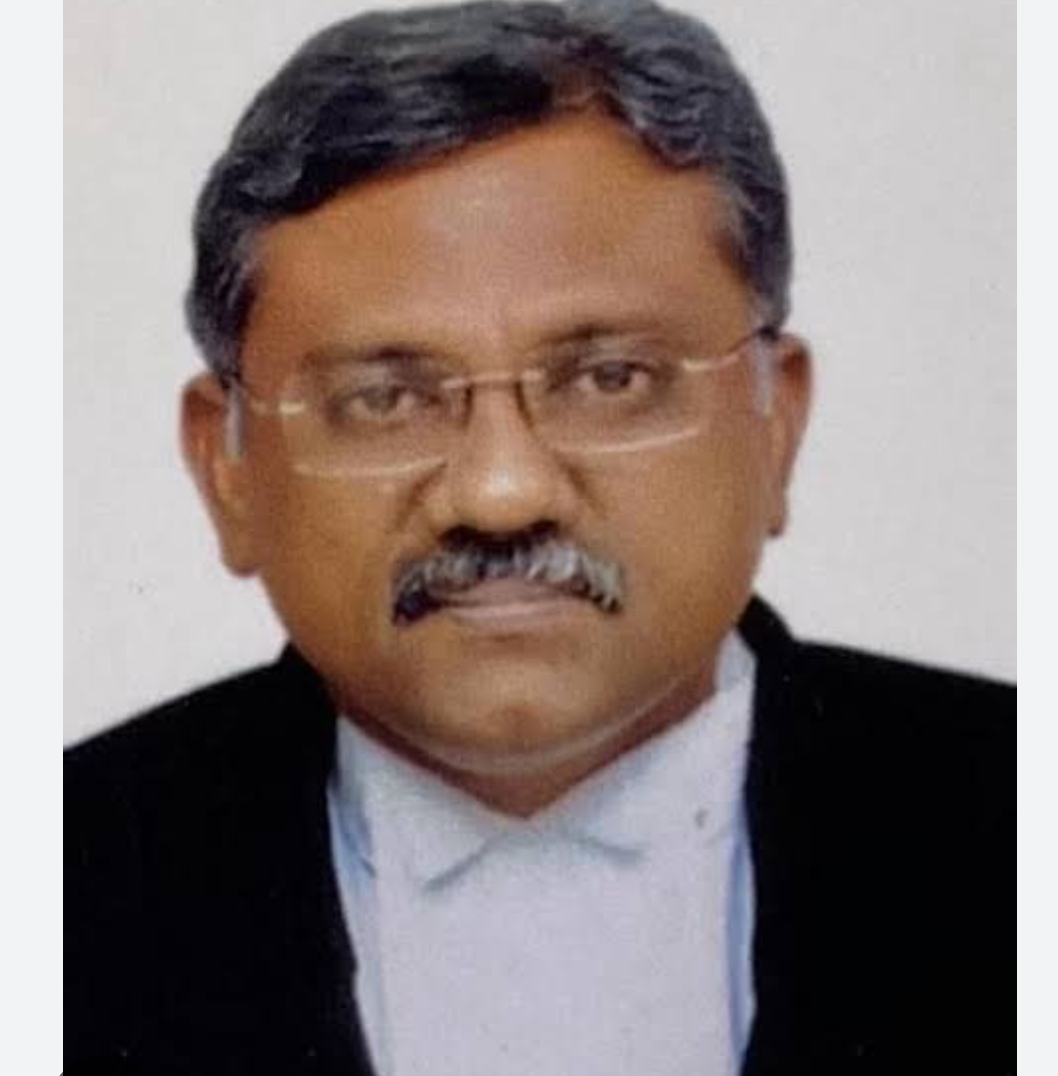
 ..Petitioners
Vs.
1.R.Vasantha
2.Ruckmani Ammal
3.B.Vijayalakshmi
4.Sarojini
5.R.Vijayalakshmi
6.Mohan
7.Uma
8.Sakunthala
9.Lakshmi Devi
10.Sreevidhya
11.Kiruthka
12. G.Ramarathinam
13. G.Damodaran
14. G.Ranganathan
15.Shanthamani
16.Kanchana
17.Banumathi
18.Pushpalatha
19.Kanagasudha
20.Rajagopal
21. K.Balakrishnan
22. K.Venkatesan
23.Jayalakshmi
24.Kanaga @ Saraswathi
25. S.Kothai Nayaki
26. S.Anantharamakrishnan
27. S.Vishnu Priya ..Respondents
Prayer: Civil Revision Petition filed under Article 227 of Constitution of
India, to call for the records relating to O.S.No.36 of 2021 from the file of the Principal Subordinate Judge, Coimbatore and strike off the plaint in O.S.No.36 of 2021 and allow the revision.
For Petitioners : Mr.ARL.Sundaresan Senior Counsel for Mrs.Meenakshi Ganesan
For Respondents : Mr.C.R.Prasanan for R1
No appearance for RR2 to 27
ORDER
This revision has been filed seeking to strike off the plaint in O.S.No.36 of 2021 pending on the file of the Principal Subordinate Court, Coimbatore.
2.I have heard Mr.ARL.Sundaresan, learned Senior Counsel for
Mrs.Meenakshi Ganesan, learned counsel for the petitioners and Mr.C.R.Prasanan, learned counsel for the 1st respondent. Though there is no
appearance for the respondents 2 to 27, in the light of the fact that the 1st respondent is the plaintiff in O.S.No.36 of 2021 and the relief in the revision being only to strike off the plaint filed by the 1st respondent, the respondents 2 to 27 are only formal parties and hence, the hearing and disposal of the revision is not going to cause any prejudice to them.
3.Mr.ARL.Sundaresan, learned Senior Counsel appearing for the petitioners would state that the present suit in O.S.No.36 of 2021 before the Principal Subordinate Court, Coimbatore, is a clear abuse of process of law. In this regard, the learned Senior Counsel would invite my attention to an earlier suit filed in O.S.No.1407 of 2015. The said suit was filed by the 20th defendant in the present suit for partition. However, an application in I.A.No.269 of 2016 was taken out by the 18th defendant in the said suit, who is the 2nd petitioner in the present revision petition and the 17th defendant in the present suit, seeking to reject the plaint under Order VII Rule 11 of CPC. The Trial Court, by order dated 20.12.2019, finding that the property could not be inherited by the husband of Kamalammal, who was the original purchaser of the property in the year 1955, in the presence of legal heirs of father of Kamalammal, proceeded to reject the plaint.
4.The learned Senior Counsel for the petitioners would contend that the present plaintiff, the 1st respondent herein was the 16th defendant in the earlier suit and therefore would be bound by the earlier judgment and decree, the suit having been rejected. He would further state that being a suit for partition, even the defendants are to be construed as plaintiffs and therefore, having not challenged the earlier judgment and decree, it is the contention of Mr.ARL.Sundaresan, learned Senior Counsel, the present suit is not
maintainable. He would further state that in such circumstances, the present suit cannot be continued and there is no useful purpose also, since the finding that the husband of Kamalammal is not entitled to any share having become final, there is no cause of action accruing to the present plaintiff/1st respondent, to stake a claim in the suit property. The learned Senior Counsel would therefore pray for the suit in O.S.No.36 of 2021 to be struck off, invoking the powers available under Article 227 of Constitution of India.
5.Per contra, Mr.C.R.Prasanan, learned counsel for the 1st respondent would state that firstly, the application to reject the plaint in the earlier suit was filed by one of the defendants and the present plaintiff was not a party to the said application and was also not heard before the plaint came to be rejected and therefore, it is the contention of the learned counsel for the 1st respondent that the said rejection order passed in the earlier suit would not bind the present plaintiff, the 1st respondent herein. Secondly, it is the contention of the learned counsel for the 1st respondent that the suit property was purchased by Kamalammal, out of her Sreedhana property and therefore, the property would have to go only under the provisions of Section 15 of the Hindu Succession Act and her husband would become entitled to a share in the property and therefore, these issues will have to be tried and the plaint cannot be struck off in limine. Thirdly, the learned counsel for the 1st respondent would state that after the plaint was rejected in the earlier suit, within a year, the present suit has been filed for partition and therefore, when the earlier judgment and decree is not binding on the 1st respondent/plaintiff, the present suit discloses a clear cause of action and therefore, the parties will have to go through trial before the issues
can be adjudicated on merits. Fourthly, the learned counsel for the 1st respondent would also rely on the provisions of Order VII Rule 13 of CPC to contend that even when an earlier application for rejection of plaint has been allowed under any of the provisions of Order VII Rule 11 of CPC, then it would not estop even the plaintiff in the earlier suit to file a fresh suit on the same cause of action, after curing the defects. Therefore, Mr.C.R.Prasanan, learned counsel would state that when there is no bar, even for the plaintiff in the earlier suit to file a fresh suit, the suit filed by the 16th defendant in the suit, the plaint of which has been struck off and the plaintiff in the present suit never be estopped or prevented from bringing the suit to adjudicate his rights in the suit property. The learned counsel for the 1st respondent would rely on the following decisions:
1.Radhika Vs. Aghnu Ram (AIR Online 1994 SC 276).
2.Virudhunagar Hindu Nadargal Dharma Paribalana Sabai and Others Vs. Tuticorin Educational Society and Others ((2019) 9 SCC 538).
3.Legend Estates Private Limited Vs. Mir Zaheer Mohammed Khan (2018 1CurCC 144).
4.Janaki Vs. Annapoorni (1995 1 L.W 141).
5.Delhi Wakf Board Vs. Jagdish Kumar Narang and Others ((1997) 10 SCC 192).
6.I have carefully considered the submissions advanced by the learned Senior Counsel for the petitioners and the learned counsel for the contesting 1st respondent.
7.The brief facts that are necessary to decide this revision are as follows:
On 02.09.1955, the suit property was purchased by one Kamalammal. The said Kamalammal died on 14.02.2013, leaving behind her husband alone as her only surviving legal heir. The husband of Kamalammal executed his last Will and testament on 25.10.2013 on the premise that as the only surviving legal heir of Kamalammal, he had inherited the entire property. The Will came into effect on 14.12.2013, when V.Kasthuri Naidu, the husband of Kamalammal passed away. The suit in O.S.No.1407 of 2015 was filed by one Kanagasudha, seeking partition and separate possession of her 1/25 share in the suit property. The claim of the plaintiff in the said suit was that as Kamalammal died without any issues, the suit property would devolve only upon the legal heirs of Kamalammal’s brothers, namely Rangasamy Naidu, Chinnasamy Naidu, Gopalsamy Naidu and Krishnasamy Naidu and sister, Ranganayaki, all of them not being alive and consequently, therefore upon their respective legal heirs.
8.It is not in dispute that the plaintiff in the present suit in O.S.No.36 of 2021 was arrayed as the 16th defendant in O.S.No.1407 of 2015. Pending the earlier suit in O.S.No.1407 of 2015, I.A.No.269 of 2016 was filed by Anantha Narayanan, the 18th defendant in the said suit, seeking rejection of the plaint on the ground that the property of Kamalammal would devolve only upon her husband, Kasthuri Naidu and would not revert back to the heirs of the father of Kamalammal. Accepting the said plea, the plaint came to be rejected on
20.12.2019.
9.No doubt, the plaintiff/16th defendant in the said suit was not arrayed as a respondent in the application seeking rejection of the plaint and was not heard before the plaint came to the rejected. I am however able to see that the present suit also proceeds on the footing that the property of Kamalammal would revert only to the heirs of her father and would not be inherited by her husband, in view of the property being the Sreedhana property acquired by the said Kamalammal from her father. Much reliance is also placed on the provisions of Order VII Rule 13 of CPC.
10.The Hon’ble Supreme Court, in Radhika’s case, held that where the property devolved on the daughter, mother of the appellant through her maternal grandfather and the mother of the appellant dying intestate, the property would devolve only on the daughter and the husband would stand excluded from succession to a property that was inherited by a female Hindu from her father side.
11.In Delhi Wakf Board’s case, the Hon’ble Supreme Court held that in view of mandate of Order VII Rule 13 of CPC, subsequent suit would not be barred, despite an earlier order rejecting the plaint.
12.In Legend Estates Private Limited’s case, the High Court of Telangana held that the question whether cause of action was real or not can be determined only at the end of trial and not in an application under Order VII Rule 11 of CPC. Relying on the said decisions, the learned counsel for the 1st respondent would contend that when even the rejection of plaint is not permissible, question of striking off the plaint invoking the extraordinary jurisdiction available under Article 227 of Constitution of India does not even arise.
13.In Janaki Vs. Annapoorni’s case, this Court held that when there was an error in applying the provisions of Hindu Succession Act, even if there was no plea by the defendant, the Court is bound to respect the provisions of law and apply the same correctly.
14.In Virudhunagar Hindu Nadargal Dharma Paripalana Subhai’s case, referred supra is relied on for the proposition that the High Court should normally refrain from exercising powers Article 227 of Constitution of India, when an alternate remedy was available under the statute.
15.Keeping the above ratio laid down by the Hon’ble Supreme Court, this Court as well as High Court of Telangana in mind and testing the facts of the present case, it is clear that there is no embargo for the plaintiff whose plaint has been rejected under Order VII Rule 11 of CPC to institute a fresh suit, even on the same cause of action. What all is required for the plaintiff to institute a fresh suit is that the defects that were pointed out in the application for rejecting the plaint, which was also accepted by the Court, are cured before a fresh suit is initiated. Here, it is not as if the defects for which the plaint was rejected in the earlier instance stands cured.
16.As already discussed herein above, in both the suits, the specific case of the plaintiff in the respective suits is that the property of Kamalammal was inherited by her father and therefore, in view of Section 15(2)(a) of the Hindu Succession Act, 1956, the property would devolve only upon the heirs of the father of Kamalammal and her husband would not be entitled to inherit the same. The said plea was negatived by the Court, while allowing the reject the plaint application in O.S.No.4107 of 2015. The said decree has admittedly become final. I find force in the submissions of the Mr.ARL.Sundaresan, learned Senior Counsel that without seeking to set aside the said decree, there cannot be a re-agitation of the same issue which would likely to even give rise conflicting judgments, besides opening of a floodgate for multiplicity of proceedings as well.
17.Admittedly, in the present suit, there is no prayer seeking to set aside the rejection of the plaint and thereby dismissal of the suit in O.S.No.1407 of 2015. Even otherwise, interpreting the provisions of the Hindu Succession Act, I do not find that the plaintiff in the present suit has any iota of interest to claim or right or share in the suit property.
18.The relevant provisions of the Hindu Succession Act, 1956, are extracted hereunder for easy reference.
“14. Property of a female Hindu to be her absolute property.-(1) Any property possessed by a female Hindu, whether acquired before or after the commencement of this Act, shall be held by her as full owner thereof and not as a limited owner.
Explanation.-In this sub-section, “property” includes both movable and immovable property acquired by a female Hindu by inheritance or devise, or at a partition, or in lieu of maintenance or arrears of maintenance, or by gift from any person, whether a relative or not, before, at or after her marriage, or by her own skill or exertion, or by purchase or by prescription, or in any other manner whatsoever, and also any such property held by her as stridhana immediately before the commencement of this Act.
(2) Nothing contained in sub-section (1) shall apply to any property acquired by way of gift or under a will or any other instrument or under a decree or order of a civil court or under an award where the terms of the gift, will or other instrument or the decree, order or award prescribe a restricted estate in such property.
15. General rules of succession in the case of female Hindus.-(1) The property of a female Hindu dying intestate shall devolve according to the rules set out in section 16,-
(a) firstly, upon the sons and daughters (including the children of any pre-deceased son or daughter) and the husband;
(b) secondly, upon the heirs of the husband;
(c) thirdly, upon the mother and father;
(d) fourthly, upon the heirs of the father; and (e) lastly, upon the heirs of the mother.
(2) Notwithstanding anything contained in sub-section
(1),-
(a) any property inherited by a female Hindu from her father or mother shall devolve, in the absence of any son or daughter of the deceased (including the children of any predeceased son or daughter) not upon the other heirs referred in sub-section (1) in the order specified therein, but upon the heirs of the father; and
(b) any property inherited by a female Hindu from her husband or from her father-in-law shall devolve, in the absence of any son or daughter of the deceased (including the children of any pre-deceased son or daughter) not upon the other heirs referred to in sub-section (1) in the order specified therein, but upon the heirs of the husband.”
19.The argument of Mr.C.R.Prasanan, is that the property being inherited by Kamalammal from her father’s side, the husband, Kasthuri Nayudu would not be entitled to any share and consequently, the Will executed by him has no validity in the eye of law. However, I am unable to countenance the said argument of Mr.C.R.Prasanan. As can be seen from the provisions of Section 14, moreso, the explanation, it is clear that the Sreedhana property is the absolute property of the female, that is Kamalammal, in the present case.
20.In such view of the matter, there is no question of applying Section 15(2)(a) to contend that the property was inherited by Kamalammal and
therefore, it would revert back to only the heirs of the father, that is her brothers and sisters and their respective heirs and not the husband of Kamalammal. Sreedhana property being an absolute property of Kamalammal would be open for succession on her intestate demise in terms of Section 15(1)(a) of the Act only and when the husband is alive and in the absence of any children, it is the husband who would take the entire benefit. Therefore, the plaintiff has no cause of action for filing the suit itself. Therefore, the decisions in Janaki’s case and Radhika’s case, would not apply to the facts of the present case.
21.No doubt, the High Court of Telangana in Legend Estates Private
Limited’s case, as well as the Hon’ble Supreme Court in Virudhunagar Hindu Nadargal Dharma Paripalana Sabhai’s case, have held that when alternate remedy is available, without exhausting the remedy, revision under Article 227 of Constitution of India should not be entertained. However, when there is an attempt at virtually re-litigating an issue that has already become final, it amounts to abuse of process. This Court can certainly exercise rights under Article 227 of Constitution of India, to nip the said futile exercise in the bud.
22.In view of the present suit being clearly not maintainable for more than one reason, firstly, the decree in the earlier suit in O.S.No.1407 of 2015 has become final and the present suit does not even challenge the said decree and secondly, in view of the admitted position that Kamalammal has purchased the suit property only out of Sreedhana, it becomes her absolute property and her intestate succession would be governed only by Section 15(1)(a) and would not revert back to her father’s heirs. Moreover, Sreedhana property is not to be treated as the property inherited by Kamalammal, but only as per self acquired property, in terms of explanation to Section 14 of the Act.
23.In the light of the above, the suit in O.S.No.36 of 2021 has no legs to stand and certainly I am well within the powers available under Article 227 of Constitution of India to strike off the plaint, which is not only amounting to a disguised re-litigation, but also an exercise in futility, since the writing is on the wall for the plaintiff, who can never make a claim for partition, which is not available to the plaintiff, under law.
24.In fine, the Civil Revision Petition is allowed and plaint in O.S.No.36 of 2021 is struck off file. There shall be no order as to costs. Connected Civil Miscellaneous Petition is closed.
22.08.2025
Speaking/Non-speaking order
Index : Yes/No ata
To
The Principal Subordinate Judge, Coimbatore.
P.B.BALAJI. J, ata
Pre-delivery order made in
CRP.No.2002 of 2021
& CMP.No.15195 of 2021
22.08.2025