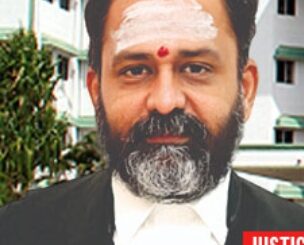
Madras High Court judge victoriya gowri orders protection of Nagercoil graves, declaring church cemeteries are held in trust
[22/12, 18:52] Sekarreporter: ”
Search
TOP STORIES
NEWS UPDATES
COLUMNS
BAR SPEAKS
ARTICLES
CARTOONS
VIDEOS
More
TOP STORIES
NEWS UPDATES
COLUMNS
BAR SPEAKS
ARTICLES
CARTOONS
VIDEOS
More
FOLLOW US
Home/News updates
Can Church Authorities Demolish Existing Graves at Will? Madras High Court Says Cemeteries Are Held in Trust
Madras High Court orders protection of Nagercoil graves, declaring church cemeteries are held in trust

By –
Salil Tiwari
|
22 Dec 2025 3:59 PM
Court says bishops and church officials do not enjoy absolute control over cemeteries and must act within constitutional and statutory limits
Rejecting claims of unfettered ecclesiastical control over burial grounds, the Madras High Court (Madurai Bench) has held that church authorities hold cemeteries in trust and cannot disturb existing graves without regard to constitutional limits and human dignity.
“Describing the Bishop as ‘title holder’ does not mean that he has an absolute right to “plough the cemetery like a field”. Any holder of property, particularly religious property dedicated to public or community use, is a trustee subject to constitutional limitations, human rights norms and statutory restrictions,” said the bench of Justice L. Victoria Gowri said.
Also Read – Madras High Court Flags ‘Favoured Few’ Culture in Govt Legal Spending, Orders Settlement of Lawyer’s Dues
Court made the observation while setting aside an order of a judicial magistrate at Nagercoil that had dismissed, on a technical ground, a plea seeking criminal investigation into the alleged demolition of graves in a century-old Christian cemetery in Punnai Nagar, Nagercoil.
Justice Gowri stressed that ownership or control over church property does not translate into unfettered power to disturb existing graves without due process or the consent of affected families.
Also Read – Delhi High Court Protects Personality Rights of Actor R Madhavan
The case arose from allegations by a parishioner of Lurthannai Church that on January 7 and 8, 2025, church office-bearers entered the parish cemetery with JCB machines and demolished existing tombs and grave structures. The petitioner claimed that the cemetery, in use for more than 100 years, serves as the sole burial ground for parish members and their families, who pay a fee for grave space, and that the demolition was carried out without consultation or consent.
Also Read – Kerala High Court nullifies land acquisition for proposed Sabarimala greenfield airport
Following the incident, the petitioner lodged a police complaint, which was later closed as “action dropped.” A status quo order was subsequently passed by the Revenue Divisional Officer amid factional disputes within the parish. With no FIR registered, the petitioner approached the judicial magistrate under Section 175(3) of the Bharatiya Nagarik Suraksha Sanhita, seeking a direction for investigation. The magistrate dismissed the plea solely because it was not accompanied by a supporting affidavit.
Also Read – Delhi HC Issues Notice on ED’s Plea Against Trial Court Order Refusing Cognisance Against Rahul, Sonia Gandhi in National Herald Case
Allowing the criminal revision, the high court held that the magistrate erred in rejecting the petition at the threshold. Relying on recent Supreme Court judgment in S.N. Vijayalakshmi & Others v. State of Karnataka & Another, the high court reiterated that non-filing of an affidavit is a curable defect and that courts must afford an opportunity to rectify such lapses before passing substantive orders.
Beyond the procedural issue, court examined whether the allegations disclosed cognizable offences. It noted that even the respondents admitted to demolishing tomb superstructures, though they claimed the action was authorised by a general body resolution and did not involve exhumation of bodies. At the revision stage, court said, it was not required to determine the validity of resolutions or rival claims within the church.
Court held that, taken at face value, the allegations prima facie attract Section 301 of the Bharatiya Nyaya Sanhita,
[22/12, 18:52] Meta AI: The Madras High Court has ruled that church authorities hold cemeteries in trust and cannot disturb existing graves without regard to constitutional limits and human dignity. This decision came in response to allegations of grave demolition in a century-old Christian cemetery in Nagercoil, where church office-bearers allegedly used JCB machines to demolish tombs and grave structures without consulting or obtaining consent from affected families.
Justice L. Victoria Gowri emphasized that ownership or control over church property does not grant unfettered power to disturb existing graves, stressing that any holder of property, particularly religious property dedicated to public or community use, is a trustee subject to constitutional limitations, human rights norms, and statutory restrictions.
The court set aside a judicial magistrate’s order dismissing a plea for criminal investigation into the alleged demolition, citing that non-filing of an affidavit is a curable defect and courts must afford an opportunity to rectify such lapses. ¹
Would you like to know more about the implications of this ruling or the specific laws governing church cemeteries in India?
[22/12, 18:53] Sekarreporter: “which penalises trespass and indignity in places of sepulture, as well as provisions of the Tamil Nadu Property (Prevention of Damage and Loss) Act. It rejected the argument that disputes of this nature could be relegated to civil or revenue proceedings.
In its most emphatic observations, court clarified that religious cemeteries cannot be treated as private estates of bishops or parish priests. Properties dedicated for religious and community use, it said, are held in trust for the benefit of the faithful. Any drastic alteration to such property, particularly where identifiable graves exist, must comply with constitutional guarantees, statutory safeguards and principles of human dignity.
“The Bishop or Parish Priest, at best, is a trustee or custodian; such status does not clothe them with absolute power to plough, demolish or repurpose cemeteries at will, especially where graves of identified families already exist,” Justice Gowri observed.
Court also criticised the police for treating allegations of grave desecration as a mere administrative dispute. Status quo orders by revenue authorities, it said, cannot supplant the obligation of the police to investigate cognisable offences under criminal law.
Setting aside the magistrate’s order, the high court remanded the matter for fresh consideration, directing that the petitioner be allowed to file the requisite affidavit. Court asked the magistrate to seek reports from the police and revenue authorities and then decide the plea on merits, keeping in view the court’s findings on the trust-like and sacred character of cemeteries.
Court clarified that its observations were limited to deciding the revision and would not prejudice any future investigation or trial.
Case Title: Arul Gerald Prakash vs State of Tamil Nadu and Others
Order Date: December 16, 2025
Bench: Justice L Victoria Gowri”
https://lawbeat.in/news-updates/can-church-authorities-demolish-existing-graves-at-will-madras-high-court-says-cemeteries-are-held-in-trust-1549435#:~:text=which%20penalises%20trespass,L%20Victoria%20Gowri
[22/12, 18:53] Meta AI: The Madras High Court has ruled that church authorities hold cemeteries in trust and cannot disturb existing graves without regard to constitutional limits and human dignity. In the case of Arul Gerald Prakash vs State of Tamil Nadu and Others, Justice L Victoria Gowri emphasized that religious cemeteries are not private estates of bishops or parish priests, but are held in trust for the benefit of the faithful.
The court clarified that any drastic alteration to such property, particularly where identifiable graves exist, must comply with constitutional guarantees, statutory safeguards, and principles of human dignity. The Bishop or Parish Priest is considered a trustee or custodian, lacking absolute power to demolish or repurpose cemeteries, especially where graves of identified families exist.
The ruling also criticized the police for treating allegations of grave desecration as a mere administrative dispute, stating that status quo orders by revenue authorities cannot supplant the obligation of the police to investigate cognizable offenses under criminal law.
The court set aside the magistrate’s order and remanded the matter for fresh consideration, directing the petitioner to file the requisite affidavit and seeking reports from the police and revenue authorities. ¹
Would you like to know more about the implications of this ruling or the specific laws governing church cemeteries in India?
[22/12, 18:53] Meta AI: ✅ *Head Notes:*
– Madras High Court ruled church cemeteries are held *in trust*, not private estates
– Bishops/Parish Priests are *trustees/custodians*, lack absolute power
– Demolishing graves requires compliance with constitutional guarantees, statutory safeguards, and human dignity
– Police must investigate cognizable offenses in grave desecration cases
– Status quo orders ≠ exemption from criminal law investigation
– Case: Arul Gerald Prakash vs State of Tamil Nadu and Others (Dec 16, 2025)