HIGH COURT RESERVED ON : 27.02.2026 PRONOUNCED ON : 21.04.2026 CORAM THE HONOURABLE MRS.JUSTICE L.VICTORIA GOWRI Crl.O.P.(MD).No.3481 of 2024 and Crl.M.P.(MD)Nos.2761 and 2763 of 2024 Jayaraman @ Pattti Jayaraman … Petitioner/Accused No.5 Vs. 1. The State of Tamil Nadu, Rep . by the Sub Inspector of Police, Kallikudi Police Station, Madurai District.
 BEFORE THE MADURAI BENCH OF MADRAS HIGH COURT
RESERVED ON : 27.02.2026
PRONOUNCED ON : 21.04.2026
CORAM
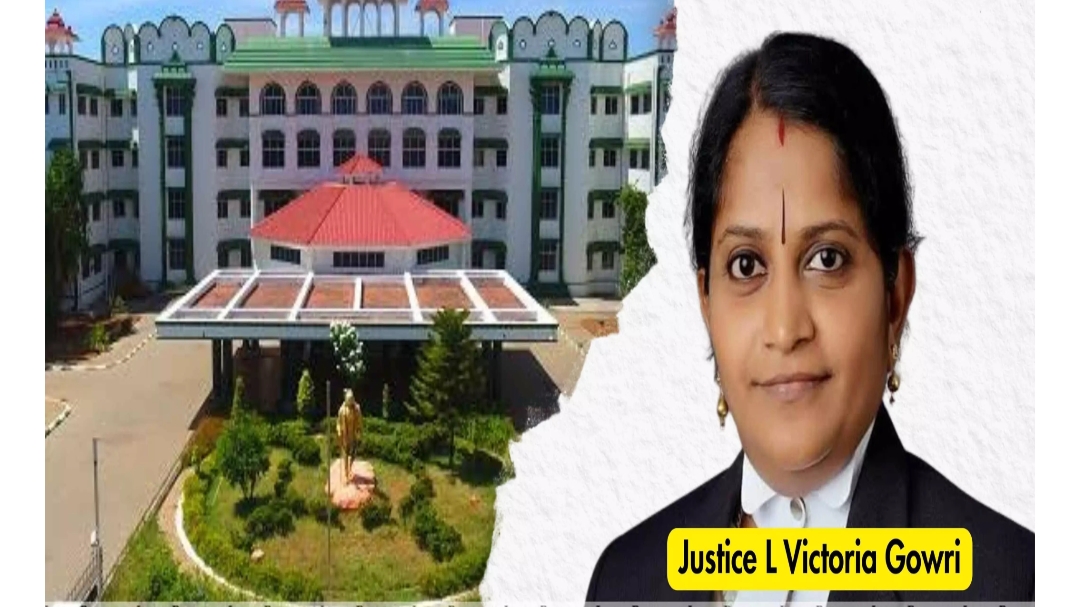
THE HONOURABLE MRS.JUSTICE L.VICTORIA GOWRI
Crl.O.P.(MD).No.3481 of 2024 and
Crl.M.P.(MD)Nos.2761 and 2763 of 2024
Jayaraman @ Pattti Jayaraman
… Petitioner/Accused No.5
Vs.
1. The State of Tamil Nadu,
Rep . by the Sub Inspector of Police, Kallikudi Police Station, Madurai District.
Crime No.262/2013 …. Respondents / Complainant
2. Sankaralingam … Respondent /
De-facto Complainant
Prayer : Criminal Original Petition is filed under Section 528 of BNSS, 2023, to call for the records in C.C No. 541 of 2023 on the file of the learned Judicial Magistrate, Thirumangalam, and quash the same as for as the petitioner is concerned.
For Petitioner : Mr.K.N.Thampi
For R-1 : Mr.B.Thanga Aravindh,
Government Advocate (Crl. Side)
For R-2 : Mr.J.Jeyakumaran
ORDER
Preface:
This Criminal Original Petition has been filed seeking to quash the proceedings in C.C.No.541 of 2023 pending on the file of the learned Judicial Magistrate, Thirumangalam, insofar as the petitioner/A5 is concerned.
2. The petitioner stands arrayed as the fifth accused. The criminal law was set in motion on the complaint lodged by the second respondent/de-facto complainant, pursuant to which the first respondent police registered a case in Crime No.262 of 2013 for the offences under Sections 406, 420, 465, 468, 471 and 506(i) IPC. Upon completion of investigation, the final report came to be laid for the offences under Sections 120-B, 423, 465, 468, 471, 473, 406,
420 and 506(i) IPC.
3. The gravamen of the accusation is that accused Nos.1 to 4,acting in concert, induced several innocent persons by making a false promise that employment would be secured for them in the Railways Department, collected huge sums of money from them, fabricated appointment-related documents and, when the deceit surfaced, threatened the victims instead of returning the money. The petitioner, who is the father of the second accused, seeks quashment on the ground that no specific overt act is attributed to him except his alleged presence at the time of a panchayat and execution of an undertaking for repayment.
4. This Court heard the submissions made on either side and carefully examined the materials placed on record.
Case of the Prosecution:
5. The prosecution case, as could be gathered from the First
Information Report, final report and the statements recorded under Section 161 Cr.P.C., 1973. is that the first accused, who is the sonin-law of the present petitioner, along with accused Nos.2 to 4, induced the de-facto complainant and several others, including Rajalakshmi, Chandrasekaran, Anbarasan and Alagarsamy, by representing that they were capable of securing jobs for them in the Railways Department.
6. Believing the said representation, the victims are said to have parted with substantial amounts of money on different dates. It is the further case of the prosecution that bogus appointment orders were thereafter created and issued, and the victims were even instructed to proceed to join duty, only to later discover that the entire exercise was a sham and that they had been duped.
7. When the cheated persons demanded the return of the money, the accused allegedly convened a panchayat near the garden land belonging to the petitioner/A5, close to a Murugan Temple. In the said panchayat, an agreement or acknowledgment is stated to have been executed assuring repayment of the amounts received. According to the prosecution, the presence of the petitioner in the said meeting was not casual, but indicative of his active support, consent and complicity in the acts committed by the other accused.
8. The prosecution would further state that as many as sixcases have been registered in connection with the same modus operandi adopted by the accused persons and that the present case forms part of a larger design of job racketeering. The petitioner, being a person of local influence and the father of the second accused, is alleged to have lent support and legitimacy to the acts of the principal accused, thereby facilitating the cheating of the victims and the intimidation that followed.
Grounds for Quash:
9. The principal contention of the learned counsel appearing for the petitioner is that the petitioner has been falsely implicated merely because he is related to accused Nos.1 to 4. According to the learned counsel, the petitioner is the father of the second accused and the father-in-law’s family has been roped in only to widen the net of criminal liability.
10. It is further contended that even according to the prosecution, the only role attributed to the petitioner is that he was present on 25.06.2013 at the time when a panchayat was held in his garden land and an assurance was allegedly given for repayment of the amount. The learned counsel would submit that mere presence at such a meeting, that too after the alleged transactions had already taken place, cannot by itself give rise to criminal liability for conspiracy, cheating, criminal breach of trust, forgery or use of forged documents.
11. The learned counsel would further contend that no money is alleged to have been received by the petitioner from any of the victims; no forged document is attributed to him; no specific act of inducement is alleged against him; and no material is available to show that he participated in the promise of employment or in the preparation of false appointment orders.
12. It is therefore submitted that the allegations against the petitioner are vague, omnibus and bereft of particulars, and that continuation of the prosecution against him would amount to abuse of process of Court.
Arguments on either Side:
13. The learned counsel for the petitioner would submit that the materials placed by the prosecution, even if taken at face value, would not make out the ingredients of the offences alleged against the petitioner. The petitioner is not stated to have induced anyone to part with money. There is also no allegation that he prepared or used forged documents or that he personally threatened any of the victims.
14. It is further submitted that the final report proceeds on surmises and assumptions and seeks to infer conspiracy merely from relationship and presence. Criminal conspiracy, being a serious charge, cannot be inferred lightly and there must be at least prima facie material to show meeting of minds. In the absence of such material, the petitioner cannot be compelled to undergo the rigours of a criminal trial.
15. The learned counsel would also draw attention to the fact that accused No.1 has since died and that the case against the present petitioner must be examined strictly on the basis of specific material available against him. Since no distinct role is attributed to him, the proceedings insofar as the petitioner is concerned deserve to be quashed.
16. Relying upon the judgment of the Hon’ble Apex Court in the case of Madhavrao Jiwaji Rao Scindia and another etc. vs Sambhajirao Chandrojirao and others , the learned Counsel submitted that the Court cannot be utilised for any oblique purpose and where in the opinion of the Court chances of an ultimate conviction are bleak and insisted that even in this case there will not be any useful purpose which could be served by allowing the criminal prosecution to be continued as against the petitioner who is the 5th Accused.
17. Further renting upon the the Hon’ ble Apex Court judgment in Rajendra Bihari Lal and another vs State of UP and others case the learned Counsel insisted that the criminal law cannot be allowed to be made a tool of harassment of innocent persons, allowing prosecuting agencies to initiate prosecution at their whims and fancy, on the basis of completely incredulous material.
18. Per contra, the learned Government Advocate (Crl. Side) would submit that the materials collected during investigation clearly reveal the petitioner’s involvement in the overall design. According to him, the offences were not isolated or individual acts, but were committed pursuant to a concerted scheme to deceive unemployed persons by promising Railway jobs.
19. The learned Government Advocate would further submit that the statement of witnesses discloses that substantial sums were paid in the presence of influential persons and that the accused had repeatedly assured the victims that jobs would be secured. When the fraud came to light, all the accused together, including the petitioner, participated in the subsequent panchayat and handled the demands for repayment.
20. It is the specific submission of the prosecution that the petitioner’s garden land was used as the venue for the meeting and that the acts of the other accused in threatening the victims and attempting to pacify them by executing a written undertaking, in the presence and with the support of the petitioner, constitute strong prima facie material of his participation and knowledge.
21. The prosecution would also submit that the role of each accused need not be proved in its entirety at the stage of quashment and that when the materials disclose a prima facie case requiring adjudication on evidence, this Court ought not to exercise its inherent jurisdiction to stifle the prosecution.
22. The learned counsel appearing for the second respondent would adopt the submissions of the learned Government Advocate and would contend that the victims were induced, cheated and threatened in a coordinated manner and that the petitioner cannot escape trial merely by describing his role as minimal.
Point for Consideration:
23. In the light of the rival submissions, the point that arises for consideration is whether the materials available on record make out a prima facie case as against the petitioner/A5 so as to warrant continuation of the prosecution in C.C.No.541 of 2023, or whether the proceedings insofar as he is concerned deserve to be quashed in exercise of the inherent jurisdiction of this Court?
Analysis:
24. The scope of interference under Section 482 Cr.P.C., 1973, is too well settled to require elaborate restatement. At the stage of quashment, this Court is not expected to undertake a meticulous appreciation of evidence or conduct a mini trial. The Court is required only to ascertain whether, on a plain reading of the complaint, final report and the materials collected during
investigation, the allegations disclose the ingredients of the offences alleged and whether continuation of the prosecution would amount to abuse of process of law.
25. The argument of the petitioner is built around the assertion that his presence at the panchayat is the only allegation against him. This Court is unable to accept such a narrow reading of the materials. When the prosecution case is that the victims were induced to part with money on the promise of Railway jobs, that bogus appointment documents were created, and that, after the deceit surfaced, the victims were taken to the garden land of the petitioner where the matter was discussed and assurance for repayment was reduced into writing, the presence of the petitioner at such a crucial stage cannot be treated as wholly innocuous at this threshold stage.
26. It is true that there is no allegation that the petitioner himself prepared any forged appointment order or directly received money from each of the victims. However, criminal conspiracy is seldom capable of direct proof. It is usually inferred from conduct, surrounding circumstances and the chain of events. The petitioner is not projected as a stranger to the principal accused. He is closely related to them and is alleged to have provided local support and shelter to their activities. The witnesses, according to the prosecution, speak about the amounts received, the false assurances given and the subsequent conduct of the accused, including the events that took place in the petitioner’s land.
27. At this juncture, the contention that the petitioner had norole except passive presence is essentially a defence. Whether his presence was merely incidental or whether it reflected conscious participation in the common design is a matter to be tested only in the course of trial.
28. As regards the offence under Section 120-B IPC, the materials prima facie indicate that the acts attributed to the accused were not isolated, but interconnected and directed towards the common object of obtaining money from the victims by false promise of employment. The alleged meeting conducted at the petitioner’s land, the execution of an undertaking to repay the cheated amount and the allegation of intimidation in that setting do furnish prima facie circumstances from which conspiracy and shared knowledge may legitimately be inferred for the limited purpose of proceeding to
trial.
29. Insofar as the offence under Section 423 IPC is concerned, this Court finds substance in the contention that the ingredients of the said provision do not appear to have been clearly spelt out in the factual matrix of the present case. Section 423 IPC relates to dishonest or fraudulent execution of a deed of transfer containing a false statement of consideration. The prosecution narrative, however, is predominantly one of job cheating, forgery of appointment orders, criminal breach of trust and criminal intimidation. The undertaking said to have been executed in the panchayat assuring repayment of the amounts received, by itself, would not straightaway satisfy the requirements of a deed of transfer envisaged under Section 423 IPC.
30. Therefore, while the materials may justify continuation of prosecution for the other offences alleged, the invocation of Section 423 IPC appears legally misconceived on the facts projected in the final report.
31. Coming to the offences under Sections 465, 468, 471 and 473 IPC, the prosecution case is that false appointment-related documents were prepared and used as genuine for deceiving the victims. Whether the petitioner had direct authorship, constructive knowledge or participatory involvement in such forgery-related offences is again a matter that would depend upon evidence. At this stage, when the prosecution alleges a concerted scheme and has placed witness statements indicating the overall participation of all the accused, it would be premature to truncate the prosecution against the petitioner altogether.
32. Similarly, as regards Sections 406 and 420 IPC, the material placed by the prosecution indicates that money was collected on false promise and not returned despite repeated demands. The petitioner’s exact degree of involvement in the entrustment and dishonest inducement cannot be definitively decided in proceedings under Section 482 Cr.P.C. Once the prosecution has produced materials suggesting that he was not an outsider but a supporting participant in the overall transaction and its aftermath, the matter must be left for trial.
33. The allegation of criminal intimidation under Section 506(i) IPC also cannot be brushed aside at this stage, particularly when the prosecution version is that when the victims demanded return of the money, the accused collectively threatened them with dire consequences in the petitioner’s premises. Whether such intimidation was in fact uttered and whether the petitioner shared common intention or common object in such conduct are factual matters that require appreciation of oral evidence.
34. The settled principle is that where the allegations, taken at face value, disclose a prima facie case and where disputed questions of fact arise, the inherent jurisdiction of this Court must be exercised sparingly and with great caution. The defence sought to be projected by the petitioner can very well be agitated before the trial Court at the appropriate stage.
35. This Court is therefore of the considered view that the petitioner has not made out a case for quashment of the entire proceedings. At the same time, since the ingredients of Section 423 IPC are not borne out from the prosecution narrative, the charge under the said provision insofar as the petitioner is concerned is liable to be interfered with.
36. The materials available on record, when read as a whole, do disclose a prima facie case as against the petitioner for the offences arising out of the alleged job racketing scheme. The role attributed to the petitioner cannot be isolated and diluted at this stage so as to hold that continuation of the prosecution is an abuse of process. The Court cannot enter into a roving enquiry on disputed facts in a petition under Section 482 Cr.P.C.
37. However, the inclusion of Section 423 IPC in the final report does not appear to be supported by the factual foundation set out by the prosecution. To that limited extent alone, interference is warranted.
38. The personal appearance of the petitioner before the learned trial Court is dispensed with, except for the following stages:
(i) at the time of furnishing copies and initial appearance, if so required;
(ii) at the time of framing of charges, if any;
(iii) at the time of examination under Section 313 Cr.P.C.;
(iv) at the time of pronouncement of judgment; and
(v) on such other dates as the learned Trial Judge may
specifically direct his presence.
39. In the result, this Criminal Original Petition is partlyallowed in the following terms:
(i) The proceedings in C.C.No.541 of 2023 on the file of the learned Judicial Magistrate, Thirumangalam, are quashed insofar as the offence under Section 423 IPC alone is concerned as against the petitioner/A5.
(ii) In respect of the other offences, namely, Sections 120-B, 465, 468, 471, 473, 406, 420 and 506(i) IPC, the prayer for quashment is rejected and the prosecution shall proceed in accordance with law.
(iii) The learned Judicial Magistrate, Thirumangalam, shall proceed with the trial uninfluenced by any of the observations made in this order, since the observations contained herein are only for the purpose of deciding the present quash petition. Consequently, Crl.M.P(MD)No.2761 of 2024 is closed. Crl.M.P.(MD)No.2763 of 2024 is allowed.
21.04.2026
NCC : Yes / No
Index : Yes / No
Internet : Yes/ No
Sml
To
1.The Judicial Magistrate, Thirumangalam.
2.The Sub Inspector of Police, Kallikudi Police Station, Madurai District.
3.The Additional Public Prosecutor, Madurai Bench of Madras High Court, Madurai.
L.VICTORIA GOWRI, J.
Sml
CRL OP(MD)No.3481 of 2024
21.04.2026
![[12/21, 08:03] Sekarreporter1: https://twitter.com/sekarreporter1/status/1340847849525788675?s=08 [12/21, 08:03] Sekarreporter1: Madras HC seeks response from Centre and state over plea urging police to identify unclaimed dead bodies using Aadhaar details – http://toi.in/OTm_mZ/a31gj Use the TOI app to get Breaking news and headlines. Download now: https://timesofindia.onelink.me/efRt/ASmwebshare](https://www.sekarreporter.com/wp-content/themes/hueman/assets/front/img/thumb-medium-empty.png)