28. In view of the above factual discussion and legal position considered, this Court has no hesitation in arriving at a conclusion that the writ order cannot be sustained. Accordingly, the Writ Appeal stands allowed.
IN THE HIGH COURT OF JUDICATURE AT MADRAS
DATED : 08.06.2026
CORAM
THE HON’BLE MR JUSTICE S. M. SUBRAMANIAM
AND
THE HON’BLE MRS.JUSTICE R.KALAIMATHI
W.A.No.838 of 2026
and
C.M.P.No.8721 of 2026
1. The State of Tamil Nadu
rep. by its Secretary to Government
Health and Family Welfare Department
Secretariat, Fort St.George
Chennai-600 009.
2. The State of Tamil Nadu
rep. by its Secretary to Government
Finance (Pay Cell) Department
Secretariat, Fort St.George
Chennai-600 009.
3. The Director
Director of Medical Education
Kilpauk, Chennai-600 010.
4. The Director of Medical and Rural Health Services
Anna Salai, Chennai-600 006. … Appellants
vs.
1. D.Mageswari
D/o.P.Dhanikachalam
2. K.Gajalakshmi
D/o.K.Krishnamoorthy
3. S.Baraneswari
D/o.Sivaprakasam
4. A.Shenbagavalli
D/o.N.Adikesavan
5. M.Vijayalakshmi
D/o.M.Mani
6. S.Sheela
D/o.Sundaram
7. R.Sathiya
D/o.G.Ranganathan
8. P.Umamaheshwari
D/o.K.Perumal … Respondents
Writ Appeal filed under Clause 15 of the Letters Patent, praying to set aside the order dated 18.12.2023 in W.P.No.18408 of 2023.
For Appellants : Mr.Vijay Narayan
Advocate General
assisted by
Ms.C.N.G.Niraimathi
For Respondents : Ms.S.Shanmitha
*****
J U D G M E N T
[Judgment of the Court was made by S. M. SUBRAMANIAM, J.,]
The present intra-Court appeal has been instituted under Clause 15 of Letters Patent by the State of Tamil Nadu, challenging the writ order dated 18.12.2023 passed in W.P.No.18408 of 2023. The State preferred the appeal mainly on the ground that the financial implication of the order of the writ Court would run into several Thousand Crores and more so, that the writ order has been passed based on an erroneous interpretation of the Government Order issued in G.O.Ms.No.340, Finance (Pay Cell) Department, dated 26.08.2010.
2. Mr.Vijay Narayanan, learned Advocate General, would mainly contend that some writ petitions were previously allowed, Division Bench confirmed those orders and Hon’ble Supreme Court dismissed the Special Leave Petitions at the admission stage. However, in S.L.P.D.(Civil)D.No.6536 of 2024, the Hon’ble Apex Court, by order dated 18.03.2024, observed that the question of law is kept open to be considered in an appropriate case and that “this order shall not be treated as a precedent”. Citing the said order, the learned Advocate General would contend that the issue requires closure examination of the facts in the context of the policy decision taken by the Government in the matter of fixation of pay. Therefore, in the present case, the test regarding the eligibility of employees appointed into Government service after 01.06.2009 to avail the benefit of pay fixation with 1.86 fitment benefit is required to be considered.
3. The uncontroverted facts, in brief, are that the respondents were appointed into Government service through the Tamil Nadu Public Service Commission [hereinafter “TNPSC” for the sake of brevity] after 02.06.2009. Therefore, their pay was fixed based on the recommendations of the State Sixth Pay Commission. The basic pay applicable to the cadre in which the respondents joined was granted to them. Subsequently, they instituted writ proceedings claiming the benefit of the Government Order issued in G.O.Ms.No.340 dated 26.08.2010, wherein certain contractual employees appointed through a Special Competitive Examination conducted by the TNPSC were granted the benefit of revised pay fixation by extending 1.86 fitment benefit. Since the said Government Order provided monetary benefit to contract employees absorbed as permanent employees joined after 01.06.2009, all the employees, directly recruited through the TNPSC after 01.06.2009 also started claiming monetary benefits on 1.86 fitment benefit based on G.O.Ms.No.340 dated 26.08.2010.
4. The sixth pay commission recommendations were implemented vide G.O.Ms.No.234, Finance (Pay Cell) Department dated 01.06.2009. The Government notified the Tamil Nadu Revised Scales of Pay Rules, 2009, revising the scales of pay notionally with effect from 01.01.2006 and granting monetary benefits with effect from 01.01.2007. 01.06.2009 is the cut-off date, beyond which fresh recruits were directly placed in the revised scale of pay, and therefore, they were not entitled to 1.86 fitment benefit, which was applicable in respect of the employees who were in service prior to 01.01.2006.
5. By G.O.Ms.No.258, Finance (Pay Cell) Department dated 23.06.2009, the Government allowed 1.86 fitment benefit for pay fixation only to fresh recruits appointed between 01.01.2006 and 31.05.2009. Therefore, employees appointed on or after 01.06.2009 were not entitled to 1.86 fitment benefit, which was granted to the employees appointed prior to 01.06.2009.
6. The background leading to the issuance of G.O.Ms.No.340 is of paramount importance for distinguishing the employees, appointed on a contract basis prior to 01.06.2009 and later absorbed into regular vacancies. G.O.Ms.No.340 is self speaking and provides details regarding the eligibility for the fitment benefit contemplated therein.
7. In the year 2003, on account of a State wide general strike by Government employees throughout the State of Tamil Nadu, to mitigate administrative exigencies, the Government engaged about 11,000 Junior Assistants on contract basis on a consolidated pay of Rs.4,000/- per month. They continued in service even after the strike came to an end. Thereafter, the Government took a policy decision to absorb these contract employees by conducting the Special Competitive Examination through the TNPSC. Accordingly, the TNPSC issued a notification on 06.12.2007 for conducting the Special Competitive Examination. Pursuant thereto, 4,301 candidates were selected and 7,000 candidates were not selected.
8. In pursuance of the Special Competitive Examination conducted by the TNPSC, final selection list was approved by the TNPSC on 02.06.2009 and 10.07.2009 and was communicated to various Departments between 16.07.2009 and 27.07.2009 respectively i.e., after the cut-off date of 01.06.2009.
9. Admittedly, the respondents herein came to be appointed into the Government Service only in December 2009, more specifically, after the cut-off date of 01.06.2009.
10. In view of the fact that an anomaly arose on account of the administrative delay in appointing the contract employees selected through TNPSC numbering 4301, the Government examined the case of these contract employees absorbed into Government Service through the Special Competitive Examination for grant of monetary benefits on par with their juniors, who had been appointed before 01.06.2009 from the very same batch. In other words, out of 11,000 contract employees participated in the Special Competitive Examination conducted by the TNPSC, 4301 candidates were selected. However, they were appointed on different dates in various Departments, before 01.06.2009 and after 01.06.2009.
11. Thus, a pay anomaly arose in respect of the selected candidates who were appointed after 01.06.2009, since their batch mates had secured the benefit of the Pay Commission recommendations, including 1.86 fitment benefit. Therefore, their case alone was exclusively considered by the Government for grant of equal pay, in order to eliminate discrimination amongst the homogeneous class of employees, who were initially appointed on a consolidated pay as contract employees, later participated in the Special Competitive Examination and appointed into Government Service. Therefore, G.O.Ms.No.340 is no way connected with the employees who were directly recruited into Government service after 01.06.2009, for whom pay was fixed based on the recommendations of the Sixth Pay Commission.
12. However, based on the said G.O.No.340, all the employees who joined Government service directly after 01.06.2009 also started claiming the benefit on par with the contract employees selected through the Special Competitive Examination and appointed before 01.06.2009 and after 01.06.2009. Pertinently, such contract employees cannot be compared with employees, who were directly appointed into Government service after 01.06.2009.
13. G.O.Ms.No.340 clarifies the said factual position in unambiguous terms. The anomaly amongst contract employees was rectified through G.O.Ms.No.340 based on the recommendations of the One Man Commission. Therefore, G.O.Ms.No.340 is not a Government Order issued pursuant to the original recommendations of the Pay Commission but it was issued to rectify the anomaly that arose amongst contract employees appointed before 01.06.2009 and after 01.06.2009 considering the delay in appointments occurred on account of the administrative reasons. The One Man Commission considered the grievances and recommended based on which the Government issued G.O.Ms.No.340 dated 26.08.2010. The above position has been amplified in G.O.Ms.No.340, more specifically, in paragraph Nos.3, 4, 5 and 6 which read as follows:
“3) The One Man Commission has examined and observed that the disparity in pay of Junior Assistants/ Agricultural Officers recruited by the Tamil Nadu Public Service Commission in March’2009 and May, 2009 and who joined on or after . 1—6—2009 has arisen due to delay in relieving the individual employees by the departments concerned where they were working as Contract Assistants and in the case of Agricultural Officers, the delay in joining duty is due to the issue of posting orders issued by the Regional Joint Directors of Agriculture which is purely administrative delay and not the fault of the individuals. Hence, considering the above peculiar circumstances and also taking into account the fact that some of the juniors happened to draw more pay than their seniors (as per their seniority list of Tamil Nadu Public Service Commission) by way of fitment benefit due to their joining prior to 01—06—2009 and the seniors joining duty after 01—06—2009 due to administrative reasons, the Commission has therefore recommended to compensate the monetary loss incurred by the employees recruited by Tamil Nadu Public Service Commission in March, 2009 and May, 2009 in the same batch but appointed on a date after 01—6—2009 due to administrative reasons by relaxing Rule-9 of the Tamil Nadu Revised Scales of Pay Rules, 2009 in favour of the incumbents.
4) The Government has carefully examined the above recommendations of the One Man Commission and decided to rectify the anomaly as pointed out by the One Man Commission. Accordingly, Government direct that in exercise of the powers conferred under Rule -13 of the Tamil Nadu Revised Scales of Pay Rules. 2009 relax the Rule-9 of the Tamil Nadu Revised Scales of Pay Rules, 2009 in favour of the incumbents recruited as Junior Assistants from among the Contract Assistants Z Agricultural Officers and any other similar categories of posts recruited by the Tamil Nadu Public Service Commission in the same batch prior to 1—6—2009 and joined / appointed on a subsequent date on or after 1—6—2009 due to administrative reasons duly allowing the fitment benefit to the individual employees concerned as a special case. However. Government direct that the above fixation benefit shall be given notional effect from the date of appointment of the individual employees concerned with monetary benefit from 1—8—2010.
5) Based on the above general orders, the Heads of Departments / Pay fixing authorities concerned’are requested to re-fix the pay of the individual employees concerned by issuing separate Office Proceedings in.this regard immediately.
6) The above orders allowing fitment benefit is not applicable to the new recruits in whose cases the selection list have been issued by the Tamil Nadu Public Service Commission / Employment Exchanges and consequent appointment orders issued by the Heads of Departments after 1—6—2009 i.e. after the date of issue of notification of the Tamil Nadu Revised Scales of Pay Rules, 2009 in the G.O.first read above. In such cases, the new recruits are entitled to have their pay fixed only at the minimum of the Pay Band plus Grade Pay applicable to the respective posts.”
14. A reading of the above portions of G.O.Ms.No.340 would be sufficient to understand that the said Government Order is not a Pay Commission order, but rectification of anomaly made pursuant to the recommendations of the One Man Commission to redress the grievances of contract employees appointed before 01.06.2009 and after 01.06.2009 due to the administrative delay.
15. Let us now consider the right of respondents / Government employees regarding the revised pay in the context of G.O.Ms.No.340.
16. Rule 2(1) of the Tamil Nadu State and Subordinate Service Rules, which were in force during the relevant point of time in respect of the appointments of the respondents, defines that “A person is said to be “appointed to a service” when in accordance with these rules or in accordance with the rules applicable at the time, as the case may be, he discharges, for the first time the duties of a post borne on the cadre of such service or commences the probation, instruction or training prescribed for members thereof.”
17. Even in the Tamil Nadu Government Servants (Conditions of Service) Act, 2016, Section 3(b) defines “appointed to a service” means when a person appointed in accordance with this Act or in accordance with the rules applicable at the time, as the case may be, discharges, for the first time the duties of a post borne on the cadre of such service or commences the probation, instruction or training prescribed for members thereof.
18. Therefore, mere selection or publication of a selection list would not confer any right on the candidates.
19. In this regard, the Hon’ble Supreme Court of India in Prafulla Kumar Swain Vs. Prakash Chandra Misra 1993 (Supp) 3 SCC 181, has pointed out the distinction between selection and appointment on the following lines:-
“The term recruitment connotes and clearly, signifies enlistment, acceptance, selection or approval for appointment. Certainly,-this is not actual appointment or posting in service. In contradistinction, the word “appointment” means an actual act of posting a person to a particular office.”
20. Further in State of Madhya Pradesh Vs. Raqhvir Singh Yadev 1994 (6) SCC 151, the Hon’ble Supreme Court has held, that the Government is entitled even to cancel a selection and conduct a fresh recruitment. The candidates, who got selected, may only have a legitimate expectation to be considered but, according to the rules in vogue. Therefore, only by mere recruitment, enlisting or selection the candidates cannot claim a right on par with those who were actually appointed .to the service.
21. An employer is well within his powers to cancel the selection at any point of time and the right accrues only after issuance of the appointment order and not otherwise. In the present case, the claim of the respondents is mainly based on the fact that they were selected and that final selection list was published on 07.11.2008. Therefore, according to them, they are to be construed as having been appointed into Government service prior to 01.06.2009 and thus, they are entitled to the monetary benefit under G.O.Ms.No.340.
22. Such a claim is baseless in view of the legal position that mere participation in the selection process or even selection by itself does not confer any right on a candidate. Admittedly, the respondents were appointed only after 02.06.2009 and their pay was fixed in accordance with the pay rules in force as on their respective dates of appointment. Thus, they cannot claim any pay benefit that was granted to the contract employees appointed in the year 2003 during general strike period, and permitted to participate in the Special Competitive Examination conducted by TNPSC and subsequently absorbed into the regular establishment in various Government Departments.
23. Admittedly, the respondents are appointed into Government service after 01.06.2009, and granted revised scale of pay in force as on their respective dates of appointment. They had not drawn any pay in the pre-revised scale of pay, which was considered under G.O.Ms.No.340 in respect of the contract employees. G.O.Ms.No.340 would not apply to the employees appointed into Government service after 01.06.2009.
24. Hon’ble Supreme Court in the case of S.C.Chandra and Others vs. State of Jharkhand and others reported in (2007) 8 SCC 279, held the fixation of pay is a delicate mechanism which requires various considerations including financial capacity, responsibility, educational qualification, mode of appointment, etc., and it has a cascading effect. If there is complete and wholesale identity between the two groups, even the employees in the two groups are doing identical work, then they cannot be granted higher pay, if there is no complete and wholesale identity. It is further submitted that fixing the pay scales by the Courts by applying the principle of equal pay for equal work upsets the high constitutional principle of separation of powers between the three organs of the State.
25. In the present case, the pay and allowances admissible to the respondents from their respective dates of appointment after 02.06.2009 were granted based on the pay rules in force as on their respective dates of appointment. Therefore, they cannot claim any financial benefits in comparison with the contract employees who were appointed in the year 2003 and subsequently, absorbed into regular service based on the
Special Competitive Examination. G.O.Ms.No.340 was issued pursuant to the recommendation of the One Man Commission to redress the grievance of a particular group of employees who faced discrimination on account of the administrative delay in issuing appointment orders.
26. This Court is of the considered view that the learned counsel for the respondents referred to certain earlier orders of this Court granting relief to employees who were appointed after 01.06.2009. Pertinently, the scope of G.O.Ms.No.340 was not considered in those judgments, nor the distinction between the contract employees absorbed into regular Government service through the Special Competitive Examination are discussed.
27. In view of the fact that those factual aspects were not considered in the context of G.O.Ms.No.340, the said judgments cannot be followed as precedents. In the event of considering those judgments, it would result in a huge financial loss running into several Thousand Crores to the State Government, which exactly the arguments placed before this Court by the learned Advocate General.
28. In view of the above factual discussion and legal position considered, this Court has no hesitation in arriving at a conclusion that the writ order cannot be sustained. Accordingly, the Writ Appeal stands allowed. 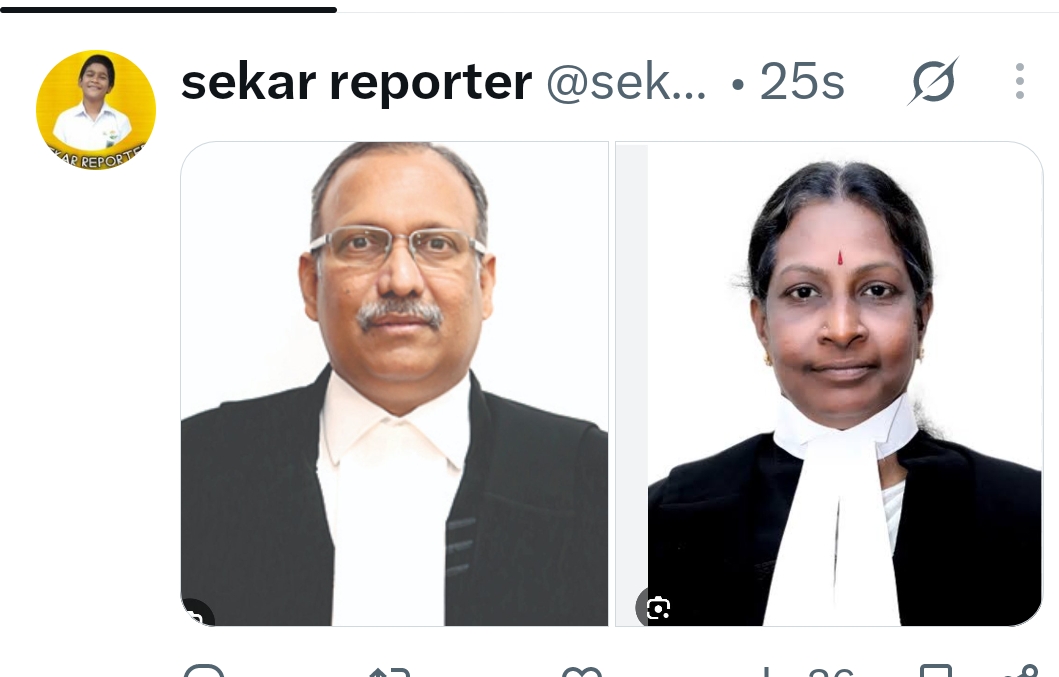 The impugned order 18.12.2023 passed in W.P.No.18408 of 2023 is set aside. Consequently, connected miscellaneous petition is closed. There shall be no order as to costs.
(S.M.S.,J.) (R.K.M.,J.)
08.06.2026
Index : Yes
Neutral Citation : Yes
Speaking order
mk
S. M. SUBRAMANIAM, J.,
and
R.KALAIMATHI, J.,
mk
W.A.No.838 of 2026
08.06.2026