Rajagopalan Senior Advocate (Formerly Additional Solicitor General ) article.CAN A NON-CITIZEN INDIAN BECOME AN ELECTOR IN INDIA? l . It is very fundamental that unless a person is a citizen of India, he cannot be an Elector; consequently, he cannot be a Legislator also. It is very
[21/07, 14:23] Sekarreporter: http://youtube.com/post/UgkxvE2sEY9Zb83xyes4gXn6kRf9GojONwub?si=mGjV4vDFs7FJs4yp
[21/07, 14:23] Sekarreporter:
CAN A NON-CITIZEN INDIAN BECOME AN ELECTOR IN INDIA?
l . It is very fundamental that unless a person is a citizen of India, he cannot be an Elector; consequently, he cannot be a Legislator also. It is very 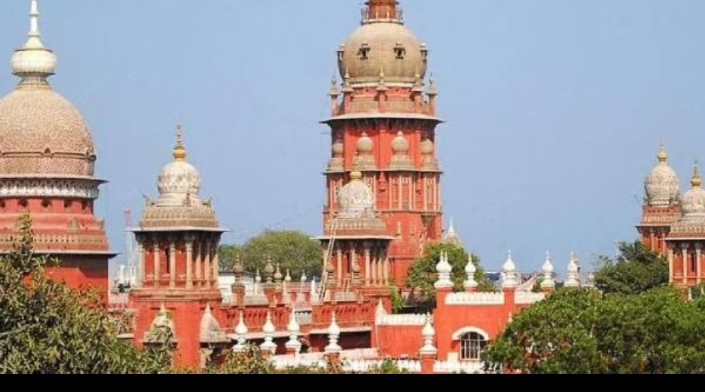 surprising that, recently, certain seasoned politicians have raised objections for revision of Electoral Rolls in the State of Bihar (where elections are expected shortly) that the citizenship should not be verified. It only demonstrates that they have absolutely no knowledge of our Constitution and the working of our system. Article 324 of the Constitution provides that the superintendence, direction and control of the preparation of Electoral roll and the conduct of all elections shall vest in the Election Commission. The Preparation of Electoral rolls is a continuous process, and it is revised from time to time irrespective of elections or no elections (AIR 1985 SC 1233).
2. Article 326 of the Constitution of India provides that the Elections to the House of People and the Legislature of every State shall be on the basis of adult suffrage, that is to say, every person who is a citizen of India and who is not less than 18 years of age in such State, as may be fixed in that behalf, by or under any
law made by the appropriate legislature and is not otherwise disqualified under
• •
this Constitution or any Law made by the appropriate Legislature on certain grounds, etc. Therefore, it is clear that unless a person is a Citizen of India, he is not entitled to be registered as a voter in any election.
3. Pursuant to the enabling provisions, the Parliament enacted The Representation of The People Act, 1950 (hereinafter, “the 1950 Act”), which deals with the preparation of Eiectoral Rolls, Delimitation, etc. The Preamble to the 1950 Act reads as follows :
“An Act to provide the allocation of seats in, and the delimitation of constituencies for the purpose of election to, the House of the People and the Legislatures ofStates, the qualifications ofvoters at such elections, the preparation ofelectoral rolls, the manner offilling seats in the Council of States to be filled by representatives of Union territories, and matters connected therewith.”
4. PART-IIA ofthe 1950 Act deals with the Officers of the Commission which includes Electoral Registration Officers and Assistant Electoral Registration Officers. PART-IIB deals with Electoral Rolls for Parliamentary Constituencies and PART-111 deals with Electoral Rolls for Assembly constituencies. Section 15 of the 1950 Act deals with preparation of Electoral Rolls for every Constituency under the superintendence, direction and control of the Election Commission.
5. Section 16 of the 1950 Act deals with disqualifications for registration in an Electoral Roll, and in specific, Section 16(1 )(a) provides that if a person is not a Citizen of India, he shall be disqualified for being registered as a voter. Further,
Section 16(2) of the 1950 Act provides that the name of the person who is so disqualified, even if registered, shall be struck off from the Electoral Rolls. Besides this, Section 20 ofthe 1950 Act also provides who is “ordinarily resident” in a constituency. Section 21 deals with preparation and revision of Electoral Rolls, Section 22 deals with correction of entries in Electoral Rolls Section 23 deals with the inclusion of names in Electoral Rolls, and Section 24 provides that if anybody is aggrieved by an order of inclusion or exclusion, they can prefer an Appeal to the authority referred to in the Section
6. The only period during which no amendment, transposition or deletion is permitted, is referred to under Section 23(3) of the 1950 Act, which provides that no amendment, transposition, deletion or inclusion, shall be made after the last date for making the nominations for an election in that constituency.
7. Therefore, it is fundamental, that unless a person is a citizen of India, his name cannot be included in the electoral roll, and if it is erroneously included, it can be deleted under the provisions as stated above. In fact, it is the duty of the
Election Commission to verify whether any non-citizens’ name has been included
in the Electoral Roll, if a complaint or doubt in this regard has been raised. In
– –
fact, to put it otherwise, the Election Commission or its officers, have no jurisdiction to include a non-citizen’s name in the Electoral Roll, and if it is so, it is null and void. Therefore, if an application is made for inclusion or a complaint is received that a non-citizen’s name is included in the Electoral roll, it is the duty of the commission to make such enquiry as necessary to ensure that the noncitizens’ names are rejected and deleted from the list. If the Election Commission fails to do so, it would be failing in its constitutional duty and the purpose for which the power is given under Articles 324 and 326 would be defeated. On the same line, if you probe further, to be an MLA or an MP, one has to be a voter in a constituency, and if he is not a citizen of India, he cannot be a member of Parliament or a State Legislature. In fact, Article 102 of the Constitution provides for disqualification of membership of either I louse of Parliament and Article 1 91 provides the same for State Legislature. It is very clear under Art 102( I )(d) that a person shall be disqualified for being chosen as and for being a member of either House of Parliament, if he is not a citizen of India, or has voluntarily acquired the citizenship of a foreign State or if he is under acknowledgment of allegiance or adherence to a foreign State. Article 191, which applies to State Legislature also provides the same. If one contends that a non-citizen would be a voter, they are also contending that a non-citizen can be a member of Legislature, which is
nothing but absurd.
8. Therefore, if questioned, one has to prove to the satisfaction of the Authority, that he is a citizen of India, and that he satisfies that the provisions of The Citizenship Act, 1955 (hereinafter, the 1955 Act). Though Section 7A of the 1955 Act provides for the registration of overseas citizens in India, Section 7B(2) of the said Act clearly provides that an Overseas citizen of India Cardholder shall not be entitled to the rights conferred on the citizens of India (under Section 16 of the 1950 Act) with regard to the registration of a voter. Therefore, the constitutional and statutory scheme clearly provides that, unless a person is a citizen of India, his name cannot be included in the electoral roll, and even if he is included, the authority of the Election Commission can order deletion of their name under Section 16(2) of the 1950 Act.
9. It is relevant to note the decision of the Supreme Court, reported in ( 1990) 3 SCC 355, which dealt with the admission at a medical college. In the said Judgement, it has been observed in Para 20 that it is only lawful residence that can be taken into account, and if a man stays in a country in breach of immigration laws, his presence there does not constitute ordinary residence.
– •
10. One more issue which has to be dealt with in this Article is whether any person who hold an AADHAR Card can be a citizen of India. A reading of the provisions of The Aadhaar (Targeted Delivery of Financial and Other Subsidies, Benefits and Services) Act, 2016 (hereinafter, “the 2016 Act”), in specific, Section 9, clearly provides that the AADHAAR Number or the Authentication thereof, shall not, by itself, confer any right of, or be proof of citizenship or domicile in respect ofAADHAAR Number holder. Section 3 of the 2016 Act, which deals with enrolment, only provides that every resident shall be entitled to obtain an AADHAAR number by submitting his demographic and biometric information by undergoing the process of enrolment. Therefore, mere possession of an AADHAAR Card is not proof of citizenship, and despite the Constitutional requirements, if the names of foreigners are retained in the Electoral Roll, the rolls to that extent would be void ab initio.
G. Rajagopalan Senior Advocate (Formerly Additional Solicitor General )