MRS.JUSTICE K.GOVINDARAJAN THILAKAVADI S.A. No.815 of 2019 State Banks’ Staff Union (Chennai
IN THE HIGH COURT OF JUDICATURE AT MADRAS
Reserved on
23.06.2025
Pronounced on
18.07.2025
CORAM
THE HONOURABLE MRS.JUSTICE K.GOVINDARAJAN THILAKAVADI
S.A. No.815 of 2019
State Banks’ Staff Union (Chennai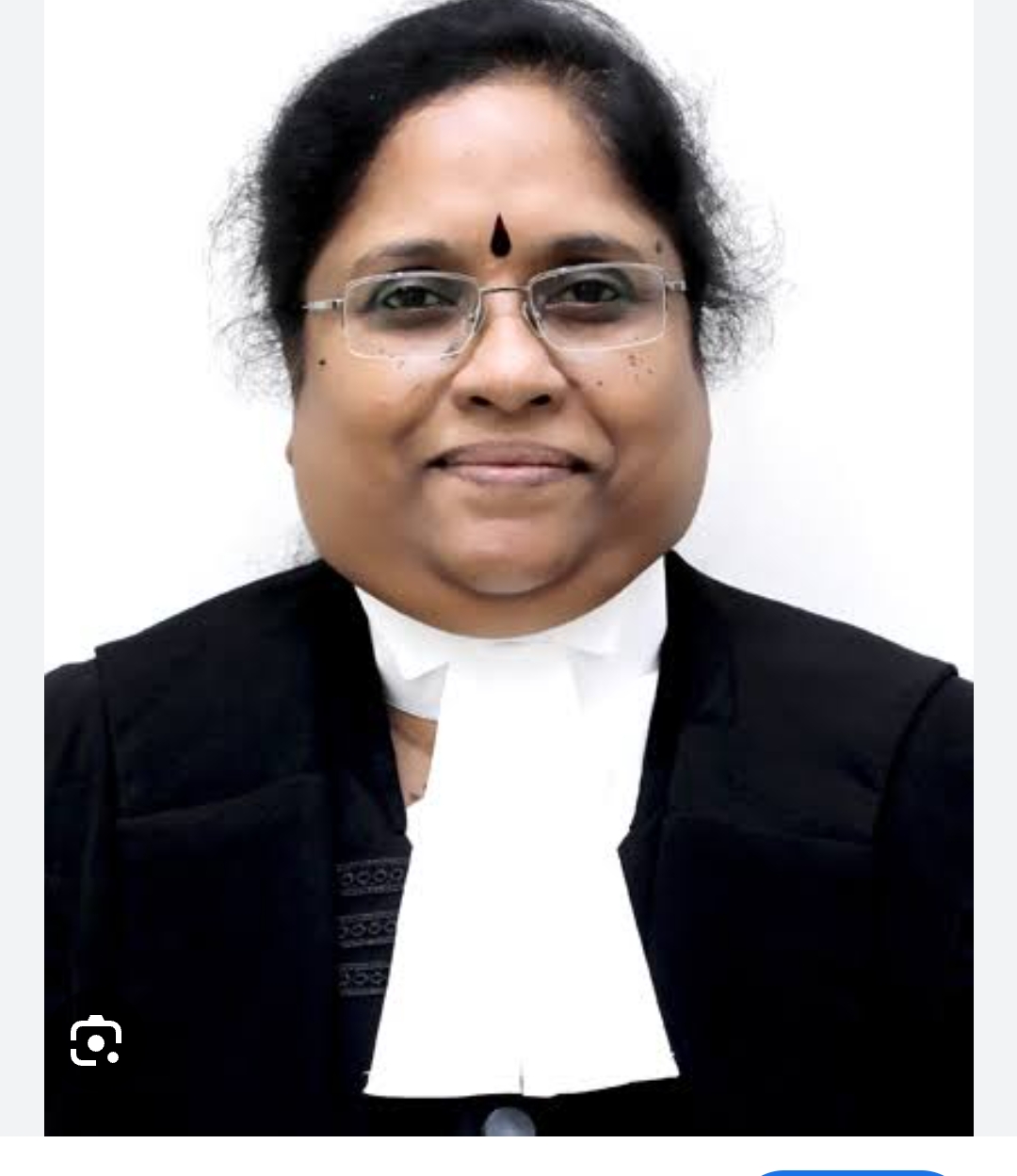 Circle)
(Regn. No.883)
Rep. by its General Secretary S.M. Selvaraj,
State Bank Buildings,
No.84, Rajaji Salai, Chennai 600 001 …Appellant
Vs.
N. Venkatasubramanian … Respondent
Prayer : Second Appeal filed under Section 100 CPC, 1908 to set aside the judgment and decree passed in A.S. No.272 of 2017 dated 20.12.2018 on the file of the VI Additional City Civil Court, Chennai, reversing the judgment and decree passed in O.S. No.1057 of 2015 dated 05.05.2017 on the file of the XVII Assistant Judge, City Civil Court, Chennai.
For Appellant : Mr. K.M. Ramesh, Senior Advocate for Mr.S.Apunu
For Respondent : Mr. K. Elango
JUDGMENT
The Second Appeal is at the instance of the defendant in O.S.
No.1057 of 2015 on the file of the XVII Assistant Judge, City Civil Court, Chennai. The said suit was laid down by the plaintiff for the following reliefs:
I. Declaring that spending money from the general funds of the defendant union for conducting any activity not specified in the objects enumerated in certified Bye Law No.51 of the defendant Union and Section 15 of the Trade Union’s Act, 1926 (hereinafter referred to as ‘the Act’) as illegal.
II. Permanent injunction restraining the defendant from spending money from the general funds of the defendant union for conducting any activity not specified in the objects enumerated in certified Bye-Law No.51 of the defendant union and for costs.
2. For the sake of convenience, the parties are referred to as per their ranking in the trial court.
3. The case of the plaintiff in brief is as follows:
3.1. The defendant union is registered under Trade Union Act having its registration Number as 883. The defendant union has got its own certified Bye-Laws. There are more than 9500 members in the defendant union including the plaintiff. The defendant union has 4 modules namely Madurai, Tiruchirapalli, Chennai and Coimbatore. The Central Committee of the defendant’s Union in its meeting dated
27.10.2014 decided to organize felicitation functions for the defendant’s General Secretary Mr.C.M.Baskaran for which circular No.64 dated
18.12.2014 was issued for the said 4 modules and thus, Madurai, Tiruchirapalli, Chennai and Coimbatore module conducted the
felicitation functions at Madurai, Tiruchirapalli, Chennai and Coimbatore on 20.12.2014, 4.1.2015, 11.1.2015 and 31.1.2015 respectively. The respective 4 modules issued circular to its respective members to collect contribution from the members. Vide defendant’s circular dated 18.12.2014, it was proposed to held a function to felicitate
Mr.C.M.Baskaran at Chennai on 28.2.2015 at the state level by inviting dignitaries from all over the country and accordingly, a function was held at 3.30 pm at Raja Annamalai Mandram, Chennai. But, the
defendant has not given any call to its members for contribution of funds to conduct the felicitation function. About 25 dignitaries participated in that function from all over India and the function was celebrated in a very grand manner by providing dinner and tea to all of them. The defendant Union bore the entire expenses. It seems the Union spent several lakhs of Rupees for that function, that too, without collecting contribution from its member. The plaintiff has learnt from reliable sources that the defendant Union has made bulk withdrawal from its general funds for this function. It is against the Bye-law under clause 51 and section 15 of the Act. The plaintiff received an invitation card from a member of the defendant union. Hence the plaintiff, through his letter dated 16.2.2015, requested the defendant Union to clarify whether the money was being spent from the general funds of the union. In spite of receiving the said notice, the defendant Union did not give any reply.
Hence the suit.
3.2 The suit was resisted by the defendant by contending that it is true that clause 51 of the certified bye-laws prescribes spending money from the general fund. Apart from clause 51, clause 52 also provides for spending money from the general fund on the basis of the decision taken by the Central Committee and clause 51(j) provides for spending general funds which is intended to benefit the workers and the employees in general and the felicitation of an officer-bearer who relinquishes his post on his superannuation would certainly come under the provision for the benefit of workers and employees in general as the members would get valuable suggestions from the outgoing office bearers as to what are the modes which proved to be success in getting the benefit from the employer when he occupied the position and which will help the members to follow the same methodology for achieving the object of the Union. The practice of the defendant Union is to organize felicitations to the outgoing office-bearers and this is in practice for the past few decades and none of the members have raised any objections so far. The circular No.64 issued by the defendant Union has also clearly stated that the felicitation function will be held at module culminating in grand thanksgiving function at Chennai on 28.2.2015. The said decision was taken in the central committee meeting held on 27.10.2014 and the same was communicated to all the members through circular No.64 dated 18.12.2014 and the plaintiff was well aware of that. The contributions were paid voluntarily by the members and there is no compulsion in paying the contribution. The defendant Union invited office-bearers from all over India and at the time of felicitation function, the crucial wage negotiation between the unions and the management of the State Bank of India was half way through and the dignitaries attended the function have had negotiation with the top officials of the management of the State Bank of India. The felicitation function is a platform for the dignitaries to share their views and views of the management and Indian Bank associations in the ongoing wage negotiations and the speeches of the dignitaries was very useful to the employees and the members who got first hand information about the wage negotiations. The defendant Union did not bear the expenses towards lodging, food and travel for guests. The wage negotiation with the management of the State Bank of India was half way through and was held in various stages at various places.
The management of State Bank of India decided to hold a central
Bipartite meeting with executive committee of the all India State Bank of
India staff federation for resolving various issues on 27.2.2015 at Chennai. A few of the dignitaries who were in the wage negotiation panel attended the above Central Bipartite meeting participated in the felicitation function at Chennai. As per the Bank’s instructions, the members of the Executive Committee of the All India State Bank of India Federation are entitled to be reimbursed all the expenses including boarding and lodging, food, travel etc for the guests who came to Chennai to participate in the felicitation function as they are entitled to full reimbursement from the bank since they are going to participate in the Central Bipartite meeting with the Bank on 27.2.2015 at Chennai. The members who attended the felicitation function were provided with high tea which cannot be termed as wasteful expenditure and the faithful members stood by the Union to felicitate the members who enriched their knowledge on the happenings of the wage negotiations and lurking dangers and the attacks on the trade union and the members contributed on their own and not out of any compulsion. The bye-laws provides for payment of salaries to the office-bearers of the Union, but none of the office-bearers including the Secretary had drawn even a single pie from the union towards salary though they have completely dedicated themselves for the Union work without minding their family and personal commitments and office bearers are working full day without any time conscious. The Central Committee of the Union has resolved to organize farewell function to the General Secretary on the eve of his retirement, a single member has no locus standi to challenge the decision of the central committee. The defendant Union had conducted several such felicitation functions in the past and no-one questioned that and the Union issued the circular dated 18.12.2014 notifying the felicitation function to be held on 28.2.2015 and before the General Secretary could respond to the plaintiff’s letter dated 16.02.2015 requesting to clarify as to whether the general funds of the union would be spent for the function, the plaintiff filed this suit against the defendant and therefore, all the actions done pursuant to the decision taken in the general committee meeting will be placed before the general committee meeting which is the supreme body. The object of the Union as enshrined in the bye-laws do permits spending money for the good cause and there is no embargo or prohibition from spending money from the general fund of the Union. The plaintiff has not come to the court with clean hands and therefore the suit is liable to be dismissed.
3.3. Before the trial court, the plaintiff examined himself as P.W.1 and marked 10 documents. On the side of the defendant, D.W.1 was examined and 19 documents were marked.
3.4. The trial court dismissed the suit, against which an appeal was preferred by the plaintiff in A.S. No.272/2017 on the file of the VI Additional City Civil Court, Chennai. The lower appellate court reversed the judgment and decree of the trial court by concluding that the plaintiff, being a member of the defendant Union is well within his right to question the Union if the amounts from the general fund is spent or will be spent other than the objects specified in Clause 51 of the Bye-laws. Accordingly, the lower appellate court decreed the suit filed by the
plaintiff .
4. Aggrieved over the same, the defendant has come up with this
Second Appeal.
5. The following substantial question of law was framed at the time of admission.
“Whether the Court below is right in ignoring educational and social benefits of meeting members periodically at the cost of the union for any reason whatsoever and the same is allowed under Section 15 of the
Trade Unions vis-a-vis Clause Bye Law 51″
6. Heard Mr.K.M.Ramesh, learned Senior Advocate appearing for Mr.S.Apunu, learned counsel for the appellant and Mr. K.Elango, learned counsel appearing for the respondent.
7. Mr.K.M.Ramesh, learned Senior Advocate appearing for the appellant would contend that the first appellate court while discussing Section 15 vis-a-vis Bye-law 51 failed to give legal reasoning as to why meeting of members and office bearers at the cost of union does not constitute educational benefits, social and other similar benefits for members and other dependants and failed to explain what constitutes such benefits. He would further submit that the fact remains that Section 15(h) of the Act is meant for meeting and sharing of thought among the members and office bearers of the Union so as to learn the principles of trade unionism and modalities to win collective bargaining which otherwise defeats the whole purpose of trade union which consequently defeats the welfare of the members/employees of the union. It is further contended that it is well established position of law under Section 15 visa-vis Bye law 51 about spending of general funds for the object of the Union is inclusive of organising meeting of members in any form and manner as decided by the office bearers of the Union and such expenditure is audited through a chartered accountant under established legal procedures and approved in the general council meeting in a democratic process. It is his further submission that the first appellate court failed to consider the purpose and object behind Bye law 51 and has come to an erroneous conclusion that spending money for laudable object of holding meeting for felicitating would amount to violation of bye law 51. There is no mainstream educational institutions that teach principles of trade union nor are there modern seminars, symposiums conducted for the office bearers to learn the tricks of principles and procedures in taking forward the welfare of the employees of the trade union. Such education happens only through felicitation or valedictory function among other meetings where members and office bearers of the trade union learn through word of mouth through senior members/office bearers which is nothing but educational learning for the younger generation to take the object of the trade union forward. Therefore, the first appellate court in allowing the suit with an omnibus prayer is nothing but taking over of day to day management and affairs of the union and that court of law is neither empowered nor authorized under any provision of law and that any such acts of taking over of powers and functions of members, office bearers, statutory auditors, Central council of the union is not only against the principles of law but also defeats the democratic values vests upon such elements in running the union.
8. Contending contra, the respondent/plaintiff would submit that the the evidence of D.W.1 who is one of the vice president of respondent Union admitted that the appellant union had been spending money from the general funds from October 2014 till 27.02.2015 for the felicitation function to be held on 28.02.2015. There is no provision in the bye-laws (Ex.A1) of the Union to spend money for felicitation functions from the general funds. D.W.1 further admits that Ex.A8 invitation is for felicitating the then General Secretary of the appellant Union. Only after obtaining the order of interim injunction, the appellant/defendant stopped spending for felicitation function from the general funds. Hence it is an admitted fact that the appellant/defendant was spending money without any authority and illegally from the general funds for such felicitation functions prior to the interim order passed by the trial court. The appellant/defendant has not produced any evidence which permits them to spend money from the general funds of the Union for conducting felicitation functions.
8.1 . The learned counsel would further submit that the felicitation function was held on 28.2.2015 at Chennai and the appellant/ defendant had marked their income and expenditure statement for the year ending 31.12.2014 as Ex.B.19 and that the said statement would not reflect the expenditure involved for conducting the function on 28.2.2015. The plaintiff has not sought relief against the felicitation function conducted on 28.2.2015, but for declaration declaring that spending money from the general funds of the appellant Union for conducting any activity not specified in the objects enumerated in certified Bye-law No.51 of the appellant Union and Section 15 of the Act as illegal and for permanent injunction restraining the appellant/defendant from spending money from the general funds of the appellant Union for conducting any activity not specified in the objects enumerated in certified Bye-law No.51 of the appellant Union.
8.2 His further submission is that, D.W.1, in his proof affidavit stated that it is not correct to say that members would contribute money for organising such felicitation functions. Hence it goes to show that the appellant/defendant Union had not collected money for conducting such felicitation functions if the function is held at the Head quarters. Moreover, in his cross examination, D.W.1 has admitted that for felicitation functions of the retired office bearers, they collect money from the members and that if there was a need they also spend money from the general funds. Therefore, from his evidence it is seen that the appellant/defendant has been following a wrong practice of spending money from general funds for the felicitation functions. The
appellant/defendant should not be allowed to perpetuate an illegal act by spending money from general funds for any other object other than those enumerated in Clause 51 of Ex.A.1 Bye-laws. If the appellant decides to spend from general funds for any other object, those objects have to be notified by the appropriate Government in the official Gazette as per clause 51(k) of Ex.A.1 and that it is not the case of the appellant/defendant that the Government has notified for such an expenditure. Therefore, the first appellate court is right in concluding that the plaintiff is entitled for the relief claimed in the suit, which calls for any interference by this Court.
9. Heard on both sides. Records perused.
10. Firstly, it has to be seen whether the Court can interfere in the Bye-laws of Trade Union. The answer is that, Courts can interfere with the Bye-laws of a Trade Union – but only under specific circumstances , when there is,
➢ Violation of Fundamental Rights: If a Trade Union’s bye-laws infringe upon the constitutional rights of its members (e.g., equality, freedom of association), courts can step in.
➢ Contravention of the Trade Union Act: Bye-laws must comply with the mandatory provisions of the Act. If they don’t, Courts may declare them invalid.
➢ Disputes over Membership or Elections: Courts have entertained civil suits when disputes arise over the interpretation or implementation of bye-laws, especially regarding membership
eligibility or internal elections.
➢ Fraud or Malafide intent: If the be-laws are bing used to perpetrate fraud or suppress dissent within the union, judicial scrutiny is possible.
Limitations to judicial interference:
➢ Autonomy of Trade Unions: Courts generally respect the internal autonomy of unions. They avoid interfering in policy matters or internal management unless there is a clear legal violation.
➢ No Adjudicatory Mechanism in the Act: The Trade Union Act, 1926 does not provide a specific forum for resolving internal disputes. Hence, such matters are usually addressed through civil suits in competent courts.
In Amalesh Kumar and another vs. State of Jharkand reported in 2017 SCC Online Jhar 1814, the Hon’ble Apex Court acknowledged that dispute over Trade Union Bye-laws must be resolved through civil litigation, as the Act lacks a built-in adjudicatory mechanism.
10.1. Therefore, even when there is no explicit law whether Court can interfere with the Bye-laws of the Trade Union, the Court can intervene in the Bye-laws of the Trade Union if it violates the statutory provisions of the Act, violate principles of natural justice, infringe constitutional or legal rights of members. Generally, the Court respects the autonomy and internal governance of the Trade Union.
10.2. In the present case, the contention of the plaintiff is that the money from the general funds of the defendant Union cannot be utilised for conducting any activity not specified in the objects enumerated in certified Bye-law No.51 of the defendant Union and that Section 15 of the Act deals with the object on which the general funds can be spent. This Section exhaustively list the purposes for which general funds of a registered Trade Union may be spent. These includes:- Trade disputes, salaries of Union staff, legal proceedings, compensation to members, educational, social or religious benefits, insurance, funeral benefits,etc. Therefore, the learned counsel for the respondent/plaintiff contends that since the above Section of the Act, does not explicitly mention the farewell functions and facilitative activities, the conduct of the defendant Union conducting the felicitation functions by spending money from the general funds is illegal.
10.3. The Section 15 of the Act lays down the provisions relating to the purposes for which the general funds of a Trade Union may be
utilised.
10.4. Section 15(j) of the Act, states that the payment, in furtherance of any of the objects on which the general funds of the Trade Union may be spent, or contributions to any cause intended to benefit workmen in general, provided that the expenditure in respect of such contributions in any financial year shall not at any time during that year be in excess of one fourth of the combined total of the gross income which has upto that time accrued to the general funds of the Trade Union during that year and of the balance at the credit of those funds at the commencement of that year. This sub section provides the power to the Trade Union to use its general funds for the benefits of its workers but it should be within one fourth of the gross income of the Trade Union.
10.5. Section 15(k) of the Act talks about, if the appropriate
Government lays any condition regarding the spending of separate fund notified in the official gazette then it shall be followed.
10.6. Therefore, Section 15 of the Act outlines the purposes for which the general funds of a registered Trade Union may be spent.
Clause(h) allows expenditure for:
“…the conduct of educational, social or religions activities for the benefit of its members.”
The term “social activities” is broad and open-ended and intentionally non exhaustive. Felicitations of outgoing members is a community building gesture that enhances morale, promotes loyalty and strengthens collective identity. The function serves social benefits by honoring contributions and providing continuity and role modeling for newer members. Section 15(h) is drafted without limiting language, suggesting legislative intent to allow Unions discretion in community-focused spending.
10.7. Furthermore, the term “social activities” is crucial in this context. It covers more than entertainment or celebrations. It includes any activities that enhances social cohesion within the Union, strengthens member bonds and morale, promotes cultural or ethical values and supports non material welfare. Felicitations, especially for those retiring or transferring, serve as transitional social functions. They publicly honor service, offer a platform for guidance from outgoing to incoming members, reinforce institutional memory and are consistent with social customs. Therefore, a felicitation function can be interpreted as a “social activity” under Section 15(h), especially when done in good faith and in line with Trade Union objectives. Though statutory bodies like Trade Unions must act within their governing frame work, however, the Byelaws do not restrict the expense, it may be deemed to be subjective. Social activities cannot be restricted to welfare measures like medical camps, mutual aid, and disaster relief, etc. Moreover, ignoring the social dimensions would reduce the Union to a mere administrative office, undermining its broader purpose as a community of labour. Since the utilisation of general fund for felicitation functions of a retired member shall be presumed to be within the ambit of Section 15(h) and done in good faith and no personal benefit was involved and moreover, when there is no tangible harm or misuse of the fund, the conduct of the defendant Union spending money from the general fund for such felicitation function would not amount to violation of Bye-law 51 and Section 15 of the Act. As rightly pointed out by the learned counsel for the appellant, the issue is purely internal and not a breach of law. It is not a case of clear illegality, breach of fiduciary or failure of internal governance mechanisms. The felicitation function is just a form of gratitude to the outgoing member who has/ had his fair share of contributions to the Union. No one around or even the
Defendant/Plaintiff for that matter in the shoes of the felicitated person would deny such a function in their name. Just because something is not expressly mentioned does not make it impermissible, especially if it fits within the spirit and scope of the law.
10.8. The statute does not list examples, giving Unions discretion to define it through their culture and practice. If the Act had intended to restrict this, it could have used the phrase “as prescribed” or “as specified in the Bye-laws”.
10.9. Thus, a felicitation, especially, for retiring or transferring members, can be seen as:
➢ A community-building exercise,
➢ A recognition of service,
➢ A moment of collective memory and continuity.
These are social benefits, even if not tangible like a salary or allowance. Section 15(5) uses open-ended terms (social/educational), not closed lists. Therefore, the statute must be interpreted purposively and contextually and not mechanically. The Court can interfere with the Byelaws of the Trade Union when it thinks that there is a necessity to interfere and it will provide benefits for the members of the Union. But, in this case, it is a matter of spending general fund for the members of the Trade Union who are leaving. The only duty cast upon the defendant Union is that, all expenditures must be transparent and auditable, ensuring accountability to the members.
10.10. However, this Court can still issue directions to the defendant Union for amendment of Bye-laws and for future compliance, when some of the members of the Trade Union opposes the spending of money from general fund and while majority of members accepts it. Therefore, the Judgment and decree passed by the first appellate court warrants interference by this Court.
11. With the above observations, this Second Appeal is allowed. No costs. The judgment and decree passed in A.S. No.272 of 2017 dated 20.12.2018 on the file of the VI Additional City Civil Court, Chennai, is set aside. The judgment and decree passed in O.S. No.1057 of 2015 dated 05.05.2017 on the file of the XVII Assistant Judge, City Civil Court, Chennai, is upheld.
18.07.2025
Index: Yes/No
Internet: Yes/No
Speaking/Non-Speaking order
bga
To
1. The VI Additional Judge, City Civil Court, Chennai
2. The XVII Assistant Judge, City Civil Court, Chennai
3. The Section Officer, VR Section, High Court, Madras.
K.GOVINDARAJAN THILAKAVADI,J
bga S.A. No.815 of 2019
18.07.2025