Allowed THE HONOURABLE MRS.JUSTICE L.VICTORIA GOWRI Crl.O.P.(MD).No.429 of 2026 and Crl.M.P.(MD)Nos.965 and 968 of 2026 G.Palanisamy … Petitioner/Accused Vs. 1. The State of Tamilnadu, Rep. by the Inspector of Police, Villor Police Station, Madurai District. Crime No.64 of 2023. …. Respondent / Complainant 2. Ramesh Babu ….. Respondent / Defacto Complainant
BEFORE THE MADURAI BENCH OF MADRAS HIGH COURT

	RESERVED ON 	: 27.02.2026

	PRONOUNCED ON 	: 01.06.2026

CORAM

 THE HONOURABLE MRS.JUSTICE L.VICTORIA GOWRI

Crl.O.P.(MD).No.429 of 2026 and

Crl.M.P.(MD)Nos.965 and 968 of 2026

G.Palanisamy	... Petitioner/Accused
Vs.
1. The State of Tamilnadu,
Rep. by the Inspector of Police, Villor Police Station, Madurai District.
Crime No.64 of 2023. .... Respondent / Complainant
2. Ramesh Babu ..... Respondent /
Defacto Complainant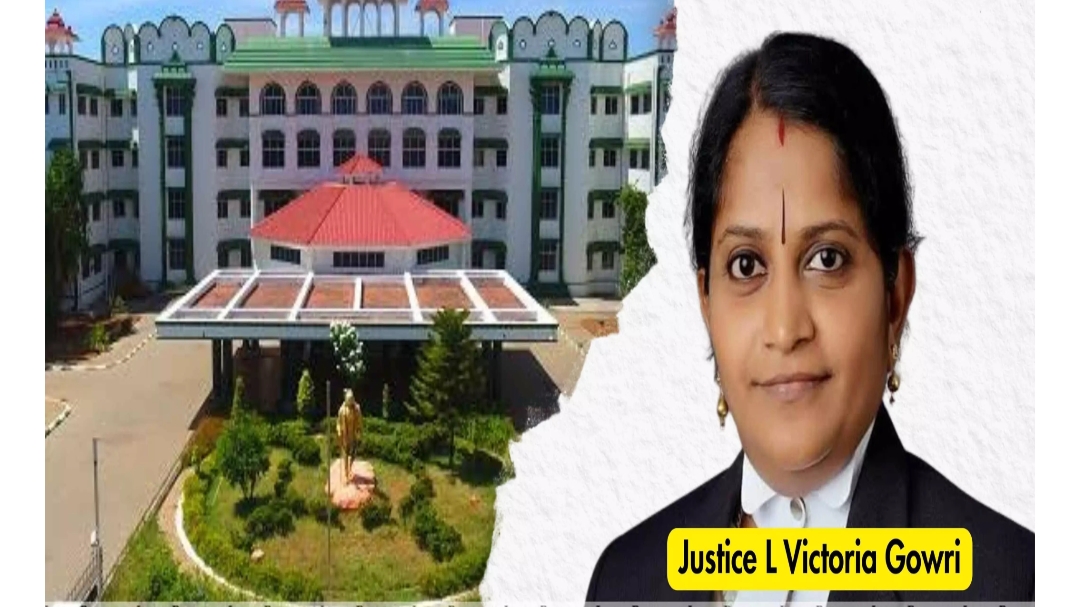
Prayer : Criminal Original Petition is filed under Section 528 of BNSS, 2023, to call for the entire records pertaining to the charge sheet in S.T.C.No.20/2024 pending on the file of the learned District Munsif cum Judicial Magistrate, Peraiyur, Madurai District and quash the same as illegal.
For Petitioners : Mr.C.M.Arumugam
For R-1 : Mr.M.Sakthi Kumar,
Government Advocate (Crl. side)
ORDER
The present Criminal Original Petition raises a recurring and significant question touching upon the interplay between the statutory restrictions imposed during public religious festivals, the procedural safeguards governing prosecution for offences under Sections 172 to 188 IPC, 1860, and the scope of inherent jurisdiction of this Court under Section 528 of the Bharatiya Nagarik Suraksha Sanhita, 2023 corresponding to Section 482 Cr.P.C., 1973.
2. The case arises out of allegations relating to installation of a Vinayagar idol during Vinayagar Chathurthi celebrations allegedly in violation of Government guidelines and District Administration regulations. Though at first blush the matter may appear to involve a simple factual controversy concerning the height and composition of an idol, the petitioner seeks to attack the very legality of the registration of the FIR, the investigation conducted by the police, the filing of the final report, and the cognisance taken by the learned
Magistrate.
3. In the said backdrop, this Court is called upon to determine whether the prosecution deserves to be interdicted at the threshold or whether the petitioner must necessarily face the rigours of trial.
Case of the prosecution:
4. The prosecution case, in brief, is that on 19.09.2023 at about 10.00 a.m., in connection with Vinayagar Chathurthi celebrations conducted near Kaliamman Temple, the petitioner herein allegedly installed a Vinayagar idol measuring approximately 13 feet in height in violation of the restrictions imposed by the District Administration.
5. According to the prosecution, the District Collector had prescribed specific regulatory conditions governing installation of Vinayagar idols during the festival season, including restrictions relating to the permissible height of idols, prohibition against use of Plaster of Paris idols, mandatory installation of CCTV cameras, provision for first-aid facilities, and obtaining prior permissions from the Revenue Department, Police Department, and Fire and Rescue
Services Department.
6. The allegation against the petitioner is that he installed aVinayagar idol of about 13 feet in height made of Plaster of Paris instead of a clay idol within the prescribed dimensions and further failed to comply with the other mandatory safety and regulatory requirements imposed by the authorities. It is further alleged that no CCTV cameras were installed at the venue and no first-aid medical facilities were arranged, thereby causing inconvenience and obstruction to the public.
7. Based on the complaint given by the second respondent, the first respondent police registered FIR in Crime No.20 of 2024 for offences under Sections 188 and 268 IPC, 1860 and upon
completion of investigation laid a final report before the learned District Munsif-cum-Judicial Magistrate, Peraiyur, which was taken on file as S.T.C.No.20 of 2024.
Grounds for quash:
8. The petitioner seeks quashment of the proceedings
principally on the following grounds:
(i) The offences under Sections 188 and 268 IPC are noncognisable offences and therefore the police could not have registered an FIR or investigated the matter without obtaining permission from the jurisdictional Magistrate;
(ii) The prosecution is hit by Section 174(2) BNSS, 2023 corresponding to Section 155(2) Cr.P.C., 1973;
(iii) The procedure contemplated under Section 195 Cr.P.C., 1973 for offences under Section 188 IPC, 1860 has not been
followed;
(iv) No scientific or chemical analysis was conducted to establish that the idol was made of Plaster of Paris;
(v) No measurement was taken to establish that the idol exceeded the prescribed height;
(vi) No idol was seized and therefore the prosecution lacks foundational material evidence;
(vii) The ingredients of public nuisance under Section 268 IPC are wholly absent;
(viii) The proceedings are vitiated by mala fides and abuse of process of law;
(ix) The learned Magistrate mechanically took cognisancewithout examining the maintainability of the prosecution.
Submissions on either side:
9. The learned counsel appearing for the petitioner vehemently contended that the entire prosecution is void ab initio since the FIR itself could not have been registered for offences under Sections 188 and 268 IPC. The learned counsel submitted that Section 188 IPC falls within the category of offences contemplated under Sections 172 to 188 IPC in respect of which the police have no authority to register FIR in view of the settled legal position laid down by this Court.
10. Reliance was heavily placed upon the judgment of this Court in Jeevanandham and others Vs. State , wherein detailed guidelines were issued governing prosecutions under Section 188 IPC. The learned counsel specifically relied upon paragraph 25 of the said judgment to contend that no police officer can register FIR for offences under Sections 172 to 188 IPC, 1860 and that only the concerned public servant can initiate prosecution by way of written complaint before the jurisdictional Magistrate in compliance with Section 195 Cr.P.C., 1973.
11. The learned counsel further contended that Section 268 IPC, 1860 dealing with public nuisance is also a non-cognisable offence and therefore investigation without permission of the Magistrate is expressly barred under Section 174(2) BNSS, 2023 corresponding to Section 155(2) Cr.P.C., 1973. It was submitted that the prosecution has absolutely no material to establish that the idol exceeded the prescribed height.
12. The learned counsel pointed out that even according to the prosecution witnesses, no actual measurement was conducted and the height was only assumed approximately. The petitioner also relied upon the Tamil portion extracted in the petition, wherein PW1 allegedly admitted that no actual measurement was taken and the height was mentioned only approximately.
13. The learned counsel further submitted that no scientific analysis whatsoever was conducted to determine whether the idol was made of Plaster of Paris. It was argued that the idol itself was never seized and therefore the prosecution lacks even the basic evidentiary foundation necessary to sustain the allegations.
14. The learned counsel submitted that the ingredients of Section 268 IPC, 1860 are conspicuously absent since there is no allegation of actual public obstruction, danger, annoyance, or injury as contemplated under the provision. It was further argued that continuation of the prosecution despite such glaring procedural and legal infirmities would amount to abuse of process of Court.
15. The learned counsel finally submitted that mere commencement of trial cannot cure an inherent jurisdictional defect and therefore this Court can exercise its inherent jurisdiction even at this stage.
16. Per contra, the learned Government Advocate (Criminal Side) submitted that the petitioner blatantly violated Government regulations and public safety norms governing Vinayagar Chathurthi celebrations. The learned Government Advocate submitted that the District Administration had imposed clear restrictions relating to height of idols, use of Plaster of Paris, installation of CCTV cameras, and obtaining permissions from various authorities.
17. According to the learned Government Advocate, the petitioner consciously violated all such regulations. It was further submitted that photographs and other materials collected during investigation prima facie establish the violations committed by the petitioner.
18. The learned Government Advocate explained that the idol was not physically seized since seizure of a Vinayagar idol prior to immersion would have led to serious law and order complications and communal tension. The learned Government Advocate further submitted that public nuisance under Section 268 IPC, 1860 is clearly attracted since the petitioner violated mandatory public safety conditions and environmental norms.
19. It was argued that the petitioner cannot invoke the extraordinary jurisdiction of this Court merely on disputed factual controversies regarding height and composition of the idol. The learned Government Advocate would further contend that the trial has already commenced and the petitioner has participated in the proceedings including cross-examination of prosecution witnesses. It was submitted that only four witnesses remain to be examined and therefore the petitioner may very well agitate all his factual and legal defences before the trial Court. The learned Government Advocate finally prayed for dismissal of the petition.
20. Heard the learned counsels on either side and carefully perused the materials available on record.
Points for consideration:
21. In light of the rival submissions, the following points arise for consideration:
(i) Whether the FIR registered for offences under Sections 188 and 268 IPC, 1860 is legally sustainable?
(ii) Whether the prosecution is vitiated for non-compliance with
Section 195 Cr.P.C., 1973?
(iii) Whether the allegations in the final report prima facie disclose the ingredients of the offences alleged?
(iv) Whether this Court should exercise its inherent jurisdiction under Section 528 BNSS, 2023 to quash the proceedings after commencement of trial?
Analysis:
22. The inherent jurisdiction of this Court under Section 528 BNSS, 2023 corresponding to Section 482 Cr.P.C., 1973 is undoubtedly wide, but the same must be exercised sparingly, carefully, and only to prevent abuse of process of law or to secure the ends of justice.
23. It is now well settled through the celebrated judgment of the Hon’ble Supreme Court in State of Haryana v. Bhajan Lal2 that quashing of criminal proceedings at the threshold can be resorted to only in exceptional cases where the allegations do not disclose any offence or where the prosecution is manifestly attended with mala fides or legal bar. Equally settled is the principle that
2 1992 SCC (SUPP) 1 335
disputed questions of fact ordinarily cannot be adjudicated in proceedings under Section 528 BNSS, 2023.
24. The principal contention advanced by the petitioner revolves around the alleged illegality in registration of FIR for the offence under Section 188 IPC. This Court cannot ignore the binding nature of the guidelines issued by this Court in Jeevanandham and others Vs. State , wherein detailed procedural safeguards were laid down in relation to prosecutions under Section 188 IPC, 1860.
25. The said judgment clearly held that a police officer cannot register FIR for offences falling under Sections 172 to 188 IPC, 1860 and that cognisance can be taken only upon a written complaint by the concerned public servant as contemplated under Section 195(1) (a)(i) Cr.P.C., 1973.
26. In the present case, the records placed before this Court reveal that the FIR itself was registered by the police and investigation was conducted culminating in filing of final report. The prosecution has not demonstrated before this Court that the mandatory procedure contemplated under Section 195 Cr.P.C., 1973 stood complied with in its true legal sense. The very foundation of the prosecution under Section 188 IPC, 1860 therefore appears legally vulnerable.
27. The next issue concerns the allegation under Section 268 IPC, 1860 relating to public nuisance. Section 268 IPC, 1860 contemplates an act or illegal omission causing common injury, danger, or annoyance to the public or to people in general dwelling or occupying property in the vicinity.
28. The allegations in the present case essentially revolve around violation of administrative guidelines relating to idol height, alleged use of Plaster of Paris, and absence of CCTV and first-aid arrangements. However, the prosecution materials do not prima facie disclose any specific overt act demonstrating actual public obstruction, common injury, danger to life, or tangible public inconvenience in the manner contemplated under Section 268 IPC,
1860.
29. More importantly, the prosecution itself admits that noactual measurement was conducted regarding the height of the idol. The petitioner has also produced material indicating that the prosecution witness admitted that the height was only approximately assumed and not scientifically measured. Similarly, admittedly no chemical analysis was conducted to establish that the idol was made of Plaster of Paris. The idol itself was never seized and no sample appears to have been collected.
30. While practical difficulties in seizure of a religious idol may exist, the absence of foundational material evidence significantly weakens the substratum of the prosecution. The prosecution thus rests predominantly upon assumptions and approximations rather than legally admissible foundational evidence.
31. The learned Government Advocate strongly contended that since the trial has already commenced, this Court ought not to interfere. Undoubtedly, once trial commences, the High Court would ordinarily exercise restraint while invoking inherent jurisdiction.
32. However, it is equally well settled that when the veryinstitution of prosecution is legally barred or fundamentally incompetent, mere commencement of trial cannot legitimise an otherwise void proceeding. Jurisdictional defects strike at the root of the matter and cannot be cured by participation of parties or by progress of trial.
31. Therefore, this Court is unable to accept the contention that commencement of trial by itself creates an absolute embargo against exercise of inherent powers.
Epilogue:
32. Religious festivals form an integral component of the cultural and spiritual fabric of this nation. Simultaneously, public authorities are equally duty-bound to ensure that such celebrations are conducted in a regulated manner consistent with environmental safeguards, public order, and public safety. However, while enforcing such regulations, prosecuting agencies must scrupulously adhere to the procedural safeguards contemplated under criminal law.
33. Criminal prosecution cannot be sustained merely onassumptions, approximations, or administrative displeasure. The rule of law demands that even regulatory prosecutions must strictly conform to statutory requirements and procedural safeguards.
34. In the present case, this Court finds that the prosecution suffers from substantial legal infirmities relating to registration of FIR for offences under Section 188 IPC, 1860, absence of compliance with Section 195 Cr.P.C., 1973, and lack of foundational material supporting the allegations under Section 268 IPC. Continuation of the prosecution in such circumstances would amount to abuse of process of Court.
35. Accordingly, this Criminal Original Petition is allowed. The proceedings in S.T.C.No.20 of 2024 pending on the file of the learned District Munsif-cum-Judicial Magistrate, Peraiyur, Madurai District, are hereby quashed. Consequently, connected miscellaneous
petitions are closed.
01.06.2026
NCC : Yes / No
Index : Yes / No
Internet : Yes/ No
Sml
To
1.The District Munsif cum
Judicial Magistrate, Peraiyur, Madurai District.
2.The Inspector of Police, Villur Police Station, Madurai District.
3. The Additional Public Prosecutor, Madurai Bench of Madras High Court, Madurai.
L.VICTORIA GOWRI, J.
Sml
CRL OP(MD)No.429 of 2026
01.06.2026


