Trapped In A Body, Starving For Dignity “There are wounds that don’t bleed. There are screams that never reach the air.” For many transgender persons in India, life is a long negotiation between identity and invisibility. You may walk past them on a street
Trapped In A Body, Starving For Dignity
“There are wounds that don’t bleed.
There are screams that never reach the air.”
For many transgender persons in India, life is a long negotiation between identity and invisibility. You may walk past them on a street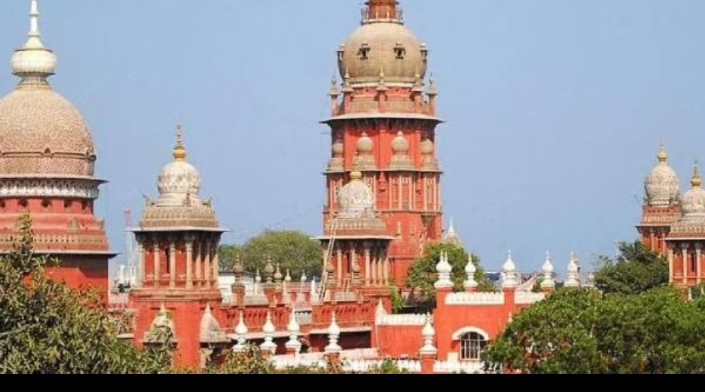 , share a bus seat, or smile at them briefly in an office corridor. But too often, society either stares with ridicule or looks away in silence. Very few see the human behind the label — someone seeking nothing more than dignity, respect, and a chance to live as they truly are.
From Courtrooms to Toilets: The Long Walk to Dignity for India’s Transgender Community
In June 2024, the Madras High Court made history by becoming the first High Court in India to install three gender-neutral toilets on its campus. Here’s what’s been happening regarding the Madras High Court and improved facilities for transgender individuals:
A LinkedIn post by transgender advocate Kanmani R. (verified on June 2024) shared good news:
“The Hon’ble Madras High Court has sanctioned three additional gender neutral washrooms in the High Court campus. One of the first High Courts in the country to take this small but very important step!”
This confirms the High Court has installed three new gender‑neutral washrooms on its premises, marking a meaningful step toward inclusive facilities.
This infrastructural change, while seemingly small, is a profound act of institutional empathy—a recognition of the rights and dignity of transgender and gender-nonconforming persons. But this isn’t just a story about toilets. It’s about how courts—are reshaping the idea of justice through inclusion, listening, and humility.
A Judicial Voice of Empathy
In a legal landscape where detachment is often valorized, Justice Anand Venkatesh stood apart and more recently the Bench consisting of their Lordships Justtice. G R. Swaminathan and Justice V.Lakshminarayanan when approached by a same-sex couple seeking protection from their disapproving parents, did something remarkable. Justice Anand Venkatesh paused the hearing, stating that he needed time to “understand same-sex relationships” before delivering a judgment. He didn’t stop there. He wrote to psychologists, read scientific literature, and interacted directly with LGBTQIA+ individuals. His honesty was disarming. In his own words:
“I am trying to break my preconceived notions about this issue. I have no hesitation in admitting that I am not fully ‘woke’ to this subject. I am willing to understand.” That journey translated into a series of bold, progressive directives:
Ban on conversion therapy in Tamil Nadu.
Directions to revise school and college curricula to include LGBTQIA+ issues.
Mandate for sensitisation of police and government officials.
A push for gender-neutral restrooms in public and institutional spaces.
Periodic monitoring of implementation through status reports.
It is from this context that the gender-neutral washrooms in the High Court campus must be seen—not just as construction projects, but as judicially seeded symbols of change.
Infrastructure as Inclusion
Toilets might seem mundane, but for transgender persons, the lack of safe, affirming restrooms can lead to harassment, violence, or complete avoidance of public life. Recognising this, in the Sushma case, Justice Venkatesh explicitly urged both the Union and State Governments to ensure provision of gender-neutral restrooms, especially in public institutions like courts, colleges, and government offices. His orders made it clear that dignity begins with access.
Following his directions and subsequent PILs in 2023–24, the Madras High Court’s campus became the first to act on these ideals, completing installation of three gender-neutral toilets by June 2024.
Legal Gains vs. Legislative Gaps
Even as courts like the Madras High Court move toward inclusion, India’s primary transgender law—the Transgender Persons (Protection of Rights) Act, 2019—lags behind.
Justice Venkatesh himself had flagged issues with the law, notably:
The requirement of certification for gender identity—a direct contradiction of the NALSA judgment (2014).
The absence of provisions for reservations, marriage, adoption, and inheritance.
Tokenistic punishment for violence and abuse against transgender persons.
He echoed the demand that rights must not come with red tape, nor be made conditional upon medical procedures or administrative approval.
Why This Moment Matters
The Madras High Court’s move marks a turning point:
It symbolises judicial responsibility not just to interpret law, but to humanise it.
It aligns with Articles 14 and 21 of the Constitution, guaranteeing equality and dignity.
It responds to community-led demands, acknowledging that legal victories must be followed by institutional change
A Broader Vision for Reform
Building on this vision, the road ahead must include:
1. Amending the 2019 Act to fully honour self-identification, introduce reservations, and grant family rights.
2. Enacting a national anti-discrimination law covering gender, caste, class, disability, and sexuality.
3. Public funding for gender-affirming healthcare, and psychological support tailored to transgender needs.
4. Mandatory training for police, teachers, and judges on gender identity and inclusion.
5. Curriculum changes at school and university levels to foster respect and awareness from a young age.
A Justice That Learns, Listens, and Leads
Justice Anand Venkatesh didn’t just pass judgment—he evolved with it. His example shows that justice need not be a cold doctrine. It can be a process of learning, engagement, and moral courage.
“The courtroom cannot afford to be a closet of ignorance.”
— Justice Anand Venkatesh, Sushma v. Commissioner of Police (2021)
The Madras High Court, through its inclusive reforms, has made that courtroom a little more open—and a lot more just.
A Legacy of Acceptance Lost to Laws
India has known and embraced gender diversity for centuries. Communities like the Hijras have been part of festivals, births, and blessings. But colonial rule brought with it a rigid gender binary and criminalisation — casting the transgender identity into shadows. The Criminal Tribes Act, 1871 reduced Hijras to a stereotype — criminal by default. This stigma, though the law is long gone, survives in whispered judgments and silent exclusions.
A Judiciary That Listened: A Ray of Hope
Change didn’t begin in Parliament — it began in courtrooms, where voices long silenced found their echo.
1. NALSA v. Union of India (2014)
A historic verdict that recognised the right to self-identify one’s gender. For the first time, India’s highest court said: You exist. You matter. You are equal.
Transgender persons were granted constitutional rights under Articles 14, 15, 16, 19(1)(a), and 21.
2. Puttaswamy v. Union of India (2017)
A landmark ruling on privacy, affirming that one’s gender identity is deeply personal — and fundamentally protected.
3. Navtej Singh Johar v. Union of India (2018)
With the striking down of Section 377, the Court did more than decriminalise love — it restored the humanity of millions.
4. Arun Kumar v. IG of Registration (2019)
The Madras High Court reminded us that the law must evolve with empathy — recognising that a transwoman can be a bride under Hindu marriage laws.
5. S. Sushma v. Commissioner of Police (2021)
A rare moment of judicial humility — where a judge chose to unlearn and relearn by listening to LGBTQ+ voices. The Court ordered safeguards, called out police excesses, and banned conversion therapy.
A Law with Good Intentions, but Glaring Gaps
The Transgender Persons (Protection of Rights) Act, 2019 tried to put NALSA into law. It made discrimination illegal. It defined transgender broadly. But it fell short — deeply.
It demanded certificates for self-identity, undoing the very core of NALSA. It ignored reservations, despite clear directions. It kept family rights — like marriage, adoption, inheritance — out of reach. And its punishments for abuse were tokenistic. Today, this law is under challenge in the Supreme Court — because rights should not come with red tape.
Beyond Law: A Daily Struggle for Survival
Even with progressive judgments and half-baked legislation, most transgender persons live on the margins: 92% remain unemployed in the formal sector. Over 60% are pushed into begging or sex work. More than half drop out of school due to bullying and abuse. Healthcare, especially gender-affirming care, is a luxury they can’t access. How a transgender person feels can vary widely—just as it does for anyone else. However, many transgender individuals share common emotional experiences related to their gender identity, especially in societies where being transgender is not fully accepted or understood. Here’s a nuanced and empathetic exploration of how many transgender people might feel.
What Needs to Change — Not Tomorrow, But Now – A Call for More Than Sympathy
Justice Indu Malhotra said it best: “History owes an apology to the LGBTQ community.” But apology is not enough.
The transgender community does not need charity. They deserve citizenship, not conditional sympathy. Respect, not curiosity. Opportunities, not labels.
It’s time India matched its legal promises with social and institutional will.