08:50] sekarreporter1: https://thelegalaffair.com/news/madras-high-court-flags-use-of-children-in-election-campaigns-while-examining-alleged-corrupt-practices-in-tamil-nadu-polls/ [31/05, 08:50] sekarreporter1: The Legal Affair Let’s talk Law
[31/05, 08:50] sekarreporter1: https://thelegalaffair.com/news/madras-high-court-flags-use-of-children-in-election-campaigns-while-examining-alleged-corrupt-practices-in-tamil-nadu-polls/
[31/05, 08:50] sekarreporter1: The Legal Affair
Let’s talk Law
Home
Articles
Interviews
Resources
Careers
Contact Us
Madras High Court Flags Use of Children in Election Campaigns While Examining Alleged Corrupt Practices in Tamil Nadu Polls
Share this:
Image
30/05/2026, 15 hours ago
Madras High Court Flags Use of Children in Election Campaigns While Examining Alleged Corrupt Practices in Tamil Nadu Polls
Introduction:
The Madras High Court recently made significant oral observations regarding the use of children in political election campaigns while hearing a public interest litigation alleging corrupt electoral practices during the 2026 Tamil Nadu Legislative Assembly elections. The Court orally remarked that involving children in election propaganda was “bad” and raised concerns regarding the manner in which political messaging could indirectly influence voters through minors.
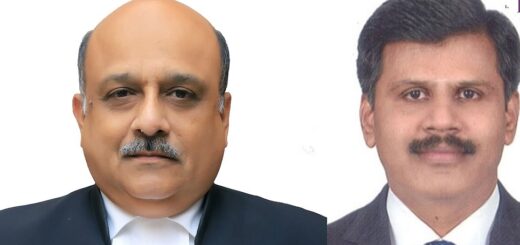
The observations came from a Division Bench comprising Justice G.R. Swaminathan and Justice V. Lakshminarayanan during the hearing of the case titled Vasuki L v. Election Commission of India, W.P. No. 20247 of 2026. The petition was filed by Advocate L. Vasuki, who sought a court-monitored and time-bound independent inquiry into alleged corrupt practices committed by major political parties during the recently concluded Tamil Nadu Assembly elections.
The litigation gained substantial public attention because the elections resulted in the formation of a new alliance government led by actor-turned-politician Joseph Vijay, whose party Tamilaga Vettri Kazhagam (TVK) emerged as a major political force. Following the electoral victory, Vijay was sworn in as the Chief Minister of Tamil Nadu. The petition specifically named TVK, Dravida Munnetra Kazhagam (DMK), and All India Anna Dravida Munnetra Kazhagam (AIADMK), alleging that these parties indulged in illegal campaign practices violating election laws and constitutional principles.
According to the petitioner, the elections witnessed widespread instances of electoral bribery, cash-for-votes practices, undue influence upon voters, and use of children for electoral propaganda. The plea alleged that certain political speeches and campaign strategies encouraged children to emotionally persuade or pressure their parents into voting for particular political parties, thereby amounting to “undue influence” under Section 123 of the Representation of the People Act, 1951.
The issue of children participating in election campaigns emerged prominently during the hearing when Justice G.R. Swaminathan narrated a personal anecdote. The Judge orally remarked that while he was preparing to cast his vote during the elections, his grandchild insisted that he vote for actor and politician Vijay. Referring to this incident, the Court orally observed that involving children in political campaigns was inappropriate and concerning.
The petition also alleged serious inaction on the part of the Election Commission of India (ECI), despite widespread reports and public allegations concerning distribution of money to voters and other corrupt electoral practices. The petitioner argued that the alleged failure of the ECI to take prompt and effective action undermined the constitutional guarantee of free and fair elections, which forms part of the basic structure doctrine under the Constitution of India.
The matter raised several significant legal and constitutional issues concerning the scope of judicial intervention in election-related matters after the conclusion of polls, the powers of the Election Commission under the Model Code of Conduct, the meaning of “undue influence” under election law, and the extent to which political parties can be held accountable for campaign methods involving children.
While the Court did not pass any final orders at this stage, it issued notices to the political parties earlier and adjourned the matter after senior counsel appearing for the respondents sought time to file detailed counter affidavits.
Arguments of the Parties:
The petitioner, Advocate L. Vasuki, approached the Madras High Court alleging that the 2026 Tamil Nadu Assembly elections were marred by several illegal and corrupt practices committed by major political parties. The petition sought judicial intervention in the form of an independent inquiry into the alleged electoral misconduct.
According to the petitioner, the election campaign witnessed widespread violations of democratic principles, including electoral bribery, cash-for-votes schemes, and undue influence exerted upon voters. A key grievance raised in the petition concerned the alleged use of children in political campaigning and voter mobilisation efforts.
The petitioner specifically alleged that Tamilaga Vettri Kazhagam leader and current Chief Minister Joseph Vijay had encouraged children to emotionally influence their parents and persuade them to vote for TVK during the election campaign. It was argued that such conduct amounted to indirect manipulation of voters through emotional pressure exerted by minors.
The plea contended that this strategy raised serious concerns under Section 123 of the Representation of the People Act, 1951, which deals with corrupt electoral practices including undue influence. According to the petitioner, involving children in electoral propaganda distorts the free exercise of voting rights and interferes with independent political choice.
The petitioner also alleged that reports of distribution of money to voters had surfaced from several constituencies during the election process. Despite such allegations being widely circulated in public discourse and media platforms, the Election Commission allegedly failed to initiate effective action against the concerned political parties.
It was argued that the inaction of the Election Commission undermined the constitutional framework governing free and fair elections. The petitioner submitted that free and fair elections form an essential component of the basic structure doctrine and that any failure to curb corrupt practices directly affects democratic governance.
The plea further contended that the alleged electoral irregularities violated Articles 14, 19, and 21 of the Constitution by compromising equality, political freedom, and democratic participation. The petitioner therefore sought a court-monitored, time-bound inquiry into the allegations against TVK, DMK, and AIADMK.
During the proceedings, another petition seeking similar reliefs was also brought before the Court, indicating wider public concern regarding the alleged use of children and other irregularities during election campaigns.
On behalf of TVK, Senior Advocate S. Muralidhar opposed the petition and questioned the basis on which the allegations had been made. He argued that the PIL relied substantially upon newspaper reports and media material rather than concrete legal evidence capable of establishing electoral misconduct.
Muralidhar submitted that the matter involved complex questions concerning the powers of the Election Commission after the conclusion of elections. According to him, the Court would need to examine whether the ECI possesses authority to intervene retrospectively regarding alleged violations that occurred during the operation of the Model Code of Conduct.
The senior counsel further argued that the legal framework governing election disputes required careful interpretation. He submitted that issues concerning “undue influence” under the Representation of the People Act would have to be analysed in detail before any conclusions could be drawn regarding the alleged conduct of political parties.
Muralidhar also highlighted the limited statutory consequences available under election law. He argued that existing legal provisions do not contemplate “disqualification” of a political party itself but only permit deregistration in specific circumstances. Therefore, according to him, the Court would have to carefully examine whether the allegations made in the petition could legally justify any action against political parties.
The TVK counsel essentially argued that broad allegations founded primarily on news reports could not become the basis for judicial findings regarding corrupt electoral practices without proper evidentiary scrutiny.
Senior Advocate N.R. Elango, appearing for the DMK party, raised another important procedural objection. He argued that if the petitioner intended to challenge alleged corrupt practices committed during elections, the returned candidates themselves ought to have been impleaded as parties to the proceedings.
According to Elango, election disputes involving allegations of corrupt practices are ordinarily governed by the statutory mechanism provided under election law, including election petitions challenging individual electoral victories. Therefore, he questioned whether a PIL could be maintained without impleading the directly affected candidates.
The Election Commission of India, represented through its standing counsel Advocate Niranjan Rajagopal, sought time to file a detailed counter affidavit responding to the allegations raised in the PIL. The ECI’s position is expected to become clearer in subsequent hearings.
The arguments before the Court therefore highlighted competing constitutional and legal concerns. While the petitioner portrayed the matter as involving systemic threats to electoral democracy, the respondents emphasised procedural limitations, evidentiary standards, and the need for careful interpretation of election laws.
Court’s Judgment:
At the present stage, the Madras High Court has not delivered a final judgment on the merits of the allegations raised in the PIL. However, the oral observations made by the Division Bench during the hearing have already attracted significant attention because they indicate judicial concern regarding the use of children in political campaigns.
Justice G.R. Swaminathan orally remarked that involving children in election campaigns was undesirable and problematic. While sharing a personal anecdote about his grandchild requesting him to vote for actor-politician Vijay, the Judge observed that such influence upon children, who may in turn emotionally influence adults, raises troubling concerns in the context of democratic elections.
The oral observations reflected the Court’s prima facie concern that children should not become instruments of political mobilisation or indirect voter influence. Although no conclusive findings were recorded at this stage, the remarks indicate judicial sensitivity towards preserving the integrity of electoral processes and protecting children from political exploitation.
At the same time, the Bench recognised that the matter raised several complex legal questions requiring detailed examination. The Court acknowledged the submissions made by Senior Advocate S. Muralidhar that the case involved interpretation of the Model Code of Conduct, provisions of the Representation of the People Act, and the scope of powers available to the Election Commission after elections have concluded.
The Court also appeared conscious of the procedural and jurisdictional issues involved in entertaining a PIL relating to alleged corrupt electoral practices. Questions concerning whether political parties can be deregistered, whether returned candidates are necessary parties, and whether allegations based substantially on media reports can sustain judicial inquiry remain open for adjudication.
Importantly, the Bench did not reject the petition outright despite the objections raised by the respondents. Instead, the Court granted time to the political parties and the Election Commission to file detailed counter affidavits. This indicates that the Court considers the issues raised worthy of further judicial examination.
The oral remarks of the Bench also carry broader constitutional significance because they touch upon the ethical dimensions of election campaigning in a democracy. Indian election law traditionally regulates direct forms of bribery, coercion, and undue influence. However, the allegations in the present case involve more subtle forms of emotional and psychological persuasion through children.
The Court’s remarks suggest an evolving judicial recognition that electoral influence may operate in indirect ways that challenge traditional understandings of free voter choice. While election campaigns often involve emotional appeals and symbolic messaging, the Court appeared concerned that involving minors in political persuasion could cross acceptable democratic boundaries.
Another important aspect emerging from the hearing is the Court’s focus on institutional accountability. The petitioner’s allegations against the Election Commission raise larger concerns regarding enforcement of the Model Code of Conduct and the effectiveness of existing regulatory mechanisms in addressing electoral malpractice.
Although the Court has not yet made any findings regarding the Election Commission’s conduct, the decision to continue hearing the matter reflects judicial willingness to scrutinise allegations affecting the fairness and credibility of elections.
The proceedings also demonstrate the increasing role of constitutional courts in addressing ethical dimensions of electoral democracy beyond conventional election disputes. Rather than limiting the matter purely to technical election law procedures, the Bench’s observations suggest concern for broader democratic values and the integrity of political participation.
Ultimately, the Court adjourned the matter after granting time to the respondents to file their replies. The PIL will now proceed for further consideration after completion of pleadings.
While the case remains pending, the oral observations made by the Madras High Court have already triggered wider public and legal debate regarding the boundaries of acceptable political campaigning, the role of children in electoral propaganda, and the responsibility of political parties to uphold ethical standards during democratic contests.
The outcome of the case may eventually have significant implications for election law jurisprudence, particularly regarding interpretation of “undue influence” under the Representation of the People Act and the scope of judicial oversight over political campaign practices in India.
Post navigation
Previous: Karnataka High Court Reinforces Limits of Custodial Interrogation While Granting Anticipatory Bail in Defamation and Modesty Outrage Case
Next: Delhi High Court Examines Free Speech and Transparency Concerns in Blocking of Satirical Political X Account
Explore
News
Articles
Resources
Interviews
Contact Us
Careers
Find jobs in law and give your career the boost it deserves
Join Us
footer-logo
Exploring, learning, and sharing the Indian peoples’ legal pursuits for justice.
Read more
The Legal Affair © 2026 Privacy PolicyTerms & Conditions