THE HONOURABLE MRS.JUSTICE K.GOVINDARAJAN THILAKAVADI C.M.A.No.2062 of 2025 and C.M.P.No.18113 of 2025 Sarkar Syed Habibullah Sha Kahdari Arif Rabbani Hazarat Dargha, Rep. By its Mutawalli, M.Mohammed Azmathulaah, S/o. Mahamed Qutharothulla, Flat No.3,2nd Floor, No.89/149, Llyods Road, Royapetta, Chennai-600 014. …Appellant Vs. 1.The Tamil Nadu Waqf Board, Represented by its Chairman,
IN THE HIGH COURT OF JUDICATURE AT MADRAS
Reserved on: 20.04.2026
Pronounced on: 05.06.2026
CORAM :
THE HONOURABLE MRS.JUSTICE K.GOVINDARAJAN THILAKAVADI C.M.A.No.2062 of 2025 and C.M.P.No.18113 of 2025
Sarkar Syed Habibullah Sha Kahdari Arif
Rabbani Hazarat Dargha,
Rep. By its Mutawalli,
M.Mohammed Azmathulaah,
S/o. Mahamed Qutharothulla,
Flat No.3,2nd Floor, No.89/149,
Llyods Road, Royapetta, Chennai-600 014.
…Appellant Vs. 1.The Tamil Nadu Waqf Board, Represented by its Chairman,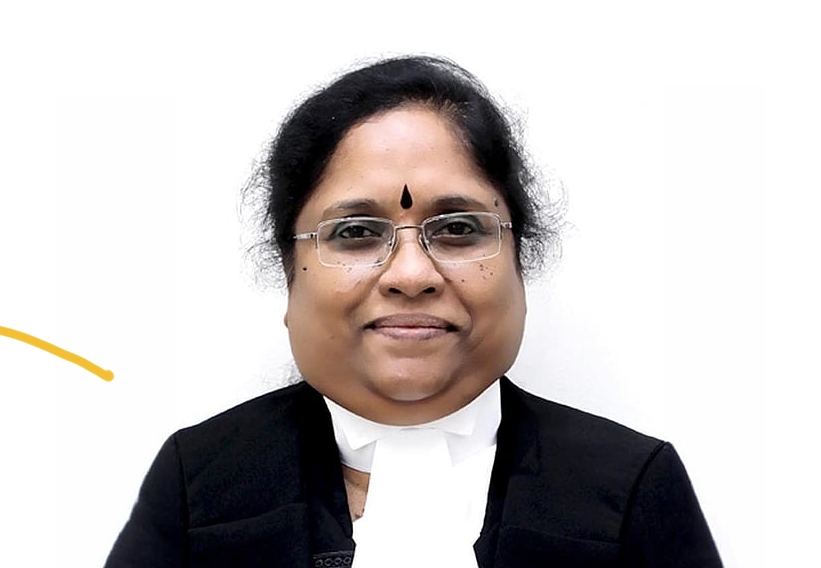
No.1, Jaffar Syrang Street, Vallal Sethakathi Nagar, Chennai-600 001.
2.The Chief Executive Officer,
Tamil Nadu Waqf Board,
No.1, Jaffar Syrang Street, Vallal Sethakathi Nagar, Chennai -600 001.
3.The Superintendent,
Tamil Nadu Waqf Board,
No.13, Dr.Besant Road,
Triplicane, Chennai- 5
4.The Executive Engineer,
Public Works Department,
South Presidency Division,
Chepauk, Chennai-5
5.A.Shainsha …Respondents
Prayer: This Civil Miscellaneous Appeal is filed under Section 83(9) of the Waqf (Amendment) Act, 2025, to set aside the order dated 13.06.2025 in O.A.No.83 of 2023 on the file of the Tamil Nadu Waqf Tribunal as illegal and unsustainable in law.
For Appellant : Ms.V.Anusha
For Respondent : Mr.C.Shankar for R1 to R3
Mr.P.Gurunathan,
Additional Government Pleader for R4 Mr.N.A.Nassir Hussain for R5
JUDGMENT
The present appeal is preferred under Section 83 (9) of the Waqf Act, 1995 (as amended by the Waqf Amendment Act, 2025), challenging the final order dated 13.06.2025 passed by the Tamil Nadu Waqf Tribunal in O.A.No.83 of 2023.
2.The subject matter concerns a Dargah known as ”Sarkar Syed
Habibullah Sha Khadari Arif Rabbani Hazarath Dargah” situated at No.2
Kamaraj road, Triplicane, Chennai. According to the appellant, the said Dargah is 240 years old and maintained by the family members of the appellant on their own earnings and that the appellant was serving as the Mutawalli of the said Dargah for the past 40 years on hereditary basis. The land in which the said Dargah is situated belongs to the 4th respondent / Public Works Department and the same is not the property of the Waqf. The appellant has obtained electricity connection in his name as Mutawalli of the said Dargah, by obtaining NOC from the 4th respondent on 02.12.2021. While so,
the 1st respondent/The Tamil Nadu Waqf Board has appointed the 5th respondent as Mutawalli of the said Dargah without any authority and declared the property in which the Dargah is situate as Waqf property. It is further submitted that the land belongs to the Public Works Department and that the 1st respondent has no authority to appoint the 5th respondent as Muttawalli of the said Dargha, and erred in declaring the property as Waqf property, without following the guidelines of the Hon’ble Supreme Court before declaring the property as Waqf property. The 1st respondent failed to follow the procedure of removal of the applicant Muttawalli as envisaged under Section 64 of the Waqf Act. Hence, the appellant preferred an application under Section 83(1) & (2) of the Waqf Act, 1995 before the Tribunal seeking the following reliefs:
(i) to declare that the resolution passed by the 1st respondent in No. 196/23 Na.Ka.No.11453/23/B6/Chennai dated 23.08.2023 and the consequential order passed by the 2nd respondent vide proceedings
Se.Mu.Order .11453/23/B6/Chennai dated 14.09.2023 as null and void
(ii) permanent injunction against the respondents 1 to 3 and 5 not to disturb the appellant serving at Sarkar Syed Habibullah Sha Khadari Arif Rabbani Hazarat Dargha.
3.The respondents 1 to 3 would submit that, the land in which the said Dargha is situated do not belong to the Public Works Department. The said land and the surrounding lands belong to the Dargha, which at later point of time came into the possession of the Municipality as per G.O.No.1796. Thereafter, it was handed over to the Public Works Department and now in the possession of Scouts. The appellant appeared before the Board and clearly admitted that he do not belong to the Dargha family and therefore, he is estopped from claiming to be the Muttawalli of the said Dargha. The registration of the Dargha as per Section 36(4) of the Waqf Act, 1995 is under process. The 5th respondent was appointed as Muttawalli based on proper enquiry. It is further stated that, the surrounding lands of the Dargha was originally used as burial ground and it was transferred to the Municipality and thereafter to the Public Works Department. It is further submitted that once a property is intended for religious and charitable purpose then it is a Waqf property and comes under the supervisory control of the Tamil Nadu Waqf Board. The appellant has no right to claim hereditary Mutawalliship. Hence, prayed for dismissal of the application.
4.The contention of the 4th respondent is that the land belongs to the
Municipality as per G.O.No.880 PWD dated 01.07.1974 and it is classified as
Poromboke in R.S.No.2615/2 and the same is allotted to the Bharat Scouts and Guides by the Public Works Department as rent free. While so, the 5th respondent fraudulently registered the Dargha land without the concurrence of the 4th respondent. The Dargha cannot be construed as Waqf since it is not related to public purpose and Islam Religious Services and prayed for dismissal of the application.
5.The contention of the 5th respondent is that, the Dargha in question is a
Waqf as defined under the Waqf Act and the land in which the Dargha is situate originally belong to the Dargha. Pursuant to G.O.No1976 the possession was taken over by Municipality and thereafter it was handed over
to the Public Works Department in the year 1886 as per the
G.O.No.2095/Revenue dated 01.04.1886, for the reason that it was a burial
ground. The waqf had all along been administered by the forefathers of the 5th defendant hereditarily who have been performing the religious rites and prayers. In the year 2010,the 5th respondent and others, interested in the waqf, created the waqf in the name of Hazarat Syed Habibullah Sha Khaderi Trust under a registered Trust deed dated 24.02.2010 on the file of SRO, Royapuram. The 5th respondent had been approaching the Waqf Board to recognize him as the Mutawalli of the said Waqf. Since no action was taken on his representation, he filed the writ petition in W.P.No.21617 of 2023 before this Court in which a direction was given to the 1st respondent to consider his representation. Pursuant to the same, the 1st respondent /Board after detailed enquiry appointed him as the Mutawalli of the Waqf in which the appellant also participated. In the said enquiry, the appellant admitted that he neither belong to the Dargha family nor is a person interested in the waqf and had gone to the extent of saying the Dargha is not a waqf. It is submitted that registration of a waqf is only a statutory formality not affecting or altering the character or nature of the waqf. Non-registration only attracts penalty against the mutawalli and the appellant cannot take advantage of the same. Hence, the appellant cannot question the authority of the respondents 1 & 2 in appointing the 5th respondent as mutawalli. The appellant is not in possession of the subject property and therefore, prayed for dismissal of the application.
6.The Tribunal, after analyzing the materials on record, dismissed the said application against which the present appeal is preferred.
7.Ms.V.Anusha, the learned counsel for the appellant would submit that, the appellant and his family continuously served and maintained the subject Dargha for over 40 years. While so, the Waqf Board solely on an unverified and irrelevant Trust deed and unsupported representation letters, appointed the 5th respondent as Mutawalli. The learned Tribunal dismissed the application filed by the appellant challenging the order passed by the Board without appreciating the materials on record in a proper manner. She would further submit that, without conducting proper survey of land as per the provisions contemplated under the Waqf Act, 1955, the property cannot be deemed waqf in law. While so, the Waqf Board directed the registration of the Dargha under Section 36(4) of the Act without prior survey or declaration.
Further the Dargha is situated in a Government land. While so, without a formal and lawful transfer or statutory notification, the Waqf Board illegally directed the registration of the Dargha. The 5th respondent was appointed as Mutawalli by the Board based on a fraudulent Trust deed. It is submitted that for establishing the subject Dargha as Waqf under the Waqf Act, a statutory survey and notification has to be done as contemplated under Section 4 and 5 of the Waqf Act, 1955. She would further contend that the property was not registered as waqf and therefore, in the absence of the above mandatory procedural steps, the property cannot be deemed as waqf in law. While so, the Tribunal erred in concluding that the subject Dargha constitutes waqf solely on the presumption that the land in which the Dargha is situated functioned as a burial ground without any iota of evidence. There is no legal document that the property was dedicated as waqf. Therefore, the Board directing the registration of the Dargha under Section 36(4) of the Act without prior survey, is impermissible in law. She would further contend that, the land in which the Dargha is situated belong to the Government and therefore, the same cannot be treated as Waqf in the absence of lawful transfer or statutory notification. Further, the subject Dargha cannot be treated as Waqf solely on account of its religious or pious usage. The creation of Waqf must be established through intention, ownership, and act of dedication and not merely on religious use.
The Board cannot assume automatic supervisory jurisdiction without following the statutory procedures as mandated under the Act. Moreover, Ex.P.8-RTI reply confirms that the appellant and his family have been in continuous control and maintenance of the Dargha. It also refutes the claim made by the 5th respondent that his grandfather Sheik Ali Sahib served as a gardener under one lessee around 1965 and that his family has hereditarily served the said Dargha. It was primarily on the basis of this unverified and incorrect claim, the Waqf Board appointed the 5th respondent as Mutawalli. The Tribunal has erroneously relied upon G.O.No.2095 to conclude that the land on which the Dargha is situated is a burial ground. The said Government order pertains to survey No.2977, whereas the subject Dargha is located in survey No.2615/2, which relates to entirely different parcel of land. The Trust deed relied upon by the 5th respondent for appointing him as Mutawalli is a fraudulent document. The Tribunal erred in relying upon the documents marked as 9,10 and 12 to 20 on the side of the 5th respondent which are selfserving representation letters addressed to various authorities and there is no evidence on record to show that any of the above representations were acknowledged, acted upon or legally recognized by the authorities concerned. Further, the registered trust deed does not contain any recital referring to the subject Dargha and in the absence of the same, reliance on informal, unacknowledged communications to establish legal or administrative control is untenable. Further, she would submit that, practices in question should be treated as a part of religion and they must be regarded by the said religion as its essential and integral part. Otherwise, even secular practices which are not an essential or an integral part of religion are apt to be clothed with a religious form and may make a claim for being treated as religious practices. Her further contention is that the 5th respondent failed to establish a customary right to the office of Muttawalli through clear and unambiguous evidence for proving a custom of hereditary succession to the office of Muttawalli. She would also submit that under Section 4 of the Act, survey is sine qua non before declaring Waqf and that Section 4(3) enquiry is formal, not informal.
To support her contention, she has relied upon the following judgments:
(i)The Durgah Committee, Ajmer & Anr. V. Syed Hussain Ali & Ors., reported in AIR 1961 SC 1402,
(ii) Aliyathammuda Beethathebiyyappura Pookoya & Anr. V. Pattakal
Cheriyakoya & Ors., Civil Appeal No. 9586 of 2010,
(iii) Madanuri Sri Rama Chandra Murthy V. Syed Jalal, reported in
AIR 2017 SC 2653,
(iv) Salem Muslim Burial Ground Protection Committee V. State of Tamil Nadu & Ors., Civil Appeal Nos. 7467-7470 of 2014, decided on
18.05.2023 (SC).
8.On the other hand, Mr.C.Shankar, learned counsel for the respondents 1 to 3 would submit that, the appellant do not belong to the Dargah family and therefore he is estopped from claiming to be the Mutawalli of the subject dargah and that the registration of the Dargah as per Section 36(4) of the Waqf Act, 1995 is under process. Further stated that, once a property is intended for religious and charitable purpose then it is a waqf property and comes under the supervisory control of the Tamil Nadu Waqf Board. Therefore, the
appointment of the 5th respondent as mutawalli of the said Dargah is proper.
9.Mr.P.Gurunathan, the learned Additional Government Pleader for the 4th respondent would submit that the land in which the subject Dargah is situate is classified as Government poromboke land in the revenue records and the same is allotted to the Bharath Scouts and guides by the Public Works Department as rent free. The subject Dargah cannot be construed as Waqf since it is not related to public purpose and the 5th respondent fraudulently registered the Dargah land without the concurrence of the Public Works Department, namely the 4th respondent. Hence, prayed for setting aside the order passed by the learned Tribunal.
10.Mr.N.A.Nassir Hussain the learned counsel for the 5th respondent would submit that the subject Dargah in question is a Waqf as defined under the Waqf Act and it is in existence from time immemorial. He would submit that the Dargah has been administered by his forefathers hereditarily. His further contention is that, the concept of private mosque is unknown to Muslim Law and that even a dilapidated structure of old Mosque becomes a Waqf by user where any member of Muslim Community, is entitled to offer prayers. Therefore, evidence of express dedication is not necessary. Therefore, the argument on the side of the appellant that there was no formal dedication is unsound. The mere act of permitting the Muslims of the Village to build a Mosque itself amounts to a complete dedication or a declaration that the mosque is a public property. His further contention is that, it is only on the determination of the surplus income for the year, the public character of the Waqf ceases, and the private trust purposes commences. To the later part the Waqf Act will not apply and so does the jurisdiction of the Waqf Board. In the present case, the subject Dargah is a public Waqf since no surplus income is determined. Hence, the Waqf Act will apply to the subject Dargah. To support his contention, he has relied upon the following judgments :
1. 1956 AIR Supreme Court 713
2. 2018 (5) MLJ 360
3. 1992(1) MLJ 535
11.Heard. Records perused.
12.The present statutory appeal is filed under Section 83(9) of the Waqf Act, 1995 (as amended by the Waqf Amendment Act, 2025), challenging the final order dated 13.06.2025 passed by the Tamil Nadu Waqf Tribunal in O.A.No.83 of 2023.
13.The case concerns a Dargah known as ”Sarkar Syed Habibullah Sha
Khadari Arif Rabbani Hazarath Dargah”, situated at No.2 Kamaraj Road, Triplicane, Chennai, on Government Poromboke land. According to the appellant, the appellant and his family have continuously served and maintained the Dargah for over 40 years. While so, the Waqf Board solely based on an unverified and irrelevant trust deed and unsupported
representation letters, appointed the 5th respondent as Mutawalli. Challenging the same, the appellant preferred O.A.No.83 of 2023 before the Tamil Nadu Waqf Tribunal and the same was dismissed, upholding the appointment of the
5th respondent as Mutawalli of the subject Dargah.
14.Now, looking at the facts of the case, the suit land is leased out to the Bharath Scouts by the Public Works Department. While so, the 5th respondent has registered the Dargah land as a trust property vide Doc.No.147 of 2010
dated 24.02.2010 at SRO, Royapuram. In pursuant to the said deed the 1st
respondent namely, the Tamil Nadu Waqf Board has appointed the 5th respondent as Mutawalli of the said Dargah.
15.It is to be noted that, under the Muslim law, a Waqf can be created in several ways but primarily by permanent dedication of any movable and immovable property by a person professing Islam for any purpose recognised by Muslim law as pious, religious or charitable purpose and in the absence of such dedication, it can be presumed to have come into existence by long use.
16.Now it has to be seen whether the subject Dargah and the land in which the Dargah is situate constitute a Waqf or Waqf property as contemplated under the Act. According to the Public Works Department, the land in which the Dargah is situated, originally belongs to Municipality as per
G.O.No.880 PWD, dated 01.07.1974 and it is classified as Poromboke land in R.S.No.2615/2 and it has been leased out to the Bharat Scouts and Guides by the Public Works Department.
17.Now, looking at the facts of the present case, none of the documents produced by the respondents 1 to 3 and 5 would indicate that the properties specified in the ‘list of auqaf’. Whether, the property is a Waqf property or not cannot be decided by the Tribunal since the property is not one specified in the ‘list of auqaf’, which is the mandatory requirement under Section 6(1) and 7(1) of the Waqf Act of 1995 to approach the Tribunal.
18.Further, the issue as to whether the property can be deemed to be a ‘Waqf by user’ cannot be considered at this juncture, since the question is still at large. Thus, it cannot constitute by Waqf by user also. Moreover, the respondents 1 to 3 and 5 failed to establish that the Dargah land would constitute a Waqf by user. The 5th respondent also failed to establish that the alleged trust deed dated 24.02.2010 was acted upon. There is nothing on record to show that the land in which the Dargah is situate belong to the Dargah. Therefore, the alleged use of the disputed land is not established to construe it as Waqf by user in the absence of evidence to show that it was so used. Moreover, to declare the land as Waqf property, the declaration has to be inconsonance with the provisions of the Waqf Act, 1954, or the Waqf Act,
1995. Both the aforesaid Acts laid down the procedure for issuing notification declaring any property as a Waqf. A preliminary survey of Waqf has to be conducted and the survey commission shall, after such inquiry as may be deemed necessary, submit its report to the State Government about certain factors enumerated therein. Whereupon the State Government by a notification in the official Gazette direct for a second survey to be conducted. Once the above procedure of survey is conducted and the disputes arising thereto have been settled on receipt of the report, the State Government shall forward it to the Waqf Board. The Waqf Board on examining the same shall publish the list of Waqf in existence with full particulars in the official Gazette as per the provisions existed under the Waqf Act, 1954 and the Waqf Act, 1995.
19.A plain reading of the provision of the above two Acts would reveal that the notification under Section 5 of both the Acts declaring the list of the Waqfs shall only be published after completion of the process as laid down under Section 4 of the above Acts. Therefore, conducting of the surveys before declaring a property a Waqf property is a sine qua non. In the case at hand, it is admitted fact that the land in dispute was not surveyed and notified in the Government Gazette. Though the respondents 1 to 3 and 5 would submit that the survey is under process, it is imperative to conduct a survey before declaring a property as Waqf Property, and the provisions of Section 4 & 5 have to be mandatorily followed to decide whether a property is a Waqf Property. Therefore, a Dargah may be declared as Waqf only if it satisfies the legal requirements under the Waqf Act, 1995. Mere religious use or existence of a tomb or shrine is not automatically sufficient. There must be permanent dedication of property by a Muslim for purposes recognised by Muslim Law as pious, religious, or charitable, which is not found in the present case.
20.Moreover, a Dargah becomes Waqf when the land/building/income is permanently dedicated for maintaining the shrine, conducting URS, feeding devotees, religious instruction, charity, etc. The founder (Waqif) must have had ownership or lawful control over the property and intended to divest himself permanently of ownership in favour of God. Dedication may be expressed through a deed or declaration or implied by long public user and conduct. For religious and public character, the Courts must examine whether the Dargah functions as a public religious institution, i.e., it must have public access for worship, offerings collected for religious purposes , performance of rituals, maintenance through endowments and recognition by the Muslim community. The relevant evidences of Waqf includes a Waqf deed, revenue records, inam register entries, historical grants, gazette notifications, entries in
waqf survey reports, long standing management as waqf and judicial decisions.
21.As mentioned above, survey and notification under the Waqf Act is mandatory as per Section 4 to 6 of the Waqf Act. A statutory survey must be conducted and the State Waqf Board must examine the property and it must be entered in the Waqf register and officially notified. However, notification alone is not conclusive if challenged before the Waqf Tribunal or Civil Court in matters where jurisdiction survives. Further, every grave or Dargah is not automatically Waqf property. Existence of a Muslim endowment is required. Courts often distinguish a private family tomb and a Saint shrine maintained as a public religious endowment.
22.Thus, if a Dargah has never been surveyed, registered or notified as Waqf, the Waqf Board ordinarily cannot assume automatic control merely because it is a Muslim Religious Institution. Jurisdiction depends upon proof that the property is legally Waqf.
23.Admittedly, in the present case, a statutory survey and notification has not been done as contemplated under Section 4 & 5 of the Waqf Act, 1955 for establishing the subject Dargah property as Waqf Property. While so, the Tribunal erred in concluding that the subject Dargah property constitutes Waqf solely on the presumption that the land in which the Dargah is situated is a Waqf Property. As rightly pointed by the learned counsel for the appellant, there is no legal document that the property was dedicated as Waqf. Therefore, the direction of the Board to the 5th respondent for registration of the Dargah under Section 36 (4) of the Act without prior survey is impermissible. Further, the appellant and the 5th respondent are claiming to be the founder of the subject Dargah. While so, the said dispute must first be resolved according to law by a competent Civil Court. Hence, the appellant is not entitled for the relief of injunction.
24.Therefore, mere existence of a Dargah does not automatically confer jurisdiction upon the Board unless the institution is established or treated as a Waqf in accordance with law. Therefore appointment of a Mutawalli ordinarily presupposes the existence of a waqf. The Board must first establish jurisdictional facts before exercising control over the institution. Hence, the
resolution passed by the 1st respondent in 196/23
Na.Ka.No.11453/23/B6/Chennai dated 23.08.2023 and the consequential order passed by the 2nd respondent vide proceedings Se.Mu.Order.11453/23/Chennai dated 14.09.2023 is unsustainable and liable to be set aside.
25.In the result, the civil miscellaneous appeal is allowed. The
resolution passed by the 1st respondent in 196/23
Na.Ka.No.11453/23/B6/Chennai dated 23.08.2023 and the consequential order passed by the 2nd respondent vide proceedings Se.Mu.Order.11453/23/Chennai dated 14.09.2023 is set aside. No costs. Consequently, connected
miscellaneous petition is closed.
05.06.2026
vsn
Internet:Yes/No
Index:Yes/No
Speaking/Non-speaking order
To
1. The Chairman,
Tamil Nadu Waqf Board,
No.1, Jaffar Syrang Street, Vallal Sethakathi Nagar, Chennai-600 001.
2.The Chief Executive Officer,
Tamil Nadu Waqf Board,
No.1, Jaffar Syrang Street, Vallal Sethakathi Nagar, Chennai -600 001.
3.The Superintendent,
Tamil Nadu Waqf Board,
No.13, Dr.Besant Road,
Triplicane, Chennai- 5
4.The Executive Engineer,
Public Works Department,
South Presidency Division,
Chepauk, Chennai-5
5. The Section Officer,
VR Section, High Court, Madras.
K.GOVINDARAJAN THILAKAVADI, J.
vsn
C.M.A.No.2062 of 2025 and C.M.P.No.18113 of 2025
05.06.2026