Justices Anita Sumanth and C. Kumarappan also ordered for disclosure of revenue generated from the temple properties and any actions taken against encroachments.
Madras HC Seeks Full Details of Meenakshi Temple Properties, Revenue and Encroachments Madras HC seeks full details of Meenakshi temple properties
Court has asked the HR&CE Department for a comprehensive report on land, revenue, and steps taken to remove encroachments at renowned Madurai Meenakshi Sundareswarar Temple and its subsidiary temples The Madurai Bench of the Madras High Court has directed the state’s Hindu Religious and Charitable Endowments (HR&CE) Department to provide comprehensive details of the properties held by the renowned Madurai Meenakshi Sundareswarar Temple and its subsidiary shrines. In a public interest litigation (PIL) filed by A. Radhakrishnan of Salem, who urged the court to expedite restoration works at the temple and ensure the security of its assets, the division bench of Justices Anita Sumanth and C. Kumarappan also ordered for disclosure of revenue generated from the temple properties and any actions taken against encroachments.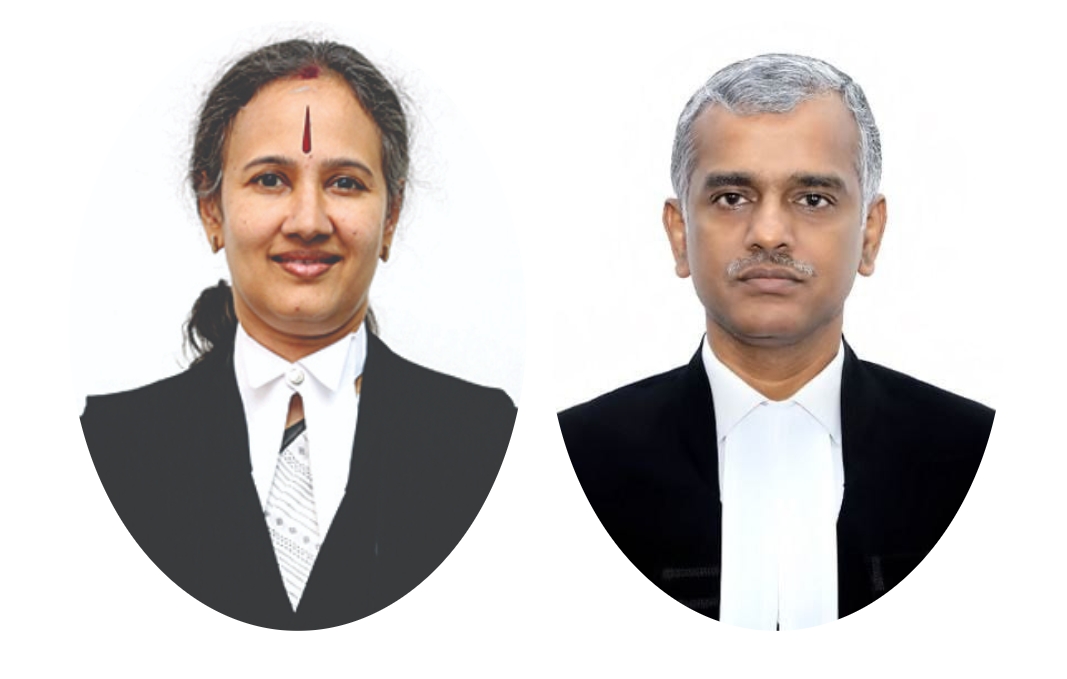
The petitioner highlighted that in 2021, the High Court had directed the state’s Chief Secretary to convene a meeting of all relevant departments to devise measures for safeguarding temple properties. Although a meeting occurred on 23 August 2021, no subsequent follow-ups were held over the following four years. Upon further court orders, a report was submitted by the joint commissioner on 4 September. The judges, however, found the report lacking in detail particularly the absence of meeting minutes, despite references to meetings being held. Also Read – Wages of skilled workman to be computed in compensation to minor child in motor accident cases: Supreme Court The matter is now scheduled for further hearing on 7 October, 2025. Recently, the High Court made it clear that temple money cannot be diverted for non-religious use. Court thereby put an end to the State’s plan to use Rs. 80 crore from surplus temple funds for building and renting marriage halls in 27 temples across the State. The government had planned to construct the marriage halls nearby temples on temple lands to assist Hindus to perform marriage functions with less expenditures. The government intended to rent out these halls. It claimed that a Hindu marriage is essentially a religious activities therefore, the halls construction would be for a religious purposes as provided under the Tamil Nadu Hindu Religious and Charitable Endowments Act, 1959. Tamil Nadu is one of the few states where thousands of Hindu temples fall under direct government control. The HR&CE Department, set up under the 1959 Act, manages finances, staff appointments, rituals, and property for over 36,000 temples, 56 mutts, and numerous trusts and endowments. This system was originally meant to ensure accountability and prevent misuse but it also led to debates over state interference in religious affairs.
The high level of control has brought several complications. Recently, the high court summoned HR&CE officers for allowing shops in ancient mandapams of Nellaiappar Temple, potentially harming heritage and religious ambiance. Although, government efforts have retrieved thousands of acres of land encroached upon, yet billions remain unrealized in fair rent, and mismanagement continues to harm temple wealth. Case Title: A.Radhakrishnan vs The Chief Secretary to Government And 70 Others Order Date: September 4, 2025 Bench: Justices Anita Sumanth and C. Kumarappan tags Madras High Court Meenakshi Sundareswarar temple Madurai temple
Next Story DUSU Candidates Not Required To Deposit Rs 1 Lakh Bond To Contest Polls, Says Delhi HC Delhi University Student Union (DUSU) elections By – Ritu Yadav | 5 Sept 2025 2:27 PM The petitioners, who hail from the Economically Weaker Sections (EWS) category and come from humble backgrounds, submitted that Clause ‘v’ of the notification imposes an unprecedented financial barrier by requiring a Rs 1 lakh security bond The Delhi High Court has recently clarified that Delhi University students contesting the DUSU elections are not required to deposit any money at the time of contesting the elections. Justice Mini Pushkarna passed the order after it was informed that students contesting the DUSU polls need not deposit money and that the varsity shall instead accept an affidavit along with a security bond. “Considering the aforesaid statements, it is clarified that the petitioners, or any other students intending to contest DUSU Elections, are not required to deposit any money at the time of contesting the Elections,” the High Court said. The development comes after two Delhi University students, Anjali and Abhishek Kumar, who intended to contest the polls, filed a plea before the High Court seeking to quash Clause ‘v’ of a notification. The impugned clause was introduced on August 8, 2025, through a notification issued by the Registrar, University of Delhi, titled “Guidelines/Measures for Anti-Defacement in and Around University/College Campus and for DUSU Elections.” Clause ‘v’ required that: “Each contesting candidate shall be required to execute a bond of Rs. 1.00 Lakh for the offence of any defacement/violation of provisions of these Guidelines by themselves or their supporters, at the time of filing nomination for any post of DUSU.” The petitioners, who hail from the Economically Weaker Sections (EWS) category and come from humble backgrounds, submitted that Clause ‘v’ of the notification imposes an unprecedented financial barrier by requiring a Rs 1 lakh security bond. The petitioners added that they simply cannot furnish such a bond. However, during the hearing, counsel for Delhi University submitted that except for filing an affidavit/undertaking with regard to the bond of Rs 1 lakh, there is no requirement of pre-deposit of Rs 1 lakh under the notification. Counsel for the petitioners said that if that was the case, they were satisfied, since the University’s clarification addressed their concern that no money needed to be deposited upfront at the time of contesting elections. It was also the petitioners’ case that the notification is ultra vires the Lyngdoh Committee Recommendations. “The Petitioners, aspiring to contest DUSU elections to amplify student voices on issues like affordable education, hostel facilities, and campus safety, hail from economically modest families reliant on agriculture and daily wages. Their annual university fees are Rs. 8,087 and Rs. 28,670, respectively, rendering the Rs. 1,00,000 bond an insurmountable barrier,” the plea added. It was further submitted that Clause ‘v’ subverts the democratic ethos of student unions, transforming elections into an elitist arena, contrary to judicial mandates for inclusivity. Last year, too, the DUSU elections had come under the scrutiny of the Delhi High Court. The Court had pulled up candidates for defacement and mutilation of public property in a petition filed by one Prashant Manchanda, who sought directions against candidates involved in defacing public walls and disrupting classrooms. The Court had even paused vote counting until the defacement was removed. Court also noted in its November 2024 order that Delhi University, by a notification dated October 30, 2024, had constituted a “DUSU Elections Reforms Committee.” The said committee was created to bolster compliance with the Lyngdoh Committee recommendations and to oversee broader reforms in the student election process. Among several proposals, the committee recommended that each candidate should execute a bond of Rs 1,00,000 at the time of filing nomination. For Petitioners: Mr. Raja Choudhary, Ms. Anushika Mishra and Mr. Kapil Sharma, Advs For Respondents: Ms. Monika Arora, CGSC with Mr. Subhrodeep Saha, Mr. Prabhat Kumar, Ms. Anamika Thakur and Mr. Abhinav Verma, Advs. for R-2/UOI Mr. Mohinder J.S. Rupal, Mr. Hardik Rupal and Ms. Aishwarya Malhotra, Advs. for R-1 Case Title: ANJALI & ANR versus UNIVERSITY OF DELHI & ANR. Date of Order: 29 August 2025 Bench: Justice Mini Pushkarna Click here to download judgment Tags Delhi High Court Delhi University Read More Next Story Wages of skilled workman to be computed in compensation to minor child in motor accident cases: Supreme Court Supreme Court directs that compensation for a minor in motor accident cases must be calculated on minimum wages of a skilled worker.


![Sekarreporter 1: https://twitter.com/sekarreporter1/status/1277066504941432832?s=08 [6/28, 08:59] Sekarreporter 1: Respected Seniors and Dear friends,SC judge v Rama sub ramaniyam today 11.30 meeting mba](https://www.sekarreporter.com/wp-content/themes/hueman/assets/front/img/thumb-medium-empty.png)
