15.With the above observations, the impugned order dated 20.09.2023 passed in W.P.No.4228 of 2020 is set aside and the writ appeal stands allowed. However, there shall be no order as to costs. Consequently, connected Civil Miscellaneous Petition is closed. [S.M.S., J.] [N.S., J.]
IN THE HIGH COURT OF JUDICATURE AT MADRAS
DATED: 14.07.2026
CORAM
THE HONOURABLE MR. JUSTICE S.M.SUBRAMANIAM
AND
THE HONOURABLE MR. JUSTICE N. SENTHILKUMAR
W.A.NO.1850 OF 2026
AND
CMP NO.16678 OF 2026
1.The Director General of Police
Mylapore,
Chennai – 600 004.
2.The Deputy Inspector General of Police
Villupuram Range,
Villupuram – 605 602.
3.The Superintendent of Police
Cuddalore District,
Cuddalore. … Appellants
Vs.
V.Arumuram … Respondent
PRAYER: Writ Appeal filed under Clause 15 of Letters Patent praying to set aside the order dated 20.09.2023 passed in W.P.No.4228 of 2020.
For Appellants : Dr.R.Gouri
Government Counsel
For Respondent : Mr.T.K.Saravanan
J U D G M E N T
(Judgment of the Court was made by S.M.Subramaniam J.)
Under assail is the writ order dated 20.09.2023 passed in W.P.No.4228 of 2020. The Director General of Police, Chennai along with the Deputy Inspector General of Police, Villupuram Range and the Superintendent of Police, Cuddalore District, filed the present intra court appeal under Clause 15 of the Letters Patent mainly on the ground that the order of the writ Court is running counter to the legal principles to be considered in conduct of departmental disciplinary proceedings.
2.The facts in nutshell are that the respondent was holding the post of Special Sub-Inspector of Police. While he was working as Special Sub-Inspector of Police at Arakandanallur Police Station, Villupuram District, he conducted an investigation in Crime No.55 of 2007 for the offences under Sections 294(b), 324, 326 and 506(ii) of IPC. On 25.11.2014, the respondent appeared before the learned Judicial Magistrate, Thirukoilur, to adduce evidence in C.C.No.165 of 2007 arising out of Crime No.55 of 2007. He was serving as a Head Constable at Arakandanallur Police Station, Villupuram District, at the relevant point of time. When his evidence was being recorded, the learned Judicial Magistrate observed that the respondent appeared to be in a drunken state and that some alcoholic smell was there from him, since the witness box is placed nearby the learned Judicial Magistrate. The respondent had shouted and there was no coherence in his speech. Immediately, the learned Judicial Magistrate had directed the respondent to undergo medical examination. One Mr.M.Karthikeyan, Office Assistant and Mr.M.Gunabalan, Sub-Inspector of Police, Thirukoilur were sent along with him. The respondent had cooperated with the Medical Officer. A Certificate of Drunkenness was issued to him. Admittedly, blood and urine tests were not conducted. The respondent, at that point of time, had not raised any objection. He was in a drunken mood and kept calm. The Medical Officer, after examination, concluded that his breath smells alcohol and accordingly, issued a Drunkenness Certificate.
3.Consequently, the learned Judicial Magistrate, Thirukoilur sent a complaint against the respondent through the Chief Judicial Magistrate, Villupuram to the Superintendent of Police, Cuddalore District. Subsequently, the act of the respondent was flashed in the newspaper on 26.11.2014 which brought discredit to the police force. Departmental disciplinary proceedings were initiated against the respondent and he was placed under suspension. Thereafter, Charge Memorandum under Rule 3(b) of the Tamil Nadu Police Subordinate Service (Discipline and Appeal) Rules, 1955 was issued. Opportunity was afforded to the respondent to submit his explanation. Since the explanation submitted by the delinquent officer / respondent was not satisfactory, the Disciplinary Authority ordered for a domestic enquiry. The respondent participated in the domestic enquiry and defended his case. The only ground taken is that blood and urine tests were not taken. The Enquiry Officer, after affording an opportunity, submitted his report holding that the charges were proved. Findings of the Enquiry Officer was accepted by the Disciplinary Authority and the punishment of “compulsory retirement from service” was imposed vide order dated 04.05.2015.
4.The respondent preferred a statutory appeal before the Deputy Inspector General of Police, Villupuram Range. The Appellate Authority taking a lenient view modified the punishment of compulsory retirement into that of postponement of his next increment for a period of three years which shall operate to postpone his future increments, vide order dated 14.07.2015 and he was allowed to join duty. His Revision Petition filed before the Director General of Police was rejected vide order dated 31.12.2016.
5.After a lapse of about four years, the respondent filed a writ petition in the year 2020 challenging the order of modified punishment as confirmed by the revisional authority. The writ Court allowed the writ petition mainly on the ground that urine and blood tests were not conducted.
6.The learned counsel for the respondent would reiterate by stating that the conduct of urine and blood tests are required for the purpose of establishing drunkenness. He would rely on certain judgments to contend that in the absence of blood and urine tests, drunkenness cannot be established. Therefore, according to him, the order passed by the Writ Court is in consonance with the judicial precedents.
7.The learned Government Counsel would submit that the Medical Officer, who examined the respondent immediately, based on the complaint of the learned Judicial Magistrate, certified that the respondent was in a drunken state. The respondent also not raised any objection during the relevant point of time when the medical examination was conducted and the respondent voluntarily submitted himself for the medical examination. The Sub-Inspector of Police and Constable who accompanied him were also present. Since it is a departmental disciplinary proceedings, non-conduct of blood and urine tests need not be fatal and based on the Drunkenness Certificate of the Medical Officer and other evidences, the punishment of compulsory retirement was originally issued, which was later modified by the Appellate Authority to that of the postponement of his next increment for a period of three years with cumulative effect. Thus, the writ Court ought not to have interfered with the said modified punishment.
8.This Court is of the considered view that to convict a person under the criminal law, the prosecution is required to establish the charge by strict proof of evidence. However, no such strict proof is required to punish an employee under the Discipline and Appeal Rules. Preponderance of probabilities is sufficient to punish a Government employee under the Discipline and Appeal Rules. In the present case, Ex-P.6 Certificate of Drunkenness issued by the Medical Officer would be sufficient to prove the charges framed by the Department. The respondent neither disputed the Certificate of Drunkenness nor raised any objection during the course of the medical examination.
9.Pertinently, the incident occurred inside the Court Hall and in the presence of the learned Judicial Magistrate. The learned Judicial Magistrate, while recording evidence, found that the respondent was in a drunken state and immediately, directed the Sub-Inspector of Police and other Constable to take him for medical examination and accordingly, medical examination was conducted and therefore, there is no reason to disbelieve the misconduct committed by the respondent inside the Court Hall and in the present of the learned Judicial Magistrate.
10.The Superintendent of Police / Disciplinary Authority, while imposing the major penalty of compulsory retirement, recorded a finding that the Drunkenness Certificate issued by the Medical Officer, which was filed and marked as Ex-P.6, will prove that he was found in a drunken state on 25.11.2014, while on duty. Such indifferent attitude of attending Court in a drunken state has to be viewed seriously. Departmental action is purely based on preponderance of probability and his act had totally degraded the image of police force in the Court hall and it has to be curbed, otherwise, the misconduct committed by the respondent will ruin the entire police force. The respondent had completed more than 30 years of service. However, he failed to maintain absolute integrity and devotion to duty while deposing as a witness before the learned Judicial Magistrate.
11.Witnesses including the police officials, while deposing before the Courts, in connection with the criminal cases or any other case, are expected to maintain decorum and discipline and depose the statement in a truthful manner. This being the settled legal position, any misconduct committed inside a Court Hall cannot, under any circumstances, be tolerated.
12.It is brought to the notice of this Court that the police personnel attending the Courts for deposing are not wearing proper uniform and maintaining decorum. A Police Officer, a Medical Practitioner, or any other Professional, while appearing before the Courts to depose as a witness, has to attend the Courts in the prescribed uniform, wherever applicable, and to maintain absolute integrity, discipline, and devotion to duty while deposing evidence before the Courts. This discipline inside the Court Halls shall be strictly maintained by the Judicial Officers. In the event of any indiscipline misconduct or unusual behaviour on the part of any of the official witnesses, then the Judicial Officer concerned is bound to file a complaint before the Competent Authority for initiation of appropriate disciplinary proceedings and further actions under the relevant provisions of the Act.
13.The Director General of Police, Chennai is directed to issue a Circular to all the police personnel across the State that the police officials attending the Courts and while deposing before the Judicial Officers, shall wear a proper uniform and maintain absolute integrity and devotion to duty, failing which disciplinary actions will be initiated. The Director General of Police is directed to issue such a Circular within a period of four weeks from the date of receipt of a copy of this judgment.
14.Registry is directed to communicate a copy of this judgment to the Director General of Police, Mylapore, Chennai for issuing appropriate Circular to the Department officials. On issuance of such Circular by the Director General of Police, the Registrar (Judicial), Madras High Court shall communicate the said Circular to all the Courts across the State of Tamil Nadu for providing information to the Judicial Officers.
15.With the above observations, the impugned order dated 20.09.2023 passed in W.P.No.4228 of 2020 is set aside and the writ appeal stands allowed. However, there shall be no order as to costs. Consequently, connected Civil Miscellaneous Petition is closed.
[S.M.S., J.] [N.S., J.] 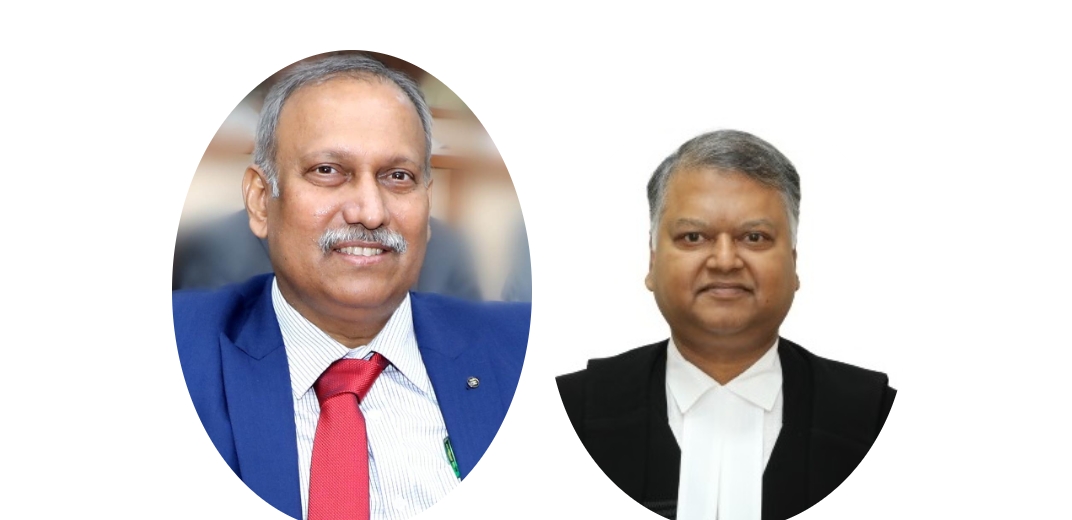
14.07.2026
Index : Yes
Speaking Order : Yes
Neutral Citation : Yes
TK
To
1.The Director General of Police
Mylapore,
Chennai – 600 004.
2.The Registrar General
Madras High Court
Chennai – 600 104.
3.The Registrar (Judicial)
Madras High Court
Chennai – 600 104.
S.M.SUBRAMANIAM, J.
AND
N.SENTHILKUMAR, J.
TK
W.A.NO.1850 OF 2026
14.07.2026