Temple case orderHONOURABLE MRS.JUSTICE L.VICTORIA GOWRI W.P.Crl.(MD).Nos.2151 of 2025 and 2187 of 2026 W.P.Crl.(MD) No.2151 of 2025 P. Sundararaju, Representing the Adi Dravidar Community,
BEFORE THE MADURAI BENCH OF MADRAS HIGH COURT
DATED : 08.07.2026
CORAM
THE HONOURABLE MRS.JUSTICE L.VICTORIA GOWRI
W.P.Crl.(MD).Nos.2151 of 2025 and 2187 of 2026
W.P.Crl.(MD) No.2151 of 2025
P. Sundararaju,
Representing the Adi Dravidar Community,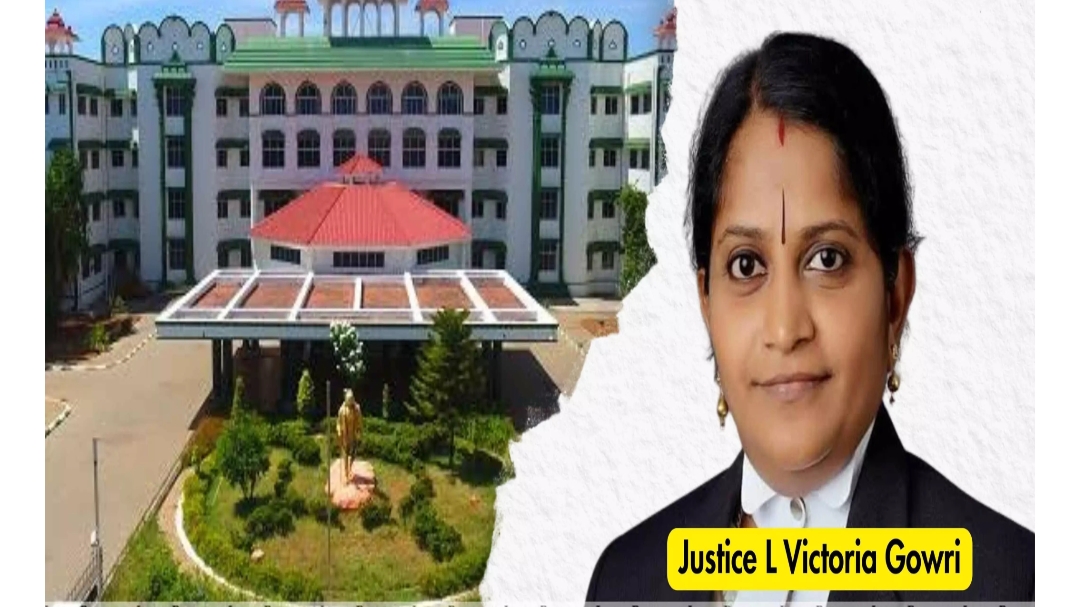
Valavampatti Village,
Kandharvakottai Taluk, Pudukkottai District.
… Petitioner Vs.
1. The District Collector O/o. Collectorate, Pudukkottai District.
2. The Joint Commissioner,
Hindu Religious and Charitable Endowments Department, Pudukkottai.
3. The Assistant Commissioner
Hindu Religious and Charitable Endowments Department, Pudukkottai District.
4. The Executive Officer,
Arulmighu Sri Moongil Ayyanar Temple,
Valavampatti Village,
Kandharvakottai Taluk, Pudukkottai District.
5. The Superintendent of Police
O/o. Superintendent of Police,
Pudukkottai District
6. The Revenue Divisional Officer, Pudukkottai.
7. The Tahsildar,
kandharvakottai Taluk Office, Kandharvakottai Taluk, Pudukkottai District.
8. The Inspector of Police,
Athanakottai Police Station, Pudukkottai District.
… Respondents
Prayer : Writ Petition, filed under Article 226 of the Constitution of India, praying this court to issue a Writ of Certiorarified Mandamus calling for records pertaining to the impugned order vide in Na.Ka.No.621/2025/B dated 09.09.2025 passed by the 4th respondent quash the same and consequently directing the
respondents to allowing with protection.
For Petitioner : Mr.P.Manokaran
For Respondent : Ms.M.R.Priyanka Jothi
(R1 to R3, R6 & R7)
Government Advocate (Civil)
Mr.C.Susikumar (R5 & R8)
Government Advocate (Crl.)
Mr.G.Mathavan (R4)
Standing Counsel
W.P.Crl.(MD) No.2187 of 2026
1. Maruthamuthu
2. Subramanian
3. Swaminathan
4. Veerasamy
5. Muthu
6. Kubendran
7. Murugesan
8. Ganesan
… Petitioner Vs.
1. The State of Tamil Nadu rep by The Superintendent of Police, O/o. Superintendent of Police, Pudukkottai District.
2. The Revenue Divisional Officer, Revenue Divisional Office, Pudukkottai District.
3. The Deputy Superintendent of Police O/o. Deputy Superintendent of Police, Pudukkottai District.
4. The Tahsildar
Taluk Office,
Kandharvakottai Taluk, Pudukkottai District.
5. The Inspector of Police
Aathanakkottai Police Station, Kandharvakottai Taluk, Pudukkottai District.
6. The Joint Commissioner,
Hindu Religious and Charitable Endowments Department, Thanjavur District.
7. The Assistant Commissioner,
Hindu Religious and Charitable Endowments Department, Pudukkottai District.
8. The Executive Officer
Hindu Religious and Charitable Endowments Department, Pudukkottai Devasthanam, Pudukkottai District.
9. Sundar
10. Rajamanickam
Prayer : Writ Petition, filed under Article 226 of the Constitution of India, praying this court to Writ of Mandamus directing the respondents 1 to 8 to grant permission and adequate police protection to conduct the Chithirai Festival of Sri Moongil Ayyanar and it’s Parivara Deivangal Temple situated at Valavampatti Village,
Kandharvakottai Taluk.
For Petitioner : Mr.K.Baalasundaram, Senior Counsel for M/s.KBS Law Office
For Respondent : Mr.C.Susikumar (R1, R3 & R5)
Government Advocate (Crl.)
Ms.M.R.Priyanka Jothi (R2, R4 & R6)
Government Advocate (Civil)
Mr.G.Madhavan (R8)
Standing Counsel
Mr.P.Manoharan (R9 & R10)
COMMON ORDER
Prologue
Temples in India have, through centuries, stood as institutions of faith, culture, social cohesion and collective identity. Equally, history reminds this Court that temples have also witnessed exclusion founded upon caste hierarchies, resulting in the denial of equal spiritual participation to sections of society. The Constitution of India sought to transform this social reality by replacing inherited inequalities with constitutional values founded upon equality, fraternity and dignity.
2. The present writ petitions raise a delicate yet significant question. The issue is not whether an ancient custom deserves respect. Nor is the issue whether hereditary customary practice of offering Mandakapadi can continue to be preserved. The question is whether a customary practice governing a public temple administered by the Hindu Religious and Charitable Endowments Department can continue in a manner which results in the exclusion of an entire Scheduled Caste community from participating in one of the ceremonial Mandakapadis solely because of historical practice.
3. The Court is therefore called upon to harmonise two equally important constitutional values. On one hand lies the preservation of genuine religious customs and practices protected under Articles 25 and 26 of the Constitution. On the other hand stands the constitutional mandate contained in Articles 14, 15, 17, 21 and 25, requiring that no citizen be denied equal dignity in matters of religion merely because of caste.
4. Constitutional adjudication demands that neither constitutional guarantees nor genuine religious traditions are sacrificed. The endeavour of this Court is therefore to evolve a solution which preserves legitimate customary rights while simultaneously ensuring that constitutional morality prevails over social exclusion.
5. Since both the writ petitions arise out of the same temple festival, involve identical parties, concern the same customary practice relating to Mandakapadi and raise common questions of law and fact, they are heard together and are disposed of by this common order.
Facts leading to W.P.(MD) No.2151 of 2025
6. The petitioner claims to represent nearly three hundred families belonging to the Adi Dravidar community residing at Valavampatti Village, Kandharvakottai Taluk, Pudukkottai District. The grievance projected is that the members of the petitioner community have been systematically prevented from offering the Ninth Day Mandakapadi during the annual Chithirai Festival celebrated in Arulmighu Sri Moongil Ayyanar Temple.
7. According to the petitioner, the temple is admittedly a public temple under the administration and control of the Hindu Religious and Charitable Endowments Department. It is situated in Survey Nos.147/3, 156 and 158 of Valavampatti Village and is not a denominational temple belonging exclusively to any one community.
8. It is the specific case of the petitioner that although the Adi Dravidar community has continuously participated in the renovation, maintenance and religious activities of the temple, including contribution towards Kumbabishekam, payment of Thalaikattu Vari, participation in temple festivals, protection of temple properties, construction of roads for drawing the temple car and other customary services, they alone have been denied the privilege of offering Mandakapadi on the ninth day.
9. The petitioner would submit that such exclusion is not founded upon any statutory rule, deed of endowment, registered scheme, hereditary grant or judicial declaration. According to him, the exclusion is solely on the basis of caste and therefore directly offends Articles 14, 15, 17, 21 and 25 of the Constitution of India.
10. It is further stated that repeated representations submitted before the Executive Officer, the Joint Commissioner and other Revenue Authorities failed to evoke any favourable response, compelling the petitioner to invoke the extraordinary jurisdiction of this Court under Article 226 of the Constitution.
Impugned proceedings
11. The petitioner challenges the proceedings of the fourth respondent in Na.Ka.No.621/2025/B dated 09.09.2025 whereby his request for recognising the right of the Adi Dravidar community to offer the Ninth Day Mandakapadi came to be decided by directing him to approach competent civil court or the 2nd respondent Joint Commissioner.
12. According to the petitioner, the impugned proceedings fail to assign any legally sustainable reason and merely perpetuate an existing practice without examining its constitutional validity.
Grounds of challenge
13. Assailing the impugned proceedings, the learned counsel for the petitioner contended that—
(i) the impugned order is arbitrary and violative of Articles 14 and 21;
(ii) the temple being a public temple administered by HR&CE, every Hindu has an equal right of worship;
(iii) denial of participation only to members of one Scheduled Caste community amounts to caste discrimination prohibited by
Articles 15 and 17;
(iv) the right guaranteed under Article 25 includes not merely entry into the temple but meaningful participation in religious observances, unless lawfully restricted;
(v) there exists no legally recognised custom excluding the petitioner community;
(vi) constitutional morality must prevail over discriminatory social practices; and
(vii) the State authorities are constitutionally obligated toeliminate discrimination rather than preserve it.
Facts leading to W.P.(MD) NO.2187 of 2026
14. The petitioners in W.P.(MD) No.2187 of 2026 represent the eight traditional Karaidars associated with the temple. Their grievance is entirely different. According to them, the temple has, from time immemorial, recognised eight traditional family groups, each of whom performs Mandakapadi on one specific day during the first eight days of the Chithirai Festival.
15. It is their case that each Mandakapadi is hereditary in nature and every family bears its own expenditure in decorating the deity, conducting the rituals, organising the procession and facilitating public worship. The Learned Senior Counsel appearing for the petitioners submitted that the order of Mandakapadis has remained unchanged for several generations and constitutes a civil customary right recognised in law.
16. It is further contended that every devotee, irrespective ofcaste, is permitted to worship in the temple on all festival days and there has never been any prohibition against temple entry. According to the petitioners, what is sought to be protected is not exclusion from worship but preservation of hereditary ceremonial practices attached to the eight traditional Mandakapadis. The petitioners therefore contend that introduction of a Ninth Karaidar by judicial order would alter a long-standing customary arrangement and consequently interfere with their recognised customary rights.
Representations and peace committee proceedings
17. The records disclose that disputes arose prior to the conduct of the Chithirai Festival. Several representations were submitted by both sides before the Revenue Authorities, Executive Officer and HR&CE Department. Consequently, Peace Committee Meetings were convened by the Tahsildar as well as the Revenue Divisional Officer. Despite prolonged deliberations, no consensus emerged between the traditional Karaidars and the Adi Dravidar community.
18. Since the dispute remained unresolved, the Revenue
Authorities advised the parties to approach either the Joint Commissioner under the provisions of the HR&CE Act or the
competent Civil Court for adjudication of their respective claims.
Earlier orders of this court
19. When these writ petitions came up earlier, this Court noticed that competing claims had been raised regarding ceremonial rights in the temple. Since proceedings were already pending before the Joint Commissioner, this Court directed the Tahsildar to convene another Peace Committee Meeting and deferred further adjudication. Subsequently, this Court directed all the eight Karaidars to appear personally before this Court.
20. Pursuant thereto, all the eight Karaidars appeared and categorically stated that their right of offering Mandagapadi in the existing sequence relating to the first eight Mandakapadis should not be interfered . Simultaneously, the learned counsel appearing for the petitioner in W.P.(MD) No.2151 of 2025 fairly submitted that the petitioner community had absolutely no objection to the continuation of the first eight hereditary Mandakapadis and that the only relief sought was permission for the Adi Dravidar community collectively to perform the Ninth Day Mandakapadi.
Submissions of the petitioner in w.p.(md) no.2151 of 2025
21. Elaborating the challenge to the impugned proceedings, the learned counsel appearing for the petitioner would submit that the subject temple is admittedly a public temple governed and administered by the Hindu Religious and Charitable Endowments Department and, therefore, every Hindu possesses an equal right to enter the temple, participate in worship and offer prayers before the deity. Such right, according to the learned counsel, emanates not merely from statutory recognition but flows directly from Articles 14, 15, 17, 21 and 25 of the Constitution of India.
22. The learned counsel would submit that the grievance projected by the petitioner community is neither against the existence of the eight traditional Kararidas nor against the continuance of their hereditary practices. On the contrary, the petitioner has categorically accepted before this Court that the existing arrangement permitting the eight Karaidars to perform Mandakapadi on the first eight days of the Chithirai Festival need not be disturbed.
23. It is contended that the sole request of the petitioner community is that they may also be permitted to perform Mandakapadi collectively on the ninth day of the festival before the commencement of the Therottam, thereby enabling them to
participate with dignity in the annual festival without disturbing the rights of any existing Mandakapadidhar.
24. The learned counsel would further contend that exclusion of the Adi Dravidar community from performing Mandakapadi on any day of the festival has absolutely no statutory foundation. According to him, no Scheme framed under the provisions of the Hindu Religious and Charitable Endowments Act, no deed of endowment, no judicial declaration and no registered arrangement recognise any prohibition against the petitioner community.
25. Inviting the attention of this Court to the proceedingsobtained under the Right to Information Act, the learned counsel submitted that the office of the Joint Commissioner itself has informed that there exists no agreement between the HR&CE Department and the erstwhile Pudukkottai Samasthanam
recognising the exclusive right of the eight Karaidars over all ceremonial and customary practices or first honours. Therefore, the very foundation upon which the exclusion is sought to be justified is factually unsustainable.
26. Learned counsel would further submit that after the peace committee proceedings, the petitioner community approached the second respondent/Joint Commissioner seeking recognition of their claim. The Joint Commissioner, instead of rejecting the claim, called upon the Executive Officer to submit a detailed report after obtaining the views of all the village communities. However, despite such direction, the Executive Officer failed to submit the report, thereby delaying adjudication of the legitimate grievance of the petitioner community.
27. According to the learned counsel, the continued inactionon the part of the Executive Officer cannot operate to the prejudice of a constitutional claim founded upon equality and dignity. Learned counsel further argued that Article 17 of the Constitution abolishes untouchability in every form. Though overt denial of temple entry may no longer exist, indirect exclusion from meaningful participation in temple ceremonies solely on caste considerations constitutes a subtle manifestation of the same evil which the Constitution seeks to eradicate. It is therefore contended that constitutional courts cannot remain passive spectators when historical discrimination continues under the guise of customary practice.
Submissions of the petitioners in W.P.(MD) NO.2187 of 2026
28. Per contra, the learned Senior Counsel appearing for the petitioners in W.P.(MD) No.2187 of 2026 submitted that the controversy has been unnecessarily projected as one involving caste discrimination whereas, in reality, it concerns preservation of hereditary ceremonial rights recognised and followed for several generations.
29. Learned Senior Counsel submitted that the temple festival has always been celebrated through eight Mandakapadis performed by eight traditional family groups known as “Karaidars”. Every Karaidar bears the entire expenditure for the respective day’s ceremonies and performs the rituals in accordance with longestablished custom. According to the learned Senior Counsel, the petitioner community has never been denied entry into the temple. They have been participating in the festival, worshipping the deity, joining the processions and receiving prasadam like every other devotee.
30. It is therefore argued that the present claim is not one relating to temple entry but one seeking creation of a new hereditary honour which has never existed in the history of the temple. The Learned Senior Counsel would submit that customary rights constitute civil rights recognised by law and cannot be modified merely because another section of society seeks participation in the same ceremonial honour.
31. It is further argued that hereditary customary practices attached to temple festivals have consistently been recognised by Courts as enforceable civil rights, subject to adjudication before competent civil forums or the authorities under the HR&CE Act. According to the learned Senior Counsel, if judicial directions are issued altering hereditary customs without adjudication of customary rights, similar claims may arise in numerous temples throughout the State, resulting in avoidable law and order issues and multiplicity of litigation.
32. The Learned Senior Counsel therefore prayed that the existing customary arrangement should remain undisturbed and that the petitioner’s remedy, if any, lies before the competent authority under the HR&CE Act or before the Civil Court.
Submissions of the hr&ce department
33. Learned counsel appearing for the fourth
respondent/Executive Officer submitted that the temple originally belonged to the erstwhile Pudukkottai Samasthanam and subsequently came under the administration of the Government through the HR&CE Department. It was submitted that nearly two hundred and twenty-five temples similarly transferred from the Pudukkottai Samasthanam follow a practice whereby the Samasthanam or the temple administration performs the concluding ceremonial Mandakapadi before the commencement of the Therottam.
34. According to the learned counsel, after completion of the first eight Mandakapadis, the temple administration along with all sections of villagers collectively offers worship on the concluding day before commencement of the chariot festival. However, it is fairly admitted that no counter affidavit has been filed placing any statutory material, historical record, Scheme, decree or Government proceedings recognising such practice as legally binding.
35. Equally, the Department has not produced any document evidencing that the petitioner community was ever prohibited by any valid statutory order from participating in the ninth day’s ceremonies.
Proceedings before the joint commissioner
36. During the pendency of these writ petitions, the petitioner community approached the Joint Commissioner seeking recognition of their claim. The Joint Commissioner, instead of rejecting the request, called for a comprehensive report from the Executive Officer regarding the feasibility of recognising the claim after consulting all stakeholders.
37. Unfortunately, despite receipt of such communication, the Executive Officer has not submitted the report till date. This unexplained inaction on the part of the Executive Officer has virtually stalled the statutory adjudicatory process contemplated under the HR&CE Act.
Questions for consideration
38. Upon hearing the rival submissions and perusing the materials available on record, the following questions arise for consideration:
(i) Whether the claim made by the petitioner community inW.P.(MD) No.2151 of 2025 is maintainable under Article 226 of the Constitution?
(ii) Whether the existing customary practice relating to the first eight Mandakapadis constitutes an enforceable customary right?
(iii) Whether recognition of the petitioner’s claim would amount to interference with the customary rights of the eight Karaidars?
(iv) Whether exclusion of the petitioner community from offering Mandakapadi on the ninth day can withstand constitutional scrutiny under Articles 14, 15, 17, 21, 25 and 26 of the Constitution?
(v) Whether constitutional morality requires this Court to mould relief balancing customary practices with constitutional guarantees?
(vi) To what relief are the parties entitled?
Constitutional and statutory framework
39. India is governed by a transformative Constitution. Unlike constitutions which merely preserve existing social arrangements, the Constitution of India consciously seeks to reform social institutions wherever inherited inequalities conflict with constitutional values. Article 14 guarantees equality before law and equal protection of laws. Article 15 prohibits discrimination on the ground of caste, religion, race, sex, place of birth or any of them. Article 17 abolishes untouchability in every form and declares its practice in any manner an offence against constitutional values. Article 21 guarantees every individual the right to live with dignity, and such dignity necessarily extends to equal participation in public religious life.
40. Article 25 guarantees to every person freedom of conscience and the right freely to profess, practise and propagate religion, subject only to public order, morality, health and the other provisions of Part III. Article 26 protects the right of every religious denomination to manage its own affairs in matters of religion. However, such protection is itself subject to public order, morality and health and cannot be interpreted in a manner that defeats the overarching constitutional guarantees of equality and dignity
available to every citizen.
41. Equally significant is the statutory scheme under the Hindu Religious and Charitable Endowments Act, under which public temples vest in public administration. Once a temple is admittedly under the control of the HR&CE Department, its administration is necessarily regulated by constitutional norms and statutory supervision. Customary practices undoubtedly deserve due respect, but they cannot be perpetuated in a manner that legitimises discrimination prohibited by the Constitution. It is in the above constitutional and statutory backdrop that the rival claims require examination.
Analysis
42. Having bestowed the anxious consideration that the matter deserves, this Court proceeds to examine the rival claims in the light of the constitutional guarantees, the statutory framework governing public temples and the well-settled principles regulating judicial review under Article 226 of the Constitution of India.
I. Nature of the Temple
43. The first and foremost circumstance which deserves emphasis is that Arulmighu Sri Moongil Ayyanar Temple is admittedly a public temple under the administrative control of the Hindu Religious and Charitable Endowments Department. Neither side disputes the said position. Consequently, the administration of the temple is no longer governed merely by local usage but is subject to the discipline of the Constitution and the statutory supervision contemplated under the Hindu Religious and Charitable Endowments Act.
44. Once a temple comes under the administration of the HR&CE Department, every action of the temple authorities assumes the character of State action amenable to judicial review under Article 226 of the Constitution. Such action must necessarily satisfy the tests of fairness, reasonableness, equality and non-
discrimination.
II. Scope of Articles 25 and 26
45. Articles 25 and 26 embody two complementary
constitutional guarantees. Article 25 secures the individual right of every person to freely profess, practise and propagate religion, whereas Article 26 protects the collective rights of religious denominations to manage their own affairs in matters of religion.
46. Neither of these Articles is absolute. Both are expressly made subject to public order, morality, health and the other provisions contained in Part III of the Constitution. Therefore, while Courts ordinarily exhibit judicial restraint in matters concerning religious practices, such restraint cannot extend to perpetuating practices which offend constitutional guarantees of equality, dignity and fraternity. The Constitution does not recognise any hierarchy among devotees based upon birth. The Constitution recognises only one hierarchy—the supremacy of constitutional values.
III. Constitutional Morality
47. Constitutional morality constitutes one of the foundational principles governing constitutional adjudication. It obligates every constitutional authority to prefer constitutional values over social prejudices, inherited inequalities and historical discrimination. Constitutional morality is neither an abstract philosophy nor a judicial innovation. It represents the constitutional conscience of the Republic. Whenever a conflict arises between long-standing social practices and constitutional guarantees, the Constitution must necessarily prevail.
48. Courts are not expected merely to preserve tradition. Courts are expected to preserve those traditions which are compatible with constitutional values while simultaneously removing those practices which perpetuate discrimination. Social customs cannot be permitted to fossilise constitutional freedoms. Equally, constitutional freedoms cannot be exercised in a manner that unnecessarily destroys legitimate customs. The constitutional task is therefore one of reconciliation rather than destruction.
IV. Whether the Eight Karaidars possess customary
rights?
49. This Court has no hesitation in accepting the contention of the petitioners in W.P.(MD) No.2187 of 2026 that the eight traditional Karaidars possess long-recognised customary rights to perform the first eight Mandakapadis during the annual Chithirai Festival, in the following order:1)Kaar Servai 2)Vandaan Servai 3)Chinnaiyan Servai 4)Muthuthevan 5)Pattukatti 6)Perungandar 7)Poonaiyar 8) Kondaiyar.
50. The materials placed before this Court disclose that the first eight Mandakapadis have been performed for several decades by eight traditional family groups in an uninterrupted sequence as mentioned supra. Every Mandakapadi involves expenditure, organisation of rituals, adornment of the deity and performance of ceremonial obligations undertaken by the respective Karars.
51. Such customary honours constitute civil rights recognised in law. Courts ordinarily do not interfere with such customs unless they violate statutory provisions or constitutional guarantees. Consequently, this Court finds absolutely no reason to disturb the customary arrangement relating to the first eight Mandakapadis.
V. Whether recognition of the petitioner’s claim disturbs
the customary rights?
52. Significantly, the petitioner himself has fairly conceded before this Court that the existing order of the first eight Mandakapadis need not be altered. The petitioner has neither sought substitution of any Karaidar nor claimed participation in any of the existing eight Mandakapadis. The claim projected is considerably narrower.
53. The petitioner merely seeks recognition of the right of the Adi Dravidar community collectively to offer Mandakapadi on the ninth day before the commencement of the Therottam. Therefore, the apprehension expressed by the petitioners in W.P.(MD) No.2187 of 2026 that their hereditary rights would be diluted is largely misplaced. Recognition of an additional ceremonial participation after completion of the existing eight Mandakapadis does not disturb, diminish or substitute any existing customary honour.
VI. Whether exclusion is constitutionally sustainable?
54. The crucial question is whether exclusion of an entire Scheduled Caste community from performing Mandakapadi on any day of the temple festival can survive constitutional scrutiny. This Court repeatedly put a specific query to the learned counsel appearing for the respondents as to whether any statutory provision, Scheme decree, deed of endowment, judicial declaration or recognised legal instrument prohibited the petitioner community from performing the ninth day’s Mandakapadi. No such material has been produced.
55. Equally, the Executive Officer has not placed any documentary evidence demonstrating that the exclusion of the petitioner community is founded upon any legally recognised custom capable of overriding constitutional guarantees. On the contrary, the materials obtained under the Right to Information Act indicate that no agreement exists between the HR&CE Department and the erstwhile Pudukkottai Samasthanam recognising such exclusive
rights.
56. The inevitable conclusion therefore is that the exclusioncomplained of, rests substantially upon historical practice rather than legally enforceable necessity. History undoubtedly deserves respect. History, however, cannot become a justification for perpetuating discrimination.
VII. Temple Entry versus Meaningful Participation
57. Much emphasis was placed by the learned Senior Counsel for the petitioners in W.P.(MD) No.2187 of 2026 on the submission that members of the Adi Dravidar community are permitted to enter the temple and worship the deity. This Court readily accepts that there is no allegation of physical denial of temple entry. Nevertheless, equality in matters of religion is not confined merely to physical entry into the temple precincts.
58. Equal dignity necessarily includes meaningful participation in public religious ceremonies unless such participation interferes with an essential religious practice or a legally protected denominational right. The Constitution does not envisage an arrangement where one class of devotees perpetually performs ceremonial honours while another class remains permanent
spectators solely because of caste.
VIII. Role of the Executive Officer
59. Equally disturbing is the conduct of the fourth respondent.
The Joint Commissioner had specifically called upon the Executive Officer to submit an elaborate report after consulting all stakeholders. Despite receipt of such proceedings, no report has been submitted till date.
60. Such inaction has unnecessarily prolonged a dispute involving constitutional rights and has delayed the statutory adjudicatory process. Officers administering public temples must remember that they discharge public duties consistent with constitutional values and not merely administrative functions.
IX. Balancing Constitutional Morality with Custom
61. Constitutional adjudication is seldom a choice between absolute victory and absolute defeat. The true constitutional solution lies in harmonisation. This Court is therefore of the considered opinion that both competing interests deserve protection. The customary rights of the eight traditional Karaidars deserve continued recognition. Simultaneously, the constitutional entitlement of the Adi Dravidar community to participate in the annual festival with equal dignity also deserves judicial recognition. Such balancing alone advances fraternity, social harmony and constitutional
transformation.
Conclusion
62. For all the foregoing reasons, this Court holds that—
(i) the customary rights of the eight Karaidars to perform Mandakapadi on the first eight days of the Chithirai Festival shall remain completely undisturbed;
(ii) the petitioner community shall not claim participation in any of the first eight Mandakapadis;
(iii) the members of the Adi Dravidar community shall collectively perform the Ninth Day Mandakapadi from 8.30 a.m. to
1.00 p.m. on every Chithirai Festival;
(iv) thereafter, from 1.00 p.m. onwards, on the 9th day of festival, the HR&CE Department shall perform the customary Mandakapadi together with all sections of the village community before commencement of the Therottam;
(v) the Therottam shall thereafter proceed in accordance with the customary practice followed by the temple.
Directions
63. The fourth respondent/Executive Officer shall forthwith submit the report already called for by the Joint Commissioner. The second respondent/Joint Commissioner shall pass consequential proceedings incorporating the arrangement indicated herein and ensure its implementation during future festivals. The Executive Officer shall convene meetings with all stakeholders sufficiently in advance every year to ensure peaceful conduct of the festival.
64. The District Administration and Police Authorities shall extend adequate protection for implementation of this arrangement and maintain public order. It is made clear that this arrangement neither abolishes the customary rights of the eight traditional Karaidars nor creates any hereditary right in favour of the petitioner community. The recognition accorded herein is only to facilitate equal constitutional participation in the public temple festival while preserving the existing customary rights of the first eight Karaidars.
Epilogue
65. India’s civilisation has endured because it possesses the rare capacity to preserve tradition while embracing reform. The Constitution never intended to erase faith; it sought only to erase discrimination. Customs enrich society when they unite devotees in shared reverence. They cease to command constitutional respect when they become instruments of exclusion founded upon birth. The Constitution, while protecting religion, does not countenance inequality in the name of religion.
66. The arrangement evolved by this Court preserves the hereditary customary practices of the eight traditional Karaidars in their entirety while simultaneously recognising the equal spiritual dignity of the Adi Dravidar community. In the considered opinion of this Court, such harmonisation best advances the constitutional ideals of equality, fraternity and religious freedom.
67. The greatness of a public temple lies not merely in the antiquity of its customs but in its ability to embrace every devotee who approaches the deity with faith. Constitutional morality requires that the portals of participation remain as inclusive as the sanctity of the deity itself.
68. Accordingly, W.P.(MD) No.2151 of 2025 stands allowed in the above terms and W.P.(MD) No.2187 of 2026 stands disposed of subject to the directions contained herein. Consequently, connected miscellaneous petitions, if any, are closed. There shall be no order as to costs.
08.07.2026
NCC : Yes / No
Index : Yes / No
Internet : Yes/ No
Sml/sm
To
1. The District Collector O/o. Collectorate, Pudukkottai District.
2. The Joint Commissioner,
Hindu Religious and Charitable Endowments Department, Pudukkottai.
3. The Assistant Commissioner
Hindu Religious and Charitable Endowments Department, Pudukkottai District.
4. The Executive Officer,
Arulmighu Sri Moongil Ayyanar Temple,
Valavampatti Village,
Kandharvakottai Taluk, Pudukkottai District.
5. The Superintendent of Police
O/o. Superintendent of Police, Pudukkottai District
6. The Revenue Divisional Officer, Pudukkottai.
7. The Tahsildar,
kandharvakottai Taluk Office, Kandharvakottai Taluk, Pudukkottai District.
8. The Inspector of Police,
Athanakottai Police Station, Pudukkottai District.
9. The Additional Public Prosecutor, Madurai Bench of Madras High Court, Madurai.
L.VICTORIA GOWRI, J.
Sml/sm
WP.Crl.(MD)Nos.2151 of 2025 and 2187 of 2026
08.07.2026


![9/9, 09:56] Sekarreporter: bail order Crl.OP.No.9541 of 2021 IN THE HIGH COURT OF JUDICATURE AT MADRAS DATED: 26.05.2021 CORAM: THE HON’BLE MR.JUSTICE SATHI KUMAR SUKUMARA KURUP Crl.O.P.No.9541 of 2021](https://www.sekarreporter.com/wp-content/themes/hueman/assets/front/img/thumb-medium-empty.png)